In the Russian Far East, aviation has always played a special role. Even today, many remote corners can be reached only by plane or helicopter. Hence the word "the mainland" (materik), used in Kamchatka, Chukotka, and Kolyma for the rest of Russia — settled, comfortable, threaded with paved roads. The archipelago of Far Eastern airports and landing strips is striking in its scope: from Plastun in Primorye to Pevek beyond the Arctic Circle in Chukotka, from Bering Island east of Kamchatka to Seymchan in Kolyma and Mirny in Yakutia. The largest airports — able to receive big airliners and bearing the names of distinguished people — are located near the regional centers. There are ten of them in all, even though the Far Eastern Federal District comprises eleven constituent regions (Birobidzhan has no airport of its own yet; residents of the Jewish Autonomous Region, which split off from Khabarovsk Krai in 1993, have to fly via Khabarovsk). These ten are what this piece is about.
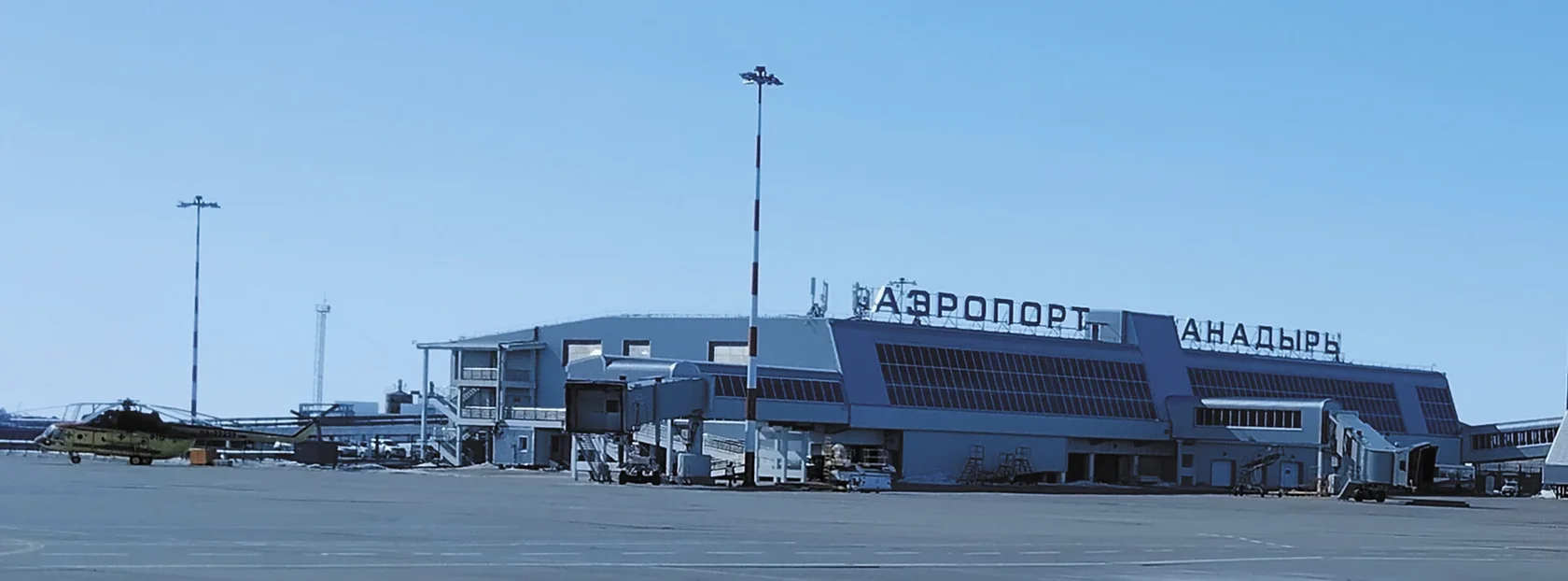
Anadyr: In Memory of the "Chukchi Márquez"
The "Ugolny" airport, built on permafrost, bears the name of the writer Yuri Rytkheu (1930–2008), who was called the literary "chief of Chukotka" and the "Chukchi Márquez." He was born in 1930 in the village of Uelen, the easternmost settlement in Russia and in all of Eurasia. He studied in Leningrad, and in 1953 published his first collection of stories, "People of Our Shore." His books followed one after another: "A Chukotka Saga," "The Time When the Snows Melt," "When the Whales Leave," "The Most Beautiful Ships," "A Dream in Polar Fog"… Many people believed that Rytkheu himself was the author of the popular jokes about the Chukchi. Rytkheu's last book was "A Traveler's Lexicon" — part dictionary, part essay, part memoir, a lyrical book full of gentle humor. A peculiarity of the Anadyr airport is that it is separated from Anadyr itself by an estuary. In summer, travelers reach the city from the airport by boat; in winter, by car across an ice crossing. In the shoulder seasons, when the ice is on the move, the only link between Anadyr and "Ugolny" is by helicopter.
Blagoveshchensk: A Chronicle of Diplomatic Victories
"Ignatyevo" airport is named after Nikolai Muravyov-Amursky (1809–1881), Governor-General of Eastern Siberia from 1847 to 1861. Its name in fact recalls two statesmen, thanks to whom the Amur and Primorye regions became part of Russia. In 1858, Nikolai Muravyov concluded the Treaty of Aigun with China, under which the left bank of the Amur was recognized as Russian, while the right bank of the Ussuri was left under the joint control of Russia and China. Muravyov's work was carried forward by the Russian envoy in Beijing, Nikolai Ignatyev (1832–1908). In November 1860 he secured the signing of the Convention of Peking, under which Primorye became part of the Russian Empire. The military geographer Mikhail Venyukov wrote that the acquisition of the Amur and Primorye regions was "the most important achievement of the Russian people not only in the second half of the 19th century, but in that century as a whole."In his most aviation-themed song, "Moscow–Odessa," Vladimir Vysotsky put it memorably.

Vladivostok: A Taiga Story
These lines have become a local catchphrase in Vladivostok. Even so, the region's main airport, "Knevichi," located in Artyom — a satellite town of Vladivostok — was named after Vladimir Arsenyev (1872–1930), an explorer of the Far East, scholar, and writer. In the early 20th century, Arsenyev led a series of major expeditions into the Sikhote-Alin mountains, fought against poachers, defended the indigenous peoples, and wrote the books "Across the Ussuri Region," "Dersu Uzala," and "Through the Taiga." For the 2012 APEC summit, "Knevichi" airport received not only a new terminal but also an airport express train — the only one of its kind in the Far East.
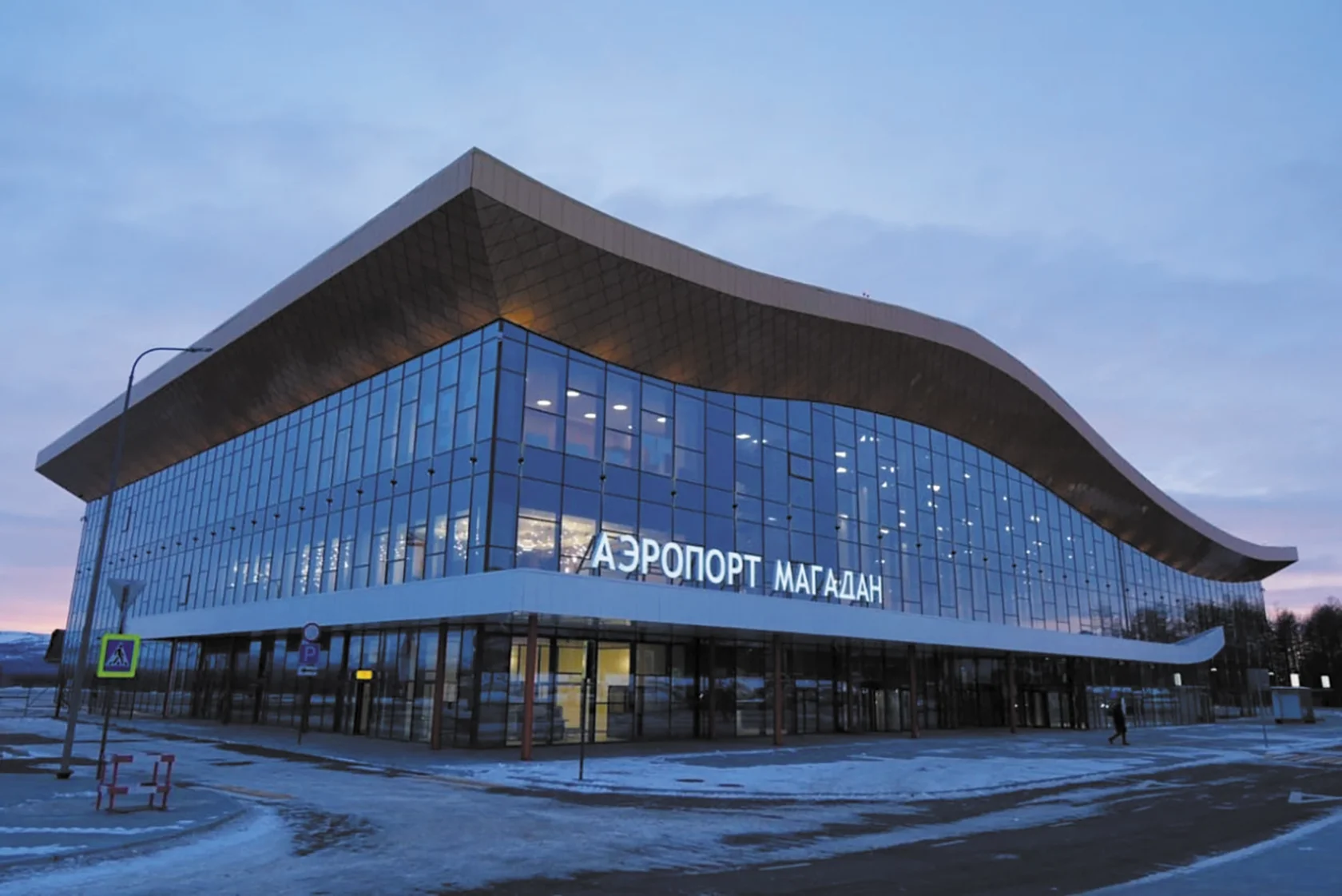
Magadan: A Vysotsky Ballad of the North
Another Far Eastern airport, "Sokol" in Magadan, was named after the poet, actor, and author of nationwide-favorite songs Vladimir Vysotsky (1938–1980). Magadan and Vladivostok were in fact the only two places in the Far East that Vysotsky ever visited, in 1968 and 1971. The choice made by the people of Magadan is easy to understand: Vysotsky did not merely visit the capital of the Kolyma region to see his friend, the poet Igor Kokhanovsky — he also wrote two songs about Magadan, "My Friend Has Gone to Magadan" and "I've Gone to Magadan." Magadan is mentioned in several other Vysotsky songs as well, including "Moscow–Odessa," named above.
Petropavlovsk-Kamchatsky: In the Commander's Footsteps
The main air gateway of Kamchatka, "Yelizovo," was named after the navigator Vitus Bering (1681–1741), a Dane by birth known as "the Russian Columbus." While in Russian service, Bering (called Ivan Ivanovich in Russia) led two major expeditions to the shores of Kamchatka and America to establish whether a strait separated Chukotka from Alaska. Peter the Great equipped and gave his blessing to Bering's First Kamchatka Expedition (1725–1730) shortly before his own death. During the Second Kamchatka Expedition, Bering reached the shores of Alaska — the future Russian America — aboard the packet boat "St. Peter." On the way back he died on the largest island of the Commander Islands archipelago, which today bears his name. The significance of Bering's voyages is hard to overstate: they surveyed the empire's eastern frontiers and began their scientific study, resolved the question of a strait between Asia and America, and spurred the development of the Sea of Okhotsk region and Kamchatka. Today, the new "Yelizovo" airport is arguably the most unusual and appealing of all the Far East's air harbors: it evokes a volcano and a spacecraft at once.
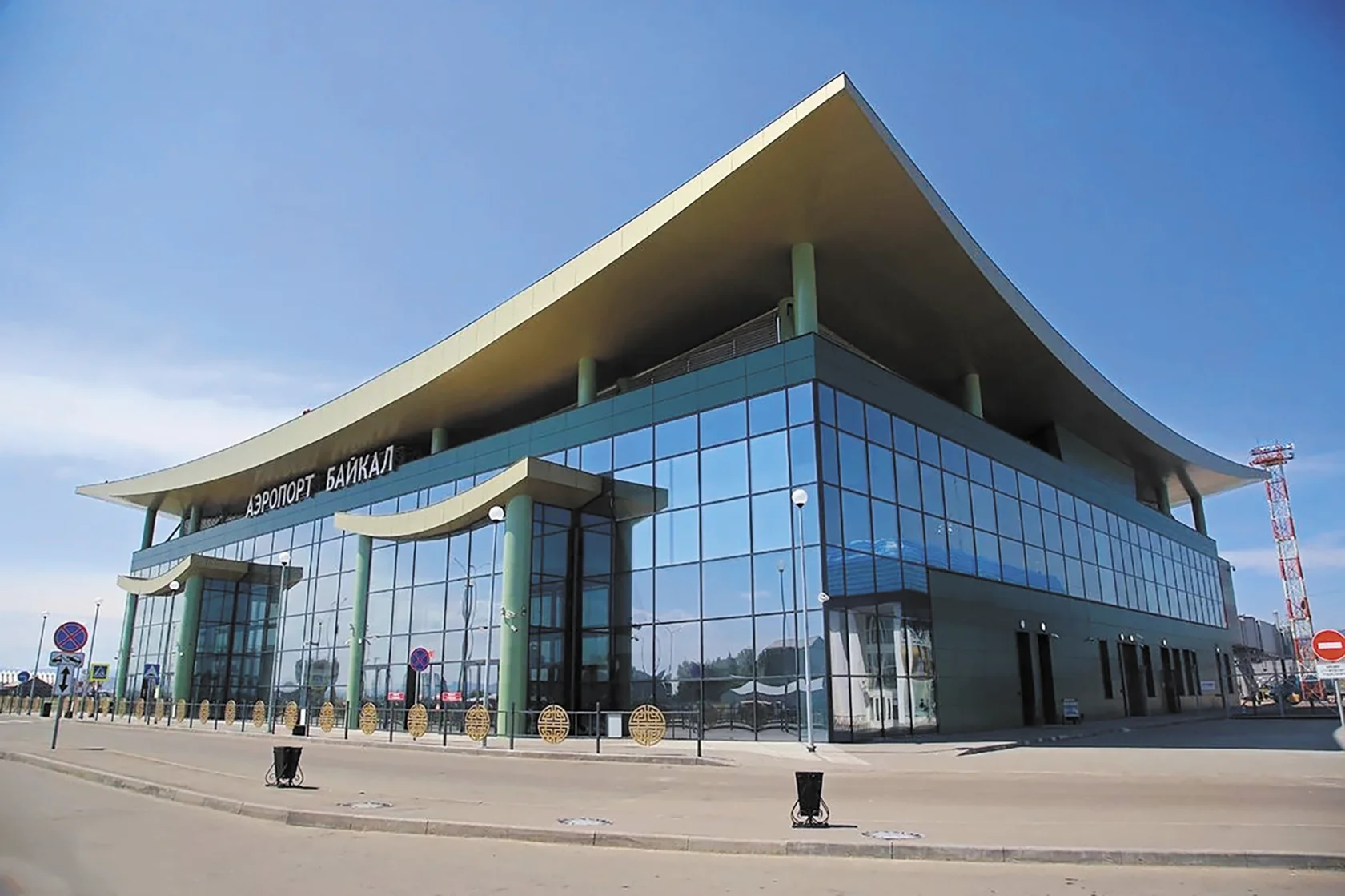
Ulan-Ude: A Sacred Sea
The Ulan-Ude airport is named not after a person but after a lake — it is called "Baikal." And it's easy to see why: Baikal is the planet's largest reservoir of fresh water, a body of water larger in area than Belgium, the deepest lake on Earth, and a genuine wonder of the world. It is often spoken of as though it were alive, and called the "sacred sea." Baikal was discovered for Russia in 1643 by the Cossack Kurbat Ivanov. It has been celebrated in folk songs, poetry, and prose. "Baikal is astonishing, and it's not for nothing that Siberians call it not a lake but a sea," Chekhov wrote, having spent two days on Baikal's shore in June 1890 on his way to the penal colony of Sakhalin.
Khabarovsk: The Discovery of the Amur
The Khabarovsk airport was named after the navigator and explorer of the Far East Gennady Nevelskoy (1813–1876). In 1849, Lieutenant Commander Nevelskoy, exceeding his orders, established that Sakhalin was an island rather than a peninsula, that the mouth of the Amur was navigable, and that there were no Chinese towns or troops on the lower Amur. These findings paved the way for revising the 1689 Treaty of Nerchinsk, for the signing of the Aigun and Peking treaties mentioned above, and for the incorporation of the Amur and Primorye regions into Russia. Foreign Minister Nesselrode demanded that Nevelskoy be demoted to common sailor for his insubordination and that the post he had founded, Nikolaevsky Post (the future city of Nikolaevsk-on-Amur), be abolished. Emperor Nicholas I, however, called the officer's action "gallant, noble, and patriotic" and pronounced his famous words: "Wherever the Russian flag has once been raised, it must never be lowered again."
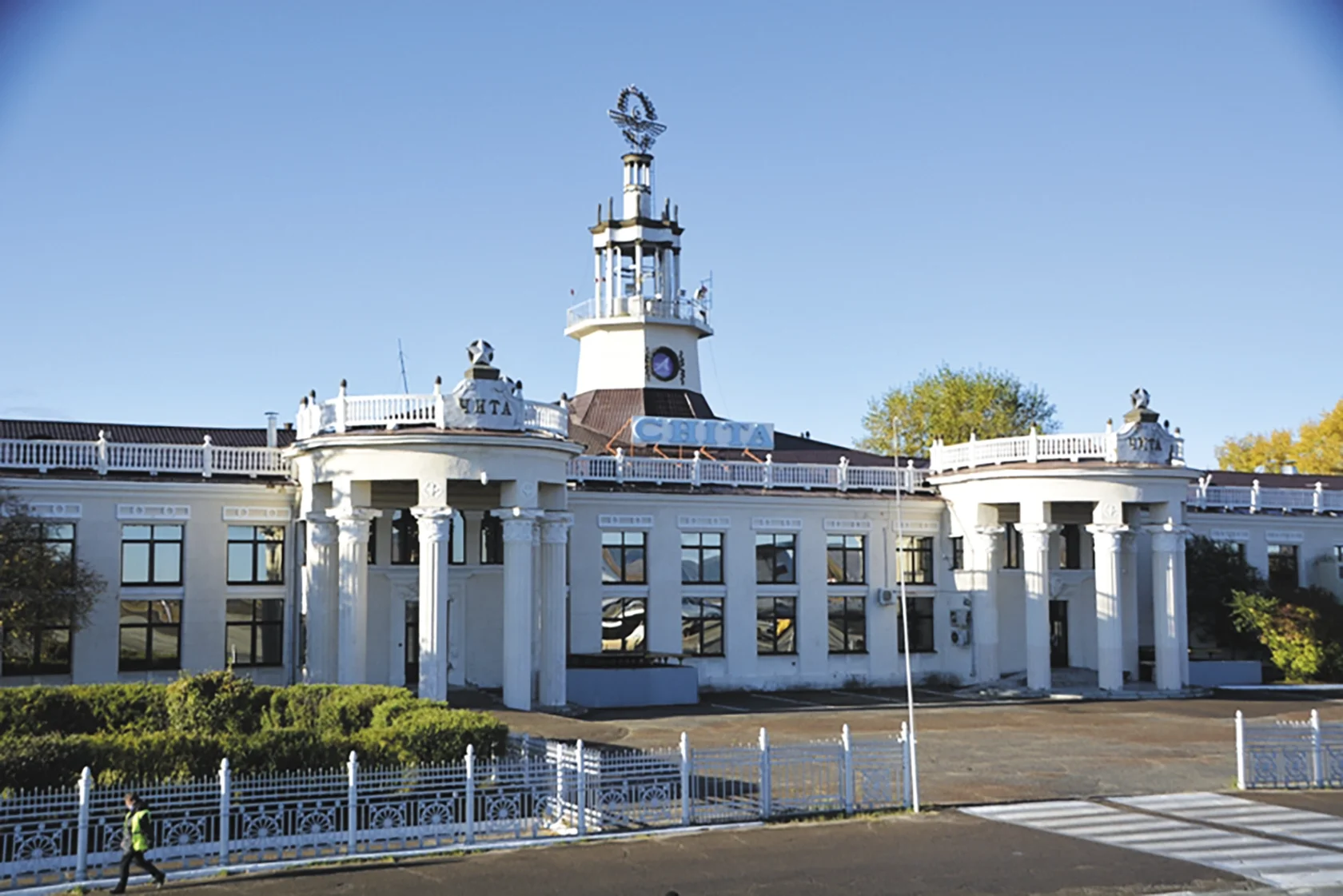
Chita: Pilot, Sniper, Pathfinder?
Chita's "Kadala" airport has not yet been named after any distinguished individual. In the public vote, three names lead the field: military pilot Yegor Stepanishin (1996–2024), who was killed during the special military operation and posthumously awarded the title Hero of Russia; the legendary Great Patriotic War sniper Semyon Nomokonov (1900–1973); and the Cossack pioneer Pyotr Beketov (circa 1600 – circa 1660), founder of both Chita and Yakutsk. Each of the candidates undoubtedly deserves his fellow countrymen's grateful memory.
Yuzhno-Sakhalinsk: Chekhov's Feat
"Khomutovo," the airport of Sakhalin's main city, bears the name of Anton Chekhov. In 1890, the great writer and playwright spent three months on the penal island, conducting a census of its inhabitants — both free and convict — after which he produced his book of a lifetime, "The Island of Sakhalin." It was Chekhov who truly opened Sakhalin up to Russia and to the world. If Sakhalin is Russia's largest island, then "The Island of Sakhalin" is Chekhov's largest work. Did Chekhov give more to Sakhalin, or Sakhalin to Chekhov? The question remains open. "And yet, it seems, everything has become 'Sakhalin-ized,'" the writer remarked soon after returning from the distant island. Here is Chekhov's message to us: don't confine yourselves to the capitals, don't rush off to foreign resorts — first, see and take the measure of our whole vast country, all the way to its farthest reaches.

Yakutsk: The Word and Deed of the "Red Shaman"
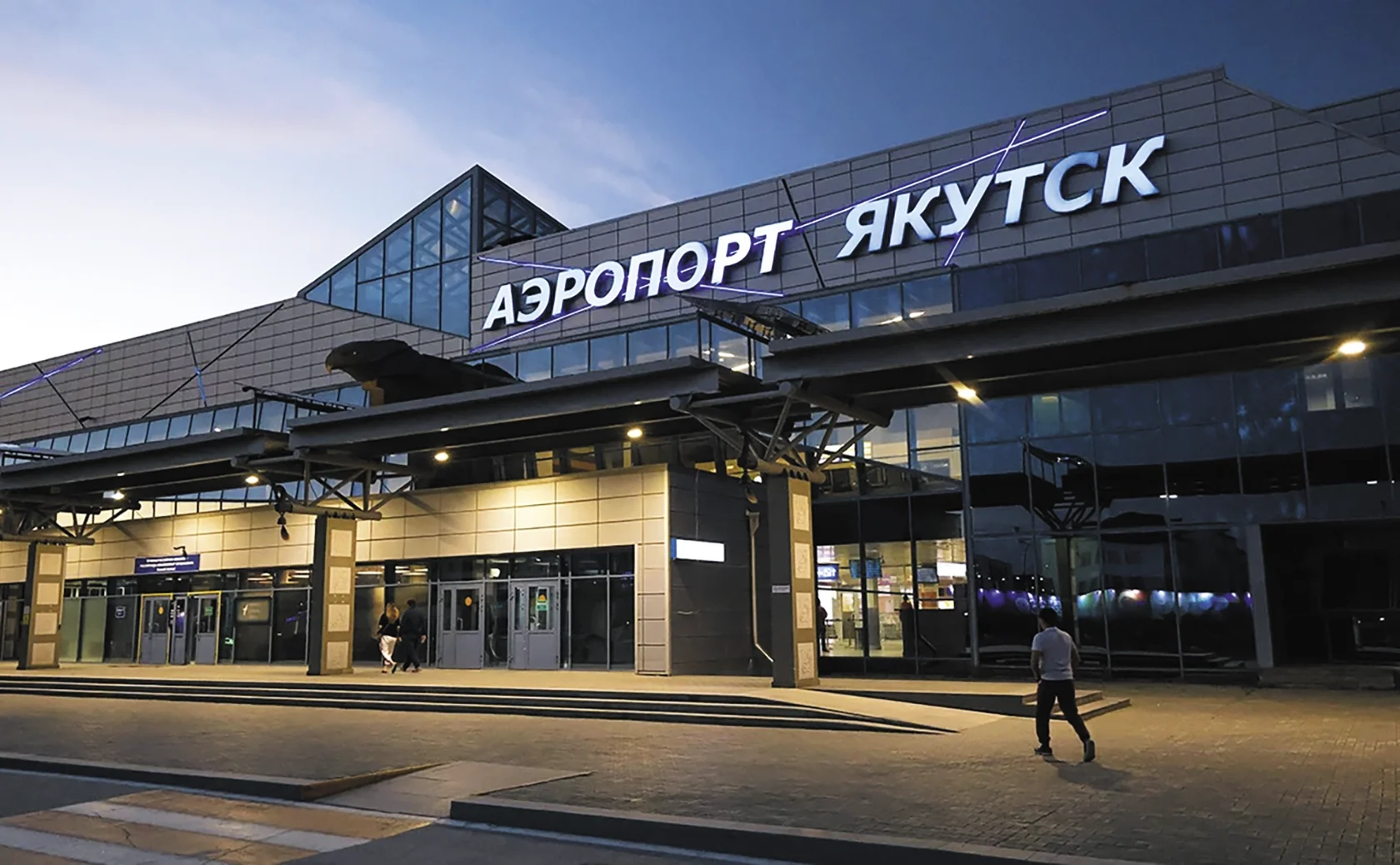
Yakutsk's airport bears the name of Platon Oyunsky (1893–1939) — writer, philologist, and educator, known as the "Yakut Lomonosov." He came from a family of shamans and, even after becoming a Bolshevik, retained respect for his ancestors' faith. He took part in the revolutionary events, led Red Yakutia from 1921 to 1923, and later served as the republic's People's Commissar for Education and Health, and was elected a deputy of the USSR Supreme Soviet. He wrote poetry and prose, translated the "Internationale" as well as Gorky, Pushkin, and Zhukovsky into Yakut, and was the first to set the Yakut epic "Olonkho" down in writing. In 1925 his poem "The Red Shaman" was published and won high praise from Gorky. As head of the Council for Yakut Written Language, Oyunsky made an enormous contribution to refining Yakut script and its rules of spelling and punctuation. In 1935 he founded and led the Institute of Language and Culture, Yakutia's first scholarly institution, and soon after compiled a Russian–Yakut spelling dictionary. In 1938, Oyunsky was arrested on false charges; a year later he died of tuberculosis in a Yakutsk prison hospital and was posthumously rehabilitated.
Today, the Yakutsk airport — which in 1942–1945 served as one of the hub points of the ALSIB route (the air corridor used to ferry American Lend-Lease aircraft from Alaska to Siberia) — also functions as a kind of museum of polar aviation. There is plenty to see here while waiting for a flight.
Today, the Yakutsk airport — which in 1942–1945 served as one of the hub points of the ALSIB route (the air corridor used to ferry American Lend-Lease aircraft from Alaska to Siberia) — also functions as a kind of museum of polar aviation. There is plenty to see here while waiting for a flight.
P.S. It's worth noting that a good half of the Far East's airports are named after writers. Truly: in the beginning was the word…