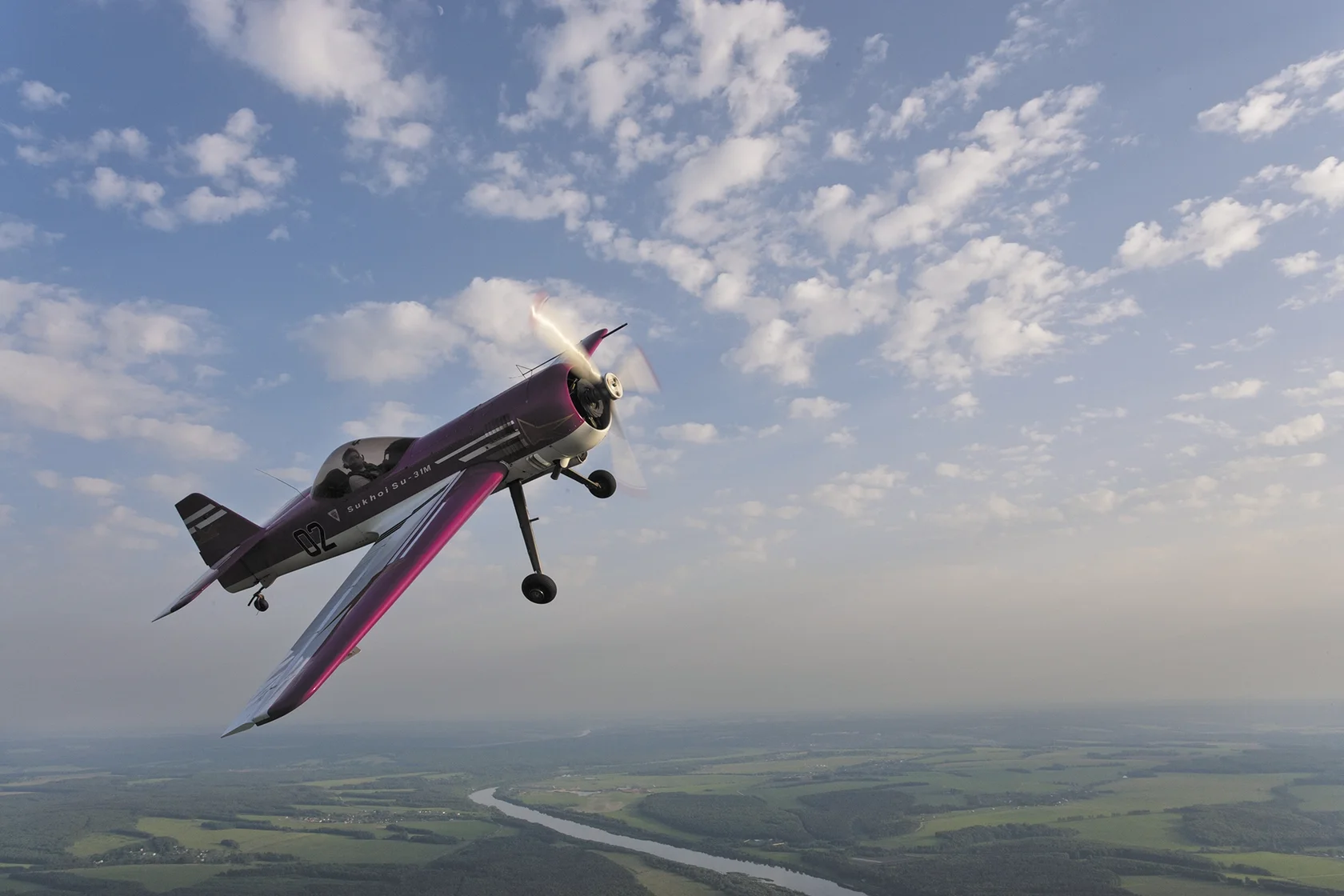
Only a handful of aerobatic Su‑26 aircraft remain in Russia — the planes in which the national team dominated its rivals for a quarter of a century. The leading pilots are now all over fifty. Russia is barred from world championships. Almost no flying clubs remain. Against this backdrop, the central question becomes inevitable: does Russia need aerobatic sport at all? We put this question to the man who knows everything about it.
‘The Aircraft Are Being Quietly Taken Apart'
— Victor Valentinovich, let us start with the most pressing question. How do you assess the current state of Russian aerobatic sport? We had the world’s finest Su‑26, the unrivalled Su‑31. What remains?
— Very few aircraft remain. A handful of Su‑26s, another couple of Su‑31s, one Su‑29 — the two-seater. That is everything this country has left from that generation. A few are privately owned. I know of two that are still flying; perhaps a third still is. The ones we had are now at the Moscow Aviation Repair Plant, and they are being quietly stripped for parts.
Aerobatics training is now done using the old Yak‑52 — basic-level aerobatics at best. A few Yak‑55s survive, capable of more demanding work. And the main aircraft in use today is the German Extra (manufactured by Extra Aircraft, founded by Walter Extra).
— Victor Valentinovich, let us start with the most pressing question. How do you assess the current state of Russian aerobatic sport? We had the world’s finest Su‑26, the unrivalled Su‑31. What remains?
— Very few aircraft remain. A handful of Su‑26s, another couple of Su‑31s, one Su‑29 — the two-seater. That is everything this country has left from that generation. A few are privately owned. I know of two that are still flying; perhaps a third still is. The ones we had are now at the Moscow Aviation Repair Plant, and they are being quietly stripped for parts.
Aerobatics training is now done using the old Yak‑52 — basic-level aerobatics at best. A few Yak‑55s survive, capable of more demanding work. And the main aircraft in use today is the German Extra (manufactured by Extra Aircraft, founded by Walter Extra).
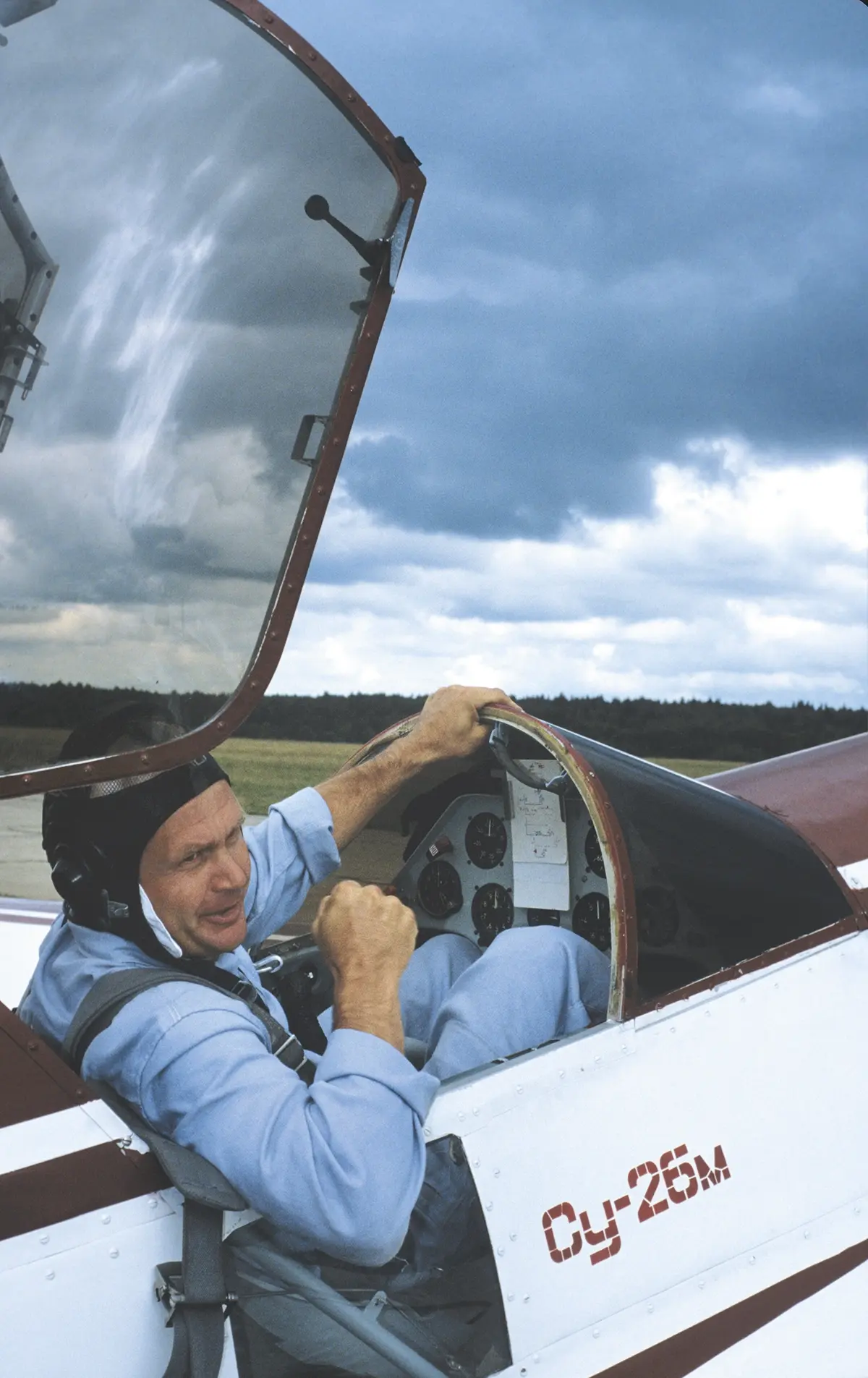
— And the pilots?
— The leading pilots capable of competing at the very highest level are all well into their fifties. Of those we would consider young, I know of three. There are younger boys and girls, promising ones, but they are still a long way from the top class — the Unlimited category. At the last Russian championship, I think twelve people flew in that category. (The Unlimited category is the highest division in competitive aerobatics under the rules of FAI (Fédération Aéronautique Internationale), with no restrictions on the difficulty of manoeuvres.)
— So, are we losing ground, or have we already lost it?
— It is impossible to say objectively — we are not allowed to enter international competitions. But the sport lost something too when it expelled us. We were the leaders; others measured themselves against us. Now there is a natural decline in standards — because there is no one to compete with. Incidentally, it came as a surprise to them just how much of a driving force we had been.
Add to that: Ukraine and Belarus are also gone. And another thing — a great many countries flew our aircraft. The Spanish, the Italians, Lithuania, South Africa. Now sanctions mean spare parts cannot be found, and the airframes have reached the end of their service life. By removing us, they ended up undermining themselves. Last year the World Championship did not happen at all.
— The leading pilots capable of competing at the very highest level are all well into their fifties. Of those we would consider young, I know of three. There are younger boys and girls, promising ones, but they are still a long way from the top class — the Unlimited category. At the last Russian championship, I think twelve people flew in that category. (The Unlimited category is the highest division in competitive aerobatics under the rules of FAI (Fédération Aéronautique Internationale), with no restrictions on the difficulty of manoeuvres.)
— So, are we losing ground, or have we already lost it?
— It is impossible to say objectively — we are not allowed to enter international competitions. But the sport lost something too when it expelled us. We were the leaders; others measured themselves against us. Now there is a natural decline in standards — because there is no one to compete with. Incidentally, it came as a surprise to them just how much of a driving force we had been.
Add to that: Ukraine and Belarus are also gone. And another thing — a great many countries flew our aircraft. The Spanish, the Italians, Lithuania, South Africa. Now sanctions mean spare parts cannot be found, and the airframes have reached the end of their service life. By removing us, they ended up undermining themselves. Last year the World Championship did not happen at all.
’What Is Aerobatic Sport Actually For?’
— What is the value of this sport? A boost for technology? A way of finding talented pilots? Something else?
— Everything at once, do you see? All of it simultaneously. Let me go through it point by point, and I will explain why it is needed not as entertainment but as a matter of national importance.
Let us start with technology. You said it yourself — we had the world's finest aircraft. The Su‑26 and Su‑31 remain unmatched to this day. But how did that aircraft come about? That is an important story.
— What is the value of this sport? A boost for technology? A way of finding talented pilots? Something else?
— Everything at once, do you see? All of it simultaneously. Let me go through it point by point, and I will explain why it is needed not as entertainment but as a matter of national importance.
Let us start with technology. You said it yourself — we had the world's finest aircraft. The Su‑26 and Su‑31 remain unmatched to this day. But how did that aircraft come about? That is an important story.
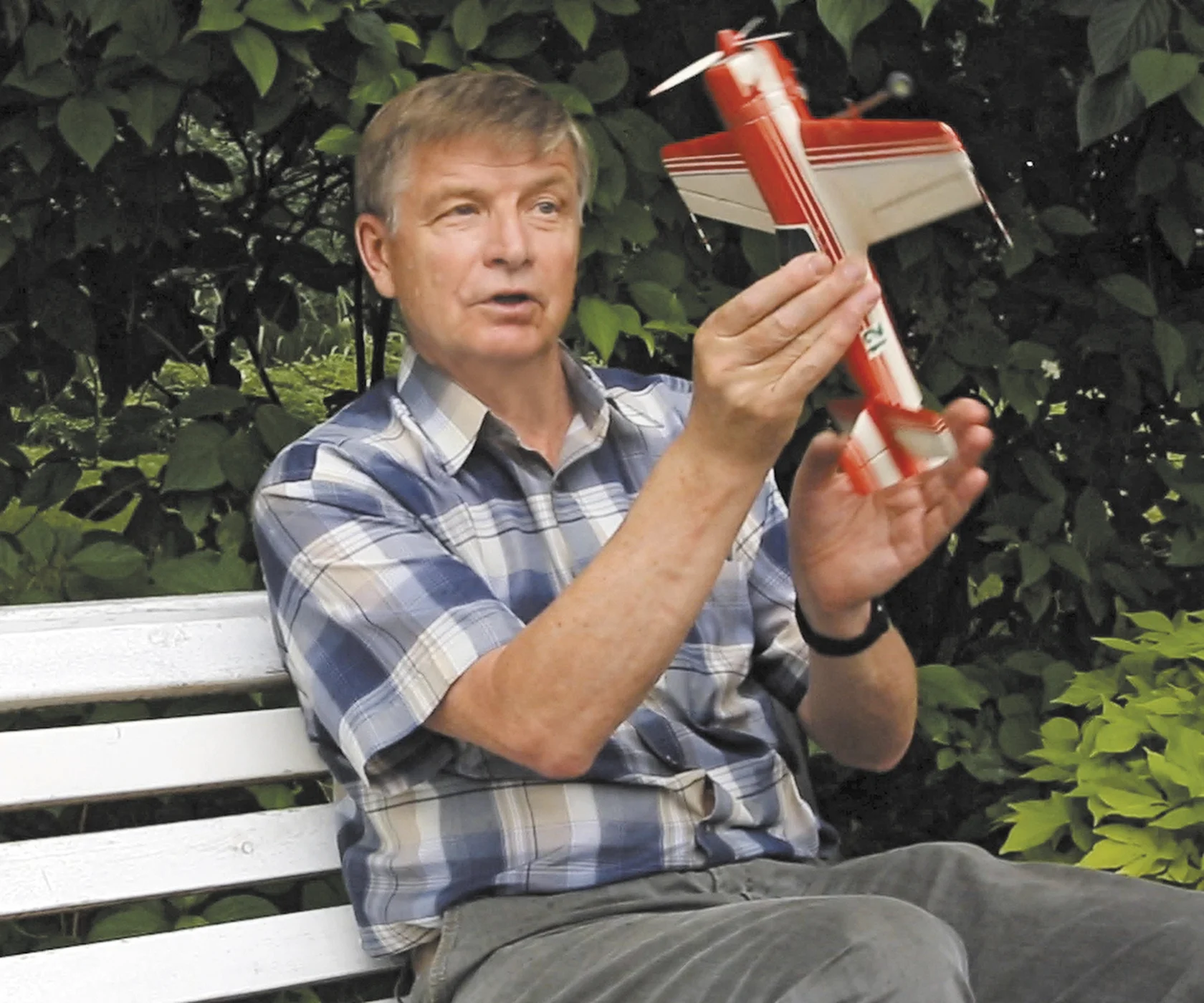
How the Su‑26 Was Born
— Tell us.
— Our team suffered four fatal accidents within a short period. Two world champions and a Russian champion lost their lives. The cause was always the same: wing failure on the Yak‑50 (the Yak‑50 was a Soviet single-seat aerobatic monoplane designed in the 1970s).
For all its merits, no one had properly accounted for the fatigue loads that build up during aerobatics. Programmes kept getting more demanding; flying became ever more intense. As they say, it slipped through the cracks. They stopped counting stress cycles — and the airframes began to fail. The calculation methods were also inadequate.
After the fourth accident we simply put our foot down: we will not fly it.
— And that is when the confrontation with Alexander Sergeyevich Yakovlev arose?
— I was there. There were three of us in his office — Lyubov Nemkova, myself, and our Colonel-General of Aviation Semyon Ilyich Kharlamov, Hero of the Soviet Union, who was then head of DOSAAF aviation (DOSAAF — the Voluntary Society for Assistance to the Army, Aviation and Navy — was the Soviet paramilitary organisation that ran flying clubs and trained civilian pilots). A combat general who had fought in the war and was deeply respected. Yakovlev told Kharlamov: 'Better improve your own pilots' skills so they do not exceed any limits.' Kharlamov slammed the door with full force — really slammed it. We were stunned: it took such courage.
'Everyone get into my car — we’re going to see Mikhail Petrovich,' he said. Mikhail Petrovich Simonov, General Designer of the Sukhoi Design Bureau (OKB Sukhoi — the Sukhoi Experimental Design Bureau, responsible for the Su‑27, Su‑30 and other combat aircraft).
That was when the decision was taken: the Sukhoi company would build us an aircraft that would not break apart in the air.
— And Simonov set three conditions.
— Yes. First: the aircraft would be of composite construction. At that time no one was making structural load-bearing elements from composites. The most anyone did was fairings, minor components. We were the first to build primary structural parts — the load-bearing airframe elements — from composite materials.
Second: the work would be done by young engineers. And third: at Sukhoi, which was primarily engaged in fighter aircraft, this aircraft would occupy, so to speak, a civilian slot. 'It will be our first civilian aircraft.'
— And Vyacheslav Kondratyev became the lead designer?
— Simonov asked: is there anyone who, in your view, could build you this aircraft? I said: there is Kondratyev at the Yakovlev company. 'I know him — I’ll invite him for a talk.' He did. And he told him: take about fifteen MAI graduates (Moscow Aviation Institute) and build the aircraft the national team needs.
That is what Kondratyev did — he assembled a group of young lads. Then he came to our training camp himself. We flew; he sketched. In the evenings we would gather around his drawing board. Each of us with a pencil. Over his sketches we would mark things up: agree with this, disagree with that, adding every idea, however wild. The next day we would fly again; he would refine what we had told him — over and over. After two weeks he left. Then he came back with a sketch of the new aircraft.
— And from sketch to first flight — nine months.
— Nine months. An unprecedented timeline. And one more thing. There were fifteen young men on Kondratyev’s team. Ten of them subsequently went on to become independent chief designers and chief engineers of major plants.
Do you see the point? When an ordinary designer joins a large design bureau (KB — konstruktorskoye byuro) after MAI, he might spend fifteen years drawing some hinge bracket or elevator trim tab — fifteen years drawing variations of the same thing, knowing nothing else about an aircraft. Here, these young men went through the full cycle in nine months — from preliminary design to first flight. Everything with their own hands. A master class in nine months. That is why aerobatic sport matters to the state — it produces personnel for the aviation industry.
— Tell us.
— Our team suffered four fatal accidents within a short period. Two world champions and a Russian champion lost their lives. The cause was always the same: wing failure on the Yak‑50 (the Yak‑50 was a Soviet single-seat aerobatic monoplane designed in the 1970s).
For all its merits, no one had properly accounted for the fatigue loads that build up during aerobatics. Programmes kept getting more demanding; flying became ever more intense. As they say, it slipped through the cracks. They stopped counting stress cycles — and the airframes began to fail. The calculation methods were also inadequate.
After the fourth accident we simply put our foot down: we will not fly it.
— And that is when the confrontation with Alexander Sergeyevich Yakovlev arose?
— I was there. There were three of us in his office — Lyubov Nemkova, myself, and our Colonel-General of Aviation Semyon Ilyich Kharlamov, Hero of the Soviet Union, who was then head of DOSAAF aviation (DOSAAF — the Voluntary Society for Assistance to the Army, Aviation and Navy — was the Soviet paramilitary organisation that ran flying clubs and trained civilian pilots). A combat general who had fought in the war and was deeply respected. Yakovlev told Kharlamov: 'Better improve your own pilots' skills so they do not exceed any limits.' Kharlamov slammed the door with full force — really slammed it. We were stunned: it took such courage.
'Everyone get into my car — we’re going to see Mikhail Petrovich,' he said. Mikhail Petrovich Simonov, General Designer of the Sukhoi Design Bureau (OKB Sukhoi — the Sukhoi Experimental Design Bureau, responsible for the Su‑27, Su‑30 and other combat aircraft).
That was when the decision was taken: the Sukhoi company would build us an aircraft that would not break apart in the air.
— And Simonov set three conditions.
— Yes. First: the aircraft would be of composite construction. At that time no one was making structural load-bearing elements from composites. The most anyone did was fairings, minor components. We were the first to build primary structural parts — the load-bearing airframe elements — from composite materials.
Second: the work would be done by young engineers. And third: at Sukhoi, which was primarily engaged in fighter aircraft, this aircraft would occupy, so to speak, a civilian slot. 'It will be our first civilian aircraft.'
— And Vyacheslav Kondratyev became the lead designer?
— Simonov asked: is there anyone who, in your view, could build you this aircraft? I said: there is Kondratyev at the Yakovlev company. 'I know him — I’ll invite him for a talk.' He did. And he told him: take about fifteen MAI graduates (Moscow Aviation Institute) and build the aircraft the national team needs.
That is what Kondratyev did — he assembled a group of young lads. Then he came to our training camp himself. We flew; he sketched. In the evenings we would gather around his drawing board. Each of us with a pencil. Over his sketches we would mark things up: agree with this, disagree with that, adding every idea, however wild. The next day we would fly again; he would refine what we had told him — over and over. After two weeks he left. Then he came back with a sketch of the new aircraft.
— And from sketch to first flight — nine months.
— Nine months. An unprecedented timeline. And one more thing. There were fifteen young men on Kondratyev’s team. Ten of them subsequently went on to become independent chief designers and chief engineers of major plants.
Do you see the point? When an ordinary designer joins a large design bureau (KB — konstruktorskoye byuro) after MAI, he might spend fifteen years drawing some hinge bracket or elevator trim tab — fifteen years drawing variations of the same thing, knowing nothing else about an aircraft. Here, these young men went through the full cycle in nine months — from preliminary design to first flight. Everything with their own hands. A master class in nine months. That is why aerobatic sport matters to the state — it produces personnel for the aviation industry.
A Unique Seat and Ejection at One Hundred Metres
— The Su‑26 is the only aerobatic aircraft fitted with an ejection seat, as far as I know. No one has replicated that to this day.
— The Zvezda company joined the project and produced something unique. (Zvezda — NPP Zvezda, the Russian aerospace manufacturer specialising in ejection seats and life-support systems for military and specialist aircraft.) The seat was tested in every attitude — both upright and inverted flight, at high and low speeds. A dummy was ejected from the ground: if the speed exceeded one hundred kilometres per hour, the pilot could leave the aircraft directly on the runway. The only regime not tested was ejection during a spin, because it was impossible to guarantee the aircraft’s safety if the ejection seat became entangled with the controls.
And then there was a real ejection — the only one in the aircraft’s entire history. A Spanish pilot entered a spin and could not recover — his shoe was jammed in the rudder pedals somewhere. He ejected at the last moment, at around one hundred metres altitude. He survived.
— Extraordinary.
— And there was one other thing no one noticed at the time — the seat itself. Ergonomics was not fashionable in our field then. But we were the first to achieve such a precisely tailored seating position that our aircraft remains superior to any other in this respect to this day. We kept quiet about it — because in training we had to endure very high g-loads. Nine g was our working load.
— That is the acceleration of a rocket launch.
— On a crewed rocket it is considerably less. But thanks to that seat and the seating position, we worked calmly, without fatigue, with no health problems at all. It is, in essence, an anti-g seat. That is the second contribution our sport has made to technology.
— The Su‑26 is the only aerobatic aircraft fitted with an ejection seat, as far as I know. No one has replicated that to this day.
— The Zvezda company joined the project and produced something unique. (Zvezda — NPP Zvezda, the Russian aerospace manufacturer specialising in ejection seats and life-support systems for military and specialist aircraft.) The seat was tested in every attitude — both upright and inverted flight, at high and low speeds. A dummy was ejected from the ground: if the speed exceeded one hundred kilometres per hour, the pilot could leave the aircraft directly on the runway. The only regime not tested was ejection during a spin, because it was impossible to guarantee the aircraft’s safety if the ejection seat became entangled with the controls.
And then there was a real ejection — the only one in the aircraft’s entire history. A Spanish pilot entered a spin and could not recover — his shoe was jammed in the rudder pedals somewhere. He ejected at the last moment, at around one hundred metres altitude. He survived.
— Extraordinary.
— And there was one other thing no one noticed at the time — the seat itself. Ergonomics was not fashionable in our field then. But we were the first to achieve such a precisely tailored seating position that our aircraft remains superior to any other in this respect to this day. We kept quiet about it — because in training we had to endure very high g-loads. Nine g was our working load.
— That is the acceleration of a rocket launch.
— On a crewed rocket it is considerably less. But thanks to that seat and the seating position, we worked calmly, without fatigue, with no health problems at all. It is, in essence, an anti-g seat. That is the second contribution our sport has made to technology.
‘Try Accelerating to Four Hundred'
— So aerobatic sport places a person in conditions that simply cannot be replicated in ordinary aviation?
— You see, aerobatic pilots process flight information at a far greater rate than pilots in any other discipline. We fly visually. The g-forces constantly alternate — positive, negative, positive. Information is processed instantaneously. Time is minimal — our working altitude band is from one hundred to one thousand metres.
Imagine: the altitude is five hundred metres, you are flying vertically downward, pull-out speed is around four hundred kilometres per hour. We pull out at roughly one hundred and fifty to two hundred metres. Try reaching four hundred in a car.
And nine g on the pull-out. The reflexes and reactions we develop are simply not achievable anywhere in normal aviation work.
— And those skills go on to save lives?
— Precisely. That goes back to the question of whether the sport is necessary. Flight safety is one of the strongest arguments in its favour.
Tu‑154 in the Taiga, Krikalev and Savitskaya
— Do you remember the incident when a Tu‑154 landed in the taiga on an abandoned airstrip after virtually all its systems had failed?
— The navigator and aircraft commander were both sport aviators. They came into the profession through our sport. They had not learned to fly on simulators. They had a proper school behind them — and that is why seventy-two lives, plus their own, were saved. (This refers to the 2010 Izhma emergency landing, when a Tu‑154 with total electrical failure was guided to an abandoned airfield in the Komi Republic by its experienced crew.)
In general, everyone who flew at a high level with us and then went on to mainstream aviation — civilian or military — distinguished themselves superbly. In exceptional situations where you have to think fast.
— That is the safety argument. What else does the sport give the state?
— Look at the people who came through it. Name a single national team in any sport that produced two twice-decorated Heroes. You cannot? Neither can I.
But ours produced Sergei Krikalev and Svetlana Savitskaya. Both cosmonauts, both twice Heroes of the Soviet Union. (Sergei Krikalev: cosmonaut, twice Hero of the Soviet Union, holds the world record for cumulative time in space. Svetlana Savitskaya: cosmonaut, twice Hero of the Soviet Union, the first woman to perform a spacewalk.) Both came through our national team before moving into the cosmonaut programme. On top of that, there are four more Heroes of Russia and Heroes of the Soviet Union — all test pilots. Nine Honoured Test Pilots of Russia have come from our national team alone, not from the sport as a whole.
Can you think of any other sport that contributes to the country in that way? These days, incidentally, even pole dancing is recognised as a sport here.
An American Lesson: Aerobatics for UAV Operators
— Does modern technology not make all of this obsolete? Everything is moving toward unmanned systems now.
— You know, in the nineties I did a great deal of flying in America. We were selling Su‑26s there — we had a dealer, and after each sale we provided training; I taught American pilots. One day I noticed a group had come from the Air Force Academy, they were flying aerobatic gliders and small aerobatic aircraft. The flying was not very good. I asked: what are they doing? The answer was: they are from our course for so-called 'ground pilots' — UAV (Unmanned Aerial Vehicle) operators.
Do you see? They were being given aerobatic skills specifically so that they could control drones while understanding what is happening in the air. Because without that understanding, a UAV operator is not a pilot — just someone with a joystick.
So aerobatic sport serves defence purposes here too.
— Indeed — an important point.
— And besides, we had fellows come into the national team who served in the VVS (Voyenno-Vozdushnye Sily — Russian Air Force). They were candidates for the team, and competing — sometimes unofficially. They all became exceptional pilots and developed a whole body of theory and practice on the use of aerobatic techniques for military purposes. And there is Yevgeny Frolov — a product of our national team. A test pilot, Hero of Russia. He is now at the controls of Sukhoi's large heavy combat drone. Incidentally, it was Frolov who took the Su‑26 on its first flight.
— And that was also an unusual story?
— Yes, a unique moment too. When the Su‑26 was completed, Zhenya had just graduated from the test pilots' school and held a Class 5 rating — the lowest one. A first flight requires Class 2 or above. Simonov and Kondratyev managed to convince the ministry that Frolov was an Honoured Master of Sport and held a Class 1 DOSAAF pilot rating — and that he should be trusted with it. And he did indeed take the aircraft up.
A couple of weeks later a second airframe arrived. A highly decorated Hero of the Soviet Union test pilot flew in to take it up. On the first flight he wrote it off — he could not handle it. A different type, a different set of demands. That can be declassified now.
Flying Clubs: Two Thousand Once, Now Almost Nothing
— And the fourth argument — mass participation?
— When aviation was a mass sport in the Soviet Union, there were around one hundred and fifty flying clubs (aero clubs). Each one recruited about fifty people a year. Twenty to twenty-five would complete the programme. That meant roughly two thousand people graduating each year — people who could fly. And they had all come of their own accord, on their own initiative.
— And now the situation with flying clubs is dire.
— Today there is a shortage of pilots in civil aviation and in military aviation. The logic is simple: flying clubs meant training aircraft; training aircraft meant instructors. Now my phone never stops ringing: ‘Help us find a good instructor.' There are almost none left.
The top-class members of the national team are all at least fifty. How is this problem to be solved? Industry and legislation both need addressing. We did fly before. The whole world flies — why can we not?
Do We Need a New Su‑26?
— A painful question. Can the Su‑31 — the developed version of the Su‑26 — be revived? Or do we need an entirely new aircraft?
— There is no point reviving it. The aircraft was designed forty years ago. In the meantime, materials science has advanced so far that current examples are built on entirely different principles.
Attempts have been made. There is a thoroughly developed project — Andrei Gusev produced it. A good one. But there is no funding to implement it. The industry as a whole is developing rapidly right now, and we could give it a powerful boost — just as we did with the Su‑26.
— When was the last production aircraft built?
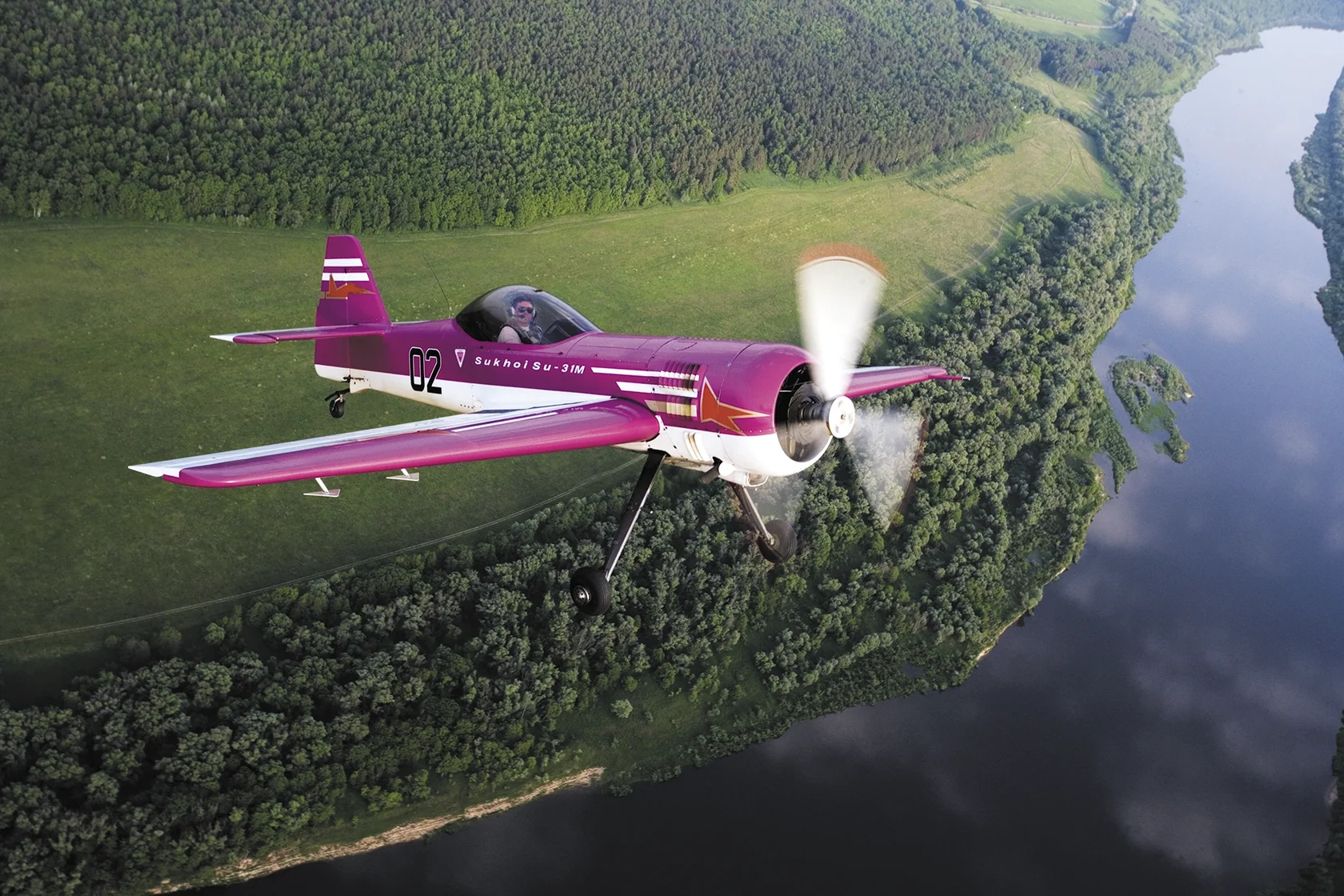
— In 1997. Since then, the national team has had a single shared aircraft — and that one is German-made, a Walter Extra (Extra Aircraft, Germany). Yet once, seventy-five per cent of all foreign competitors at world championships flew our Su aircraft. Ask any aerobatic pilot anywhere: which aircraft is the best? They will name the Sukhoi OKB machines.
— So aerobatic sport places a person in conditions that simply cannot be replicated in ordinary aviation?
— You see, aerobatic pilots process flight information at a far greater rate than pilots in any other discipline. We fly visually. The g-forces constantly alternate — positive, negative, positive. Information is processed instantaneously. Time is minimal — our working altitude band is from one hundred to one thousand metres.
Imagine: the altitude is five hundred metres, you are flying vertically downward, pull-out speed is around four hundred kilometres per hour. We pull out at roughly one hundred and fifty to two hundred metres. Try reaching four hundred in a car.
And nine g on the pull-out. The reflexes and reactions we develop are simply not achievable anywhere in normal aviation work.
— And those skills go on to save lives?
— Precisely. That goes back to the question of whether the sport is necessary. Flight safety is one of the strongest arguments in its favour.
Tu‑154 in the Taiga, Krikalev and Savitskaya
— Do you remember the incident when a Tu‑154 landed in the taiga on an abandoned airstrip after virtually all its systems had failed?
— The navigator and aircraft commander were both sport aviators. They came into the profession through our sport. They had not learned to fly on simulators. They had a proper school behind them — and that is why seventy-two lives, plus their own, were saved. (This refers to the 2010 Izhma emergency landing, when a Tu‑154 with total electrical failure was guided to an abandoned airfield in the Komi Republic by its experienced crew.)
In general, everyone who flew at a high level with us and then went on to mainstream aviation — civilian or military — distinguished themselves superbly. In exceptional situations where you have to think fast.
— That is the safety argument. What else does the sport give the state?
— Look at the people who came through it. Name a single national team in any sport that produced two twice-decorated Heroes. You cannot? Neither can I.
But ours produced Sergei Krikalev and Svetlana Savitskaya. Both cosmonauts, both twice Heroes of the Soviet Union. (Sergei Krikalev: cosmonaut, twice Hero of the Soviet Union, holds the world record for cumulative time in space. Svetlana Savitskaya: cosmonaut, twice Hero of the Soviet Union, the first woman to perform a spacewalk.) Both came through our national team before moving into the cosmonaut programme. On top of that, there are four more Heroes of Russia and Heroes of the Soviet Union — all test pilots. Nine Honoured Test Pilots of Russia have come from our national team alone, not from the sport as a whole.
Can you think of any other sport that contributes to the country in that way? These days, incidentally, even pole dancing is recognised as a sport here.
An American Lesson: Aerobatics for UAV Operators
— Does modern technology not make all of this obsolete? Everything is moving toward unmanned systems now.
— You know, in the nineties I did a great deal of flying in America. We were selling Su‑26s there — we had a dealer, and after each sale we provided training; I taught American pilots. One day I noticed a group had come from the Air Force Academy, they were flying aerobatic gliders and small aerobatic aircraft. The flying was not very good. I asked: what are they doing? The answer was: they are from our course for so-called 'ground pilots' — UAV (Unmanned Aerial Vehicle) operators.
Do you see? They were being given aerobatic skills specifically so that they could control drones while understanding what is happening in the air. Because without that understanding, a UAV operator is not a pilot — just someone with a joystick.
So aerobatic sport serves defence purposes here too.
— Indeed — an important point.
— And besides, we had fellows come into the national team who served in the VVS (Voyenno-Vozdushnye Sily — Russian Air Force). They were candidates for the team, and competing — sometimes unofficially. They all became exceptional pilots and developed a whole body of theory and practice on the use of aerobatic techniques for military purposes. And there is Yevgeny Frolov — a product of our national team. A test pilot, Hero of Russia. He is now at the controls of Sukhoi's large heavy combat drone. Incidentally, it was Frolov who took the Su‑26 on its first flight.
— And that was also an unusual story?
— Yes, a unique moment too. When the Su‑26 was completed, Zhenya had just graduated from the test pilots' school and held a Class 5 rating — the lowest one. A first flight requires Class 2 or above. Simonov and Kondratyev managed to convince the ministry that Frolov was an Honoured Master of Sport and held a Class 1 DOSAAF pilot rating — and that he should be trusted with it. And he did indeed take the aircraft up.
A couple of weeks later a second airframe arrived. A highly decorated Hero of the Soviet Union test pilot flew in to take it up. On the first flight he wrote it off — he could not handle it. A different type, a different set of demands. That can be declassified now.
Flying Clubs: Two Thousand Once, Now Almost Nothing
— And the fourth argument — mass participation?
— When aviation was a mass sport in the Soviet Union, there were around one hundred and fifty flying clubs (aero clubs). Each one recruited about fifty people a year. Twenty to twenty-five would complete the programme. That meant roughly two thousand people graduating each year — people who could fly. And they had all come of their own accord, on their own initiative.
— And now the situation with flying clubs is dire.
— Today there is a shortage of pilots in civil aviation and in military aviation. The logic is simple: flying clubs meant training aircraft; training aircraft meant instructors. Now my phone never stops ringing: ‘Help us find a good instructor.' There are almost none left.
The top-class members of the national team are all at least fifty. How is this problem to be solved? Industry and legislation both need addressing. We did fly before. The whole world flies — why can we not?
Do We Need a New Su‑26?
— A painful question. Can the Su‑31 — the developed version of the Su‑26 — be revived? Or do we need an entirely new aircraft?
— There is no point reviving it. The aircraft was designed forty years ago. In the meantime, materials science has advanced so far that current examples are built on entirely different principles.
Attempts have been made. There is a thoroughly developed project — Andrei Gusev produced it. A good one. But there is no funding to implement it. The industry as a whole is developing rapidly right now, and we could give it a powerful boost — just as we did with the Su‑26.
— When was the last production aircraft built?
— In 1997. Since then, the national team has had a single shared aircraft — and that one is German-made, a Walter Extra (Extra Aircraft, Germany). Yet once, seventy-five per cent of all foreign competitors at world championships flew our Su aircraft. Ask any aerobatic pilot anywhere: which aircraft is the best? They will name the Sukhoi OKB machines.
‘Roads Lead from Nowhere to Nowhere'
— One last thing. A vast country, poor roads, enormous distances. Aviation is surely critical to territorial connectivity.
— Look at our open spaces. How much of that territory exists without aviation? We have two famous afflictions — fools and roads. And the fools do not understand that ten kilometres of road built somewhere in the back of beyond lead from nowhere to nowhere. But one single kilometre of runway connects you to the whole world.
That is the formula for our country.
It used to be that way. Across central Russia and beyond the Urals, small settlements had simple strips. A three-by-four-metre hut, one person inside — ticket clerk and controller in one. A windsock on a pole showing the surface wind. And everything worked. Aircraft flew to places unreachable by road or on foot. Because people needed it.
— And now they are closing sixty aerodromes at a stroke.
— A law was passed requiring small aerodromes to be equipped to the standard of Domodedovo (Moscow's major international airport): a three-kilometre perimeter fence, a dedicated air traffic controller, controllers on three shifts, security scanners, medical personnel. The cost of bringing a strip up to this standard is fifty million roubles and upward. It was delayed by a year — but sixty airports closed in the meantime, the very ones that were most needed. The locals say, ‘Terrorists are not going to fly to our backwater.'
Yet how valuable it would be if every town of thirty to fifty thousand people had a small strip — a grass runway eight hundred to a thousand metres long — so that one could fly in and fly out. Even just to the nearest large airport, to continue from there.
In the United States there are seventy-eight aircraft per 100,000 people. In Russia — three.
‘Defying Everyone Who Wishes Otherwise'
— Victor Valentinovich, after everything you have said — are you an optimist?
— I suppose all of us who are obsessed with the sky are optimists. How could we be otherwise? We believe that aircraft will be built, that general aviation in this country will come back to life, and that the state will give aerobatic sport the attention it deserves.
Amid all these setbacks and difficult conversations, I hear the sound of an engine at the aerodrome. Another pilot is taking off to fly a sequence of aerobatic figures — a full freestyle programme.
There will be a Russian championship. All these difficulties will pass — and there will be a world championship too. We will prepare for it regardless. Defying everyone who wishes otherwise.
— One last thing. A vast country, poor roads, enormous distances. Aviation is surely critical to territorial connectivity.
— Look at our open spaces. How much of that territory exists without aviation? We have two famous afflictions — fools and roads. And the fools do not understand that ten kilometres of road built somewhere in the back of beyond lead from nowhere to nowhere. But one single kilometre of runway connects you to the whole world.
That is the formula for our country.
It used to be that way. Across central Russia and beyond the Urals, small settlements had simple strips. A three-by-four-metre hut, one person inside — ticket clerk and controller in one. A windsock on a pole showing the surface wind. And everything worked. Aircraft flew to places unreachable by road or on foot. Because people needed it.
— And now they are closing sixty aerodromes at a stroke.
— A law was passed requiring small aerodromes to be equipped to the standard of Domodedovo (Moscow's major international airport): a three-kilometre perimeter fence, a dedicated air traffic controller, controllers on three shifts, security scanners, medical personnel. The cost of bringing a strip up to this standard is fifty million roubles and upward. It was delayed by a year — but sixty airports closed in the meantime, the very ones that were most needed. The locals say, ‘Terrorists are not going to fly to our backwater.'
Yet how valuable it would be if every town of thirty to fifty thousand people had a small strip — a grass runway eight hundred to a thousand metres long — so that one could fly in and fly out. Even just to the nearest large airport, to continue from there.
In the United States there are seventy-eight aircraft per 100,000 people. In Russia — three.
‘Defying Everyone Who Wishes Otherwise'
— Victor Valentinovich, after everything you have said — are you an optimist?
— I suppose all of us who are obsessed with the sky are optimists. How could we be otherwise? We believe that aircraft will be built, that general aviation in this country will come back to life, and that the state will give aerobatic sport the attention it deserves.
Amid all these setbacks and difficult conversations, I hear the sound of an engine at the aerodrome. Another pilot is taking off to fly a sequence of aerobatic figures — a full freestyle programme.
There will be a Russian championship. All these difficulties will pass — and there will be a world championship too. We will prepare for it regardless. Defying everyone who wishes otherwise.
The interview was conducted by Andrei Yakovlevich Reznichenko, Science Editor at the TASS news agency