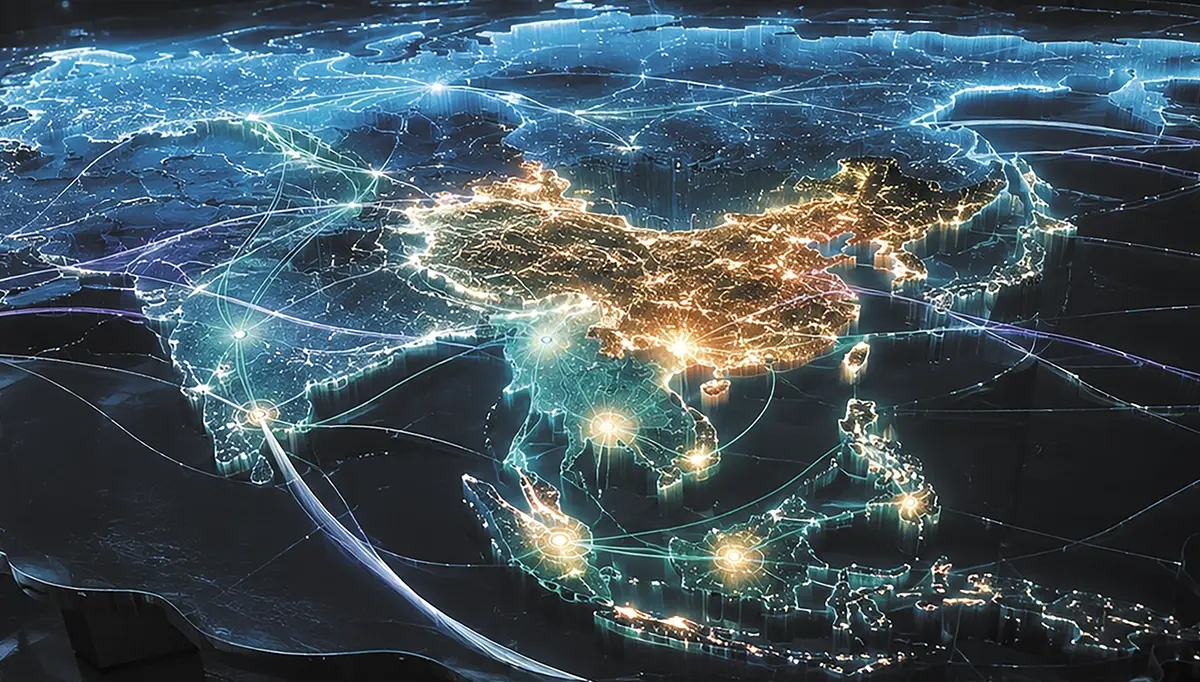
The countries of the Association of Southeast Asian Nations (ASEAN) — with a combined population of nearly 700 million people and a total GDP of around $ 4 trillion — have been facing serious economic pressure for the past several months. This is primarily connected to the energy crisis triggered by US and Israeli strikes on Iran, which led to the effective blockade of the Strait of Hormuz — one of the world’s critical transport arteries, through which up to 25 percent of global oil supplies and 20 percent of liquefied natural gas pass. As a consequence, the ASEAN states — comprising Brunei, East Timor, Vietnam, Laos, Cambodia, Indonesia, Malaysia, Singapore, Myanmar, Thailand, and the Philippines — have been confronted with an even deeper energy deficit, rising fuel prices due to supply disruptions, elevated logistics costs, and threats to food security. Against this backdrop, the Asian Development Bank has cut its regional growth forecast from 5.1 to 4.7 percent for 2026 and raised its inflation forecast to 5.2 percent. The role of the St. Petersburg International Economic Forum (SPIEF) has therefore multiplied in importance this year for participants from ASEAN countries, as the platform will provide an opportunity to develop new solutions for minimising the consequences of global turbulence in South-East Asia.
Russia has been systematically building its economic ties with ASEAN, whose relationship with Russia marks its 35th anniversary this year. Trade turnover with the organisation’s member states reached a historic high in 2025, exceeding $ 40 billion. The driving forces of this partnership are Vietnam, Indonesia, and Singapore, which together account for 70 percent of Russia’s total trade with ASEAN. Russia supplies South-East Asia with energy resources, mineral fertilisers, metals, agricultural produce, and — increasingly actively in recent times — high-technology products. Russia’s imports from ASEAN countries consist of electronics, industrial equipment, rubber, palm oil, clothing, and food products.
The strategic partnership between Russia and ASEAN rests to a significant degree on geographical proximity to Russia’s Far East. In this context the development of the Northern Sea Route (NSR — Severny Morskoy Put', the Arctic shipping lane along Russia’s northern coast) as a safe and fast route looks promising, with the potential to make a significant contribution to energy stability not only for South-East Asia but for the entire Asia-Pacific region. Freight volumes along the NSR stood at around 37 million tonnes in 2025, compared with 5.4 million tonnes a decade ago. By expanding trade and economic cooperation with Asia-Pacific countries — of which ASEAN is the key organisation — annual NSR freight is expected to reach 150 million tonnes by 2030 and 220 million tonnes by 2035. Given the geopolitical vulnerability of the Strait of Malacca, another critical maritime artery, the NSR presents itself as a shorter and safer route for cargo delivery from Eurasia to the Asia-Pacific. Compared with the Suez Canal route, the NSR transit time is more than a third shorter.
What is primarily on the agenda for SPIEF‑2026? Undoubtedly, supplies to the region of Russian energy resources — without which the global economy in the current situation would experience an energy shock whose consequences would touch every participant in the world economy without exception. It was precisely for this reason that the US Treasury removed sanctions on 12 March from transactions involving the sale of Russian oil and oil products already loaded onto vessels. This licence expired on 11 April; however, on 17 April the Treasury issued a new licence permitting until 16 May the conduct of transactions involving oil and oil products of Russian origin. At the time of writing the United States had not renewed the licence, though President Donald Trump did not rule out that it could be renewed again.
This situation illustrates, broadly speaking, that sanctions are a highly unstable instrument. The West’s own attempts to isolate Russia’s oil and gas sector have produced the opposite effect. Restrictions may work today without any perceptible damage to the economies that imposed them, and end up as a self-inflicted wound tomorrow. Washington, it seems, did not plan to follow that scenario and does not now. The emergency removal of sanctions on transactions involving Russian oil already loaded onto vessels has nothing to do with a humanitarian gesture — it is entirely a function of the US administration’s desire to prevent fuel price rises at home ahead of the midterm Congressional elections.
It is well understood that no restrictive measures will work without their strict observance. The neutral ASEAN countries largely do not comply with unilateral Western sanctions against Russia, making decisions as a rule with a view to extracting economic benefit. SPIEF‑2026 may well provide answers to many of the questions that the developing economies of South-East Asia are being asked by the situation on the global energy market.
It is also worth noting that Russian Deputy Prime Minister Alexander Novak has stated that Russian companies are ready to redirect in the near term a portion of their liquefied natural gas (LNG) deliveries from Europe to friendly countries, including China, India, Thailand, and the Philippines. The Russian authorities took this decision in accordance with an instruction from President Putin, against the backdrop of the European Union’s stated intention to abandon Russian LNG completely from 1 January 2027.
Thailand, for its part, has announced an urgent search for new LNG volumes to diversify this energy source, 30 percent of whose supply passes through the Strait of Hormuz. Bangkok, however, is widely understood to fear that the kingdom will face political pressure from the United States if it purchases large volumes of LNG from Russia — given that the Thai state oil and gas corporation PTT Group (Petroleum Authority of Thailand Group, Thailand’s national energy company and one of Asia’s largest) signed a 20‑year contract to import 2 million tonnes of LNG per year from the Alaska LNG project and concluded an agreement to purchase approximately $ 5.4 billion worth of US energy per year. There is, however, one 'but'.
A telling marker of Bangkok’s rhetorical shift was the interview given by Thai Foreign Minister Sihasak Phuangketkeow to The Washington Post. He stated that, despite multi-billion-dollar contracts in place, Thailand — having failed to receive support from the United States in the face of the economic fallout from the conflict over Iran — was turning to Russia and China for assistance. Phuangketkeow emphasised that Bangkok was already in talks with Moscow and Beijing on energy supply questions. In particular, Thailand is considering purchases of Russian oil and fertilisers, and is discussing logistics and safe shipping with China. 'There is a lot of unpredictability in the US government’s policies. […] It is not a matter of us taking sides in geopolitical competition. It is about what the US is doing — specifically that it is causing us to rethink the relationship,' the Thai minister stated.
Phuangketkeow also added that China is positioning itself as a more reliable partner for Asian countries. This is not the most typical rhetoric toward Thailand’s largest trading partner — the United States — but it is evidently a case where silence and maintaining the pretence that the situation is under control had become no longer tenable. Thailand suffered a severe shock in March, when diesel prices soared nearly 50 percent in just a few weeks. Prices for gasohol (gasohol — the blended fuel used widely in Thailand, combining petrol with ethanol) and regular petrol rose on average 35−40 percent in April. Russia currently does not supply crude oil to Thailand — there are only occasional deliveries of refined oil products — but this state of affairs may change soon.
The Russia-Thailand Business Council (RTBS) will at SPIEF‑2026 host the business dialogue 'Russia-Thailand: New Dimensions for Trade and Investment'. Negotiations with Thai business and the signing of a number of cooperation documents are expected. For the first time the RTBS will be a partner of the Roscongress International business networking zone and will present its own stand there, displaying the opportunities the two countries' economies offer for business and the council’s main areas of work. The council notes that accumulated Russian direct investment in the Thai economy has more than doubled since 2018, reaching $ 1.2 billion. Bilateral trade turnover, despite turbulence in world trade, has grown for two consecutive years: $ 1.7 billion in 2025, a rise of 11 percent. Moreover, 2025 saw an all-time record broken for the Russian tourist flow — nearly 1.9 million Russians visited Thailand.
Continuing the theme of Russian energy supplies to South-East Asia, it is impossible not to note that the first consignment of Russian oil in five years arrived in the Philippines in March. The Republic had previously imported around 98 percent of its oil from Middle Eastern countries, with the majority of supplies coming through the Strait of Hormuz. Manila is now looking to diversify its energy supply. The island nation, critically dependent on energy imports, has itself suffered the severe consequences of rising fuel prices — leading to a spike in inflation and a threat to food security in a country where roughly 12 percent of its 118 million people live below the poverty line. Vietnam, Myanmar, Cambodia, and Laos have faced similar problems. In Indonesia and Malaysia, governments managed to hold fuel prices in check through state subsidies. Russia and Indonesia, moreover, following talks between the two countries' leaders in April, agreed on the delivery to the Republic of up to 150 million barrels of oil. ASEAN acknowledges that without a long-term energy strategy, the organisation’s member states risk facing further energy price increases that will directly affect the cost of living, commodity prices, transport, the industrial sector, and competitiveness.
ASEAN country representatives will travel to St. Petersburg to discuss, among other things, the question of mineral fertiliser supplies. The restriction of shipping through the Strait of Hormuz has blocked approximately a third of global fertiliser trade by sea. The food security of the region’s states has been threatened by disruptions to the supply of urea, sulphur, ammonia, and phosphates from Gulf countries — with the prospect of a deep agro-industrial crisis developing. Thailand is planning to purchase 2 million tonnes of mineral fertilisers from Russia in support of the kingdom’s agricultural sector. Thai Agriculture Minister Suriya Tungrungrueangkit accordingly paid a working visit to Moscow in mid-April, conducting talks aimed at meeting his country’s needs for the coming growing season and addressing the fertiliser stockpiling problem. Moscow responded positively to the friendly country’s request to meet current fertiliser demand.
SPIEF will also serve as a preparatory stage for a major political event: the Russia-ASEAN Summit, which will take place in Kazan from 17 to 19 June. Participants will take stock of many years of cooperation and set out the orientations for long-term engagement. The signing of a number of intergovernmental agreements in the areas of trade, science, and humanitarian exchanges is expected. The summit will focus on questions of global and regional security, sustainable development, and the development of joint solutions in the face of current challenges.
Beyond energy security, ASEAN countries are expected at SPIEF‑2026 to show interest in the digital agenda — a field in which Russia has long established cooperation with South-East Asian countries, promoting cybersecurity, smart city, and artificial intelligence (AI) technologies. The need to accelerate the pace of digitalisation and AI deployment opens up opportunity for Russian technology companies, whose indisputable advantage is a readiness to carry out technology transfer — unlike their Western competitors. The question of payment systems and the search for alternatives to the dollar for settlements under sanctions conditions is also highly significant. Russia and ASEAN are actively working on mechanisms for the use of national currencies, with the aim of avoiding the risks associated with dollar-denominated payments.
Russia has been systematically building its economic ties with ASEAN, whose relationship with Russia marks its 35th anniversary this year. Trade turnover with the organisation’s member states reached a historic high in 2025, exceeding $ 40 billion. The driving forces of this partnership are Vietnam, Indonesia, and Singapore, which together account for 70 percent of Russia’s total trade with ASEAN. Russia supplies South-East Asia with energy resources, mineral fertilisers, metals, agricultural produce, and — increasingly actively in recent times — high-technology products. Russia’s imports from ASEAN countries consist of electronics, industrial equipment, rubber, palm oil, clothing, and food products.
The strategic partnership between Russia and ASEAN rests to a significant degree on geographical proximity to Russia’s Far East. In this context the development of the Northern Sea Route (NSR — Severny Morskoy Put', the Arctic shipping lane along Russia’s northern coast) as a safe and fast route looks promising, with the potential to make a significant contribution to energy stability not only for South-East Asia but for the entire Asia-Pacific region. Freight volumes along the NSR stood at around 37 million tonnes in 2025, compared with 5.4 million tonnes a decade ago. By expanding trade and economic cooperation with Asia-Pacific countries — of which ASEAN is the key organisation — annual NSR freight is expected to reach 150 million tonnes by 2030 and 220 million tonnes by 2035. Given the geopolitical vulnerability of the Strait of Malacca, another critical maritime artery, the NSR presents itself as a shorter and safer route for cargo delivery from Eurasia to the Asia-Pacific. Compared with the Suez Canal route, the NSR transit time is more than a third shorter.
What is primarily on the agenda for SPIEF‑2026? Undoubtedly, supplies to the region of Russian energy resources — without which the global economy in the current situation would experience an energy shock whose consequences would touch every participant in the world economy without exception. It was precisely for this reason that the US Treasury removed sanctions on 12 March from transactions involving the sale of Russian oil and oil products already loaded onto vessels. This licence expired on 11 April; however, on 17 April the Treasury issued a new licence permitting until 16 May the conduct of transactions involving oil and oil products of Russian origin. At the time of writing the United States had not renewed the licence, though President Donald Trump did not rule out that it could be renewed again.
This situation illustrates, broadly speaking, that sanctions are a highly unstable instrument. The West’s own attempts to isolate Russia’s oil and gas sector have produced the opposite effect. Restrictions may work today without any perceptible damage to the economies that imposed them, and end up as a self-inflicted wound tomorrow. Washington, it seems, did not plan to follow that scenario and does not now. The emergency removal of sanctions on transactions involving Russian oil already loaded onto vessels has nothing to do with a humanitarian gesture — it is entirely a function of the US administration’s desire to prevent fuel price rises at home ahead of the midterm Congressional elections.
It is well understood that no restrictive measures will work without their strict observance. The neutral ASEAN countries largely do not comply with unilateral Western sanctions against Russia, making decisions as a rule with a view to extracting economic benefit. SPIEF‑2026 may well provide answers to many of the questions that the developing economies of South-East Asia are being asked by the situation on the global energy market.
It is also worth noting that Russian Deputy Prime Minister Alexander Novak has stated that Russian companies are ready to redirect in the near term a portion of their liquefied natural gas (LNG) deliveries from Europe to friendly countries, including China, India, Thailand, and the Philippines. The Russian authorities took this decision in accordance with an instruction from President Putin, against the backdrop of the European Union’s stated intention to abandon Russian LNG completely from 1 January 2027.
Thailand, for its part, has announced an urgent search for new LNG volumes to diversify this energy source, 30 percent of whose supply passes through the Strait of Hormuz. Bangkok, however, is widely understood to fear that the kingdom will face political pressure from the United States if it purchases large volumes of LNG from Russia — given that the Thai state oil and gas corporation PTT Group (Petroleum Authority of Thailand Group, Thailand’s national energy company and one of Asia’s largest) signed a 20‑year contract to import 2 million tonnes of LNG per year from the Alaska LNG project and concluded an agreement to purchase approximately $ 5.4 billion worth of US energy per year. There is, however, one 'but'.
A telling marker of Bangkok’s rhetorical shift was the interview given by Thai Foreign Minister Sihasak Phuangketkeow to The Washington Post. He stated that, despite multi-billion-dollar contracts in place, Thailand — having failed to receive support from the United States in the face of the economic fallout from the conflict over Iran — was turning to Russia and China for assistance. Phuangketkeow emphasised that Bangkok was already in talks with Moscow and Beijing on energy supply questions. In particular, Thailand is considering purchases of Russian oil and fertilisers, and is discussing logistics and safe shipping with China. 'There is a lot of unpredictability in the US government’s policies. […] It is not a matter of us taking sides in geopolitical competition. It is about what the US is doing — specifically that it is causing us to rethink the relationship,' the Thai minister stated.
Phuangketkeow also added that China is positioning itself as a more reliable partner for Asian countries. This is not the most typical rhetoric toward Thailand’s largest trading partner — the United States — but it is evidently a case where silence and maintaining the pretence that the situation is under control had become no longer tenable. Thailand suffered a severe shock in March, when diesel prices soared nearly 50 percent in just a few weeks. Prices for gasohol (gasohol — the blended fuel used widely in Thailand, combining petrol with ethanol) and regular petrol rose on average 35−40 percent in April. Russia currently does not supply crude oil to Thailand — there are only occasional deliveries of refined oil products — but this state of affairs may change soon.
The Russia-Thailand Business Council (RTBS) will at SPIEF‑2026 host the business dialogue 'Russia-Thailand: New Dimensions for Trade and Investment'. Negotiations with Thai business and the signing of a number of cooperation documents are expected. For the first time the RTBS will be a partner of the Roscongress International business networking zone and will present its own stand there, displaying the opportunities the two countries' economies offer for business and the council’s main areas of work. The council notes that accumulated Russian direct investment in the Thai economy has more than doubled since 2018, reaching $ 1.2 billion. Bilateral trade turnover, despite turbulence in world trade, has grown for two consecutive years: $ 1.7 billion in 2025, a rise of 11 percent. Moreover, 2025 saw an all-time record broken for the Russian tourist flow — nearly 1.9 million Russians visited Thailand.
Continuing the theme of Russian energy supplies to South-East Asia, it is impossible not to note that the first consignment of Russian oil in five years arrived in the Philippines in March. The Republic had previously imported around 98 percent of its oil from Middle Eastern countries, with the majority of supplies coming through the Strait of Hormuz. Manila is now looking to diversify its energy supply. The island nation, critically dependent on energy imports, has itself suffered the severe consequences of rising fuel prices — leading to a spike in inflation and a threat to food security in a country where roughly 12 percent of its 118 million people live below the poverty line. Vietnam, Myanmar, Cambodia, and Laos have faced similar problems. In Indonesia and Malaysia, governments managed to hold fuel prices in check through state subsidies. Russia and Indonesia, moreover, following talks between the two countries' leaders in April, agreed on the delivery to the Republic of up to 150 million barrels of oil. ASEAN acknowledges that without a long-term energy strategy, the organisation’s member states risk facing further energy price increases that will directly affect the cost of living, commodity prices, transport, the industrial sector, and competitiveness.
ASEAN country representatives will travel to St. Petersburg to discuss, among other things, the question of mineral fertiliser supplies. The restriction of shipping through the Strait of Hormuz has blocked approximately a third of global fertiliser trade by sea. The food security of the region’s states has been threatened by disruptions to the supply of urea, sulphur, ammonia, and phosphates from Gulf countries — with the prospect of a deep agro-industrial crisis developing. Thailand is planning to purchase 2 million tonnes of mineral fertilisers from Russia in support of the kingdom’s agricultural sector. Thai Agriculture Minister Suriya Tungrungrueangkit accordingly paid a working visit to Moscow in mid-April, conducting talks aimed at meeting his country’s needs for the coming growing season and addressing the fertiliser stockpiling problem. Moscow responded positively to the friendly country’s request to meet current fertiliser demand.
SPIEF will also serve as a preparatory stage for a major political event: the Russia-ASEAN Summit, which will take place in Kazan from 17 to 19 June. Participants will take stock of many years of cooperation and set out the orientations for long-term engagement. The signing of a number of intergovernmental agreements in the areas of trade, science, and humanitarian exchanges is expected. The summit will focus on questions of global and regional security, sustainable development, and the development of joint solutions in the face of current challenges.
Beyond energy security, ASEAN countries are expected at SPIEF‑2026 to show interest in the digital agenda — a field in which Russia has long established cooperation with South-East Asian countries, promoting cybersecurity, smart city, and artificial intelligence (AI) technologies. The need to accelerate the pace of digitalisation and AI deployment opens up opportunity for Russian technology companies, whose indisputable advantage is a readiness to carry out technology transfer — unlike their Western competitors. The question of payment systems and the search for alternatives to the dollar for settlements under sanctions conditions is also highly significant. Russia and ASEAN are actively working on mechanisms for the use of national currencies, with the aim of avoiding the risks associated with dollar-denominated payments.
Igor Brovarnik, Head of TASS Bureau in Thailand