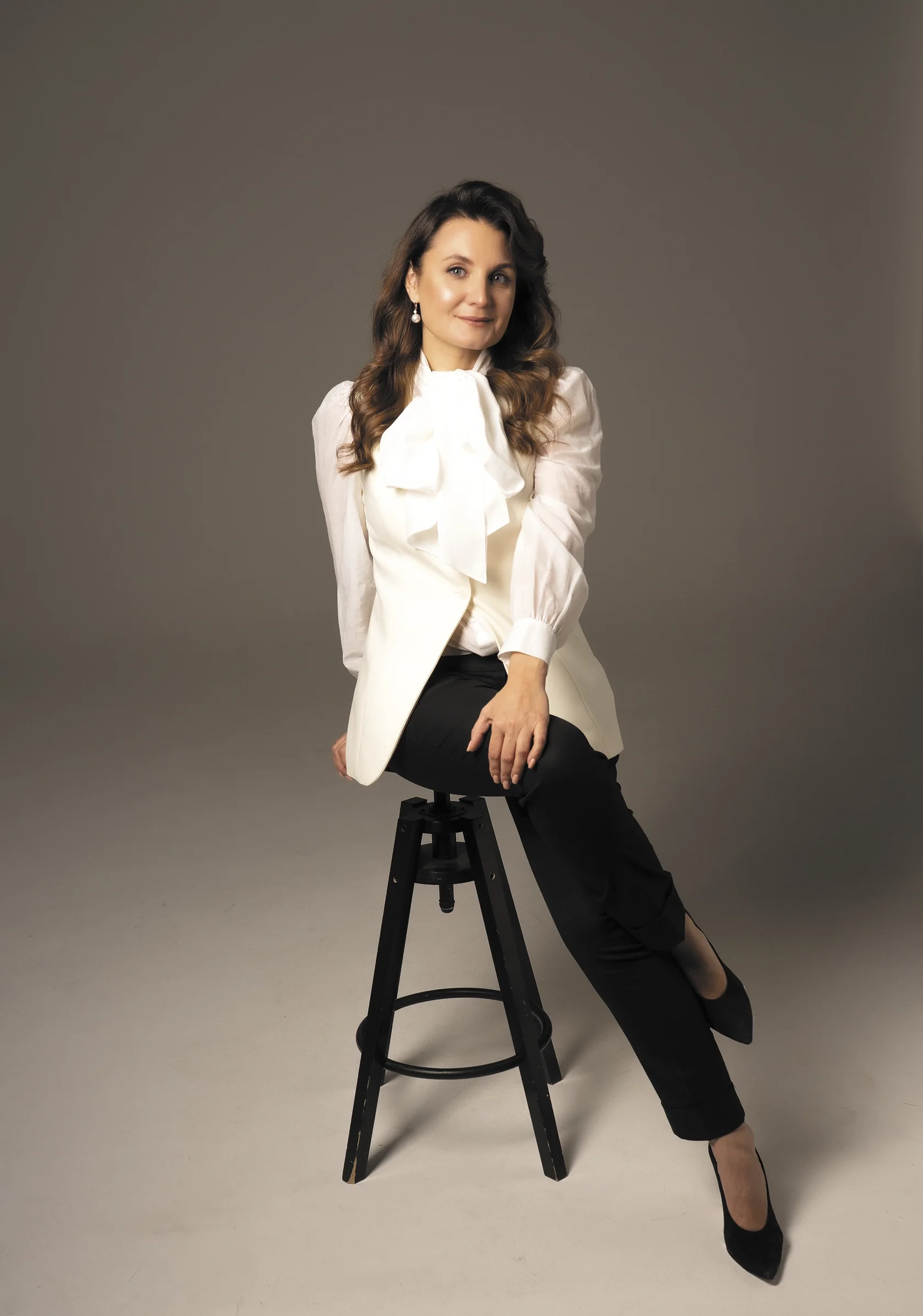
Larisa Pastukhova, President of the Sistema Charitable Foundation — on how to cultivate talent, why companies are moving from a people-centric to a family-centric approach, and what to do about the 'eternal conflict between generations'
'The main currency of the future is trust. Companies that learn to speak the language of young talent, to adopt a family-centred lens, and to make friends with AI will win the market. Because behind every project stands a Person'.
ON MISSION AND PEOPLE
— Mrs Pastukhova, the Sistema Foundation’s mission sounds grand: developing social and human capital in the regions. How do you translate that into the language of ordinary human stories?
— The Sistema Charitable Foundation was established in 2004 by Vladimir Yevtushenkov (founder of AFK Sistema, one of Russia’s largest diversified holding companies). The Foundation’s projects are built on a central idea: helping those who want to change themselves. At the heart of everything the Foundation does stands a Person — capital P. Not a report, not a KPI, but a specific schoolchild in Voronezh, a female student from a small town, or a young scientist from the Moscow region.
We have three charitable programmes. 'Lift v Budushcheye' ('Lift to the Future') focuses on talent support and the professional development of young people. 'Sistema v Regiony' ('Sistema into the Regions') delivers humanitarian and social projects and support for local communities. 'Sistema Dobrykh Del' ('Sistema of Good Deeds') provides support for children, the seriously ill, social institutions, cultural establishments, libraries, and more.
Working with people does not tolerate templates. It is impossible to follow a manual written once. Every year we effectively rebuild the projects from scratch: we analyse results, refine objectives, and assess social impact. Because society changes, people change — and so the instruments of support must change too.
Today the Foundation’s work represents a model of an ecosystem-based non-governmental institution for the development of social and human capital, drawing on the sectoral expertise of our industrial partners (more than 20 sectors of the economy, from agriculture to space) and our long-standing experience of working with scientific and educational organisations. The central figures in this model are the people — our beneficiaries from different regions of Russia.
— Mrs Pastukhova, the Sistema Foundation’s mission sounds grand: developing social and human capital in the regions. How do you translate that into the language of ordinary human stories?
— The Sistema Charitable Foundation was established in 2004 by Vladimir Yevtushenkov (founder of AFK Sistema, one of Russia’s largest diversified holding companies). The Foundation’s projects are built on a central idea: helping those who want to change themselves. At the heart of everything the Foundation does stands a Person — capital P. Not a report, not a KPI, but a specific schoolchild in Voronezh, a female student from a small town, or a young scientist from the Moscow region.
We have three charitable programmes. 'Lift v Budushcheye' ('Lift to the Future') focuses on talent support and the professional development of young people. 'Sistema v Regiony' ('Sistema into the Regions') delivers humanitarian and social projects and support for local communities. 'Sistema Dobrykh Del' ('Sistema of Good Deeds') provides support for children, the seriously ill, social institutions, cultural establishments, libraries, and more.
Working with people does not tolerate templates. It is impossible to follow a manual written once. Every year we effectively rebuild the projects from scratch: we analyse results, refine objectives, and assess social impact. Because society changes, people change — and so the instruments of support must change too.
Today the Foundation’s work represents a model of an ecosystem-based non-governmental institution for the development of social and human capital, drawing on the sectoral expertise of our industrial partners (more than 20 sectors of the economy, from agriculture to space) and our long-standing experience of working with scientific and educational organisations. The central figures in this model are the people — our beneficiaries from different regions of Russia.
ON TALENT AND THE PERSONNEL SHORTAGE
— Today everyone is talking about the personnel shortage. What is in shorter supply — talent or the tools to work with it?
— Russia is extraordinarily rich in talent — that is the truth. But the tools for working with talent become outdated at essentially the same pace as the world around us is changing.
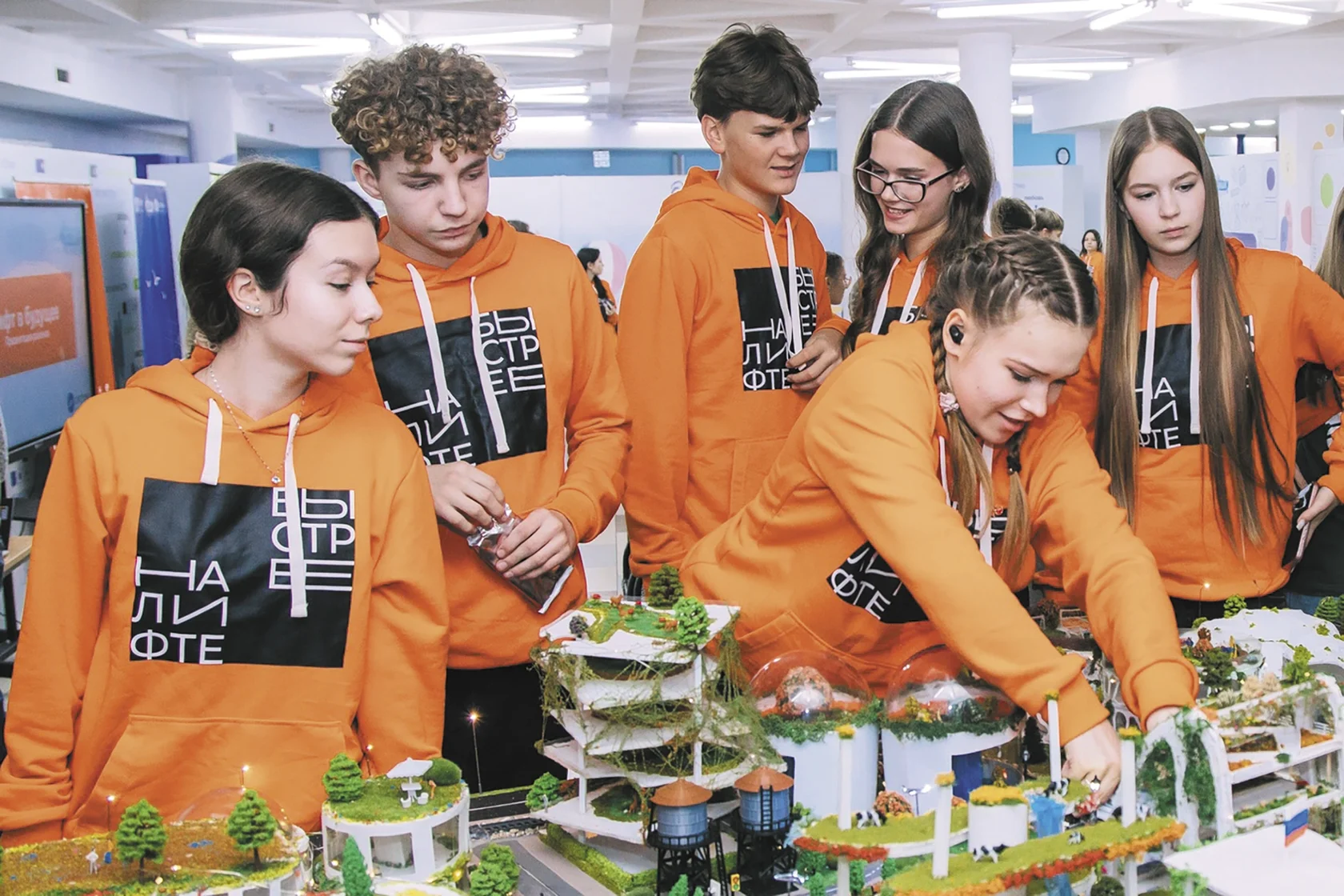
Here is a figure. According to our research, more than 70 percent of young people choose their profession while still in school. That means while school children are solving quadratic equations, they already need to imagine what the world of a doctor or an engineer will look like in 2035. A serious challenge, isn’t it? Which means industries and technologies must come into schools and be genuinely useful and accessible to teachers, parents, and the children themselves.
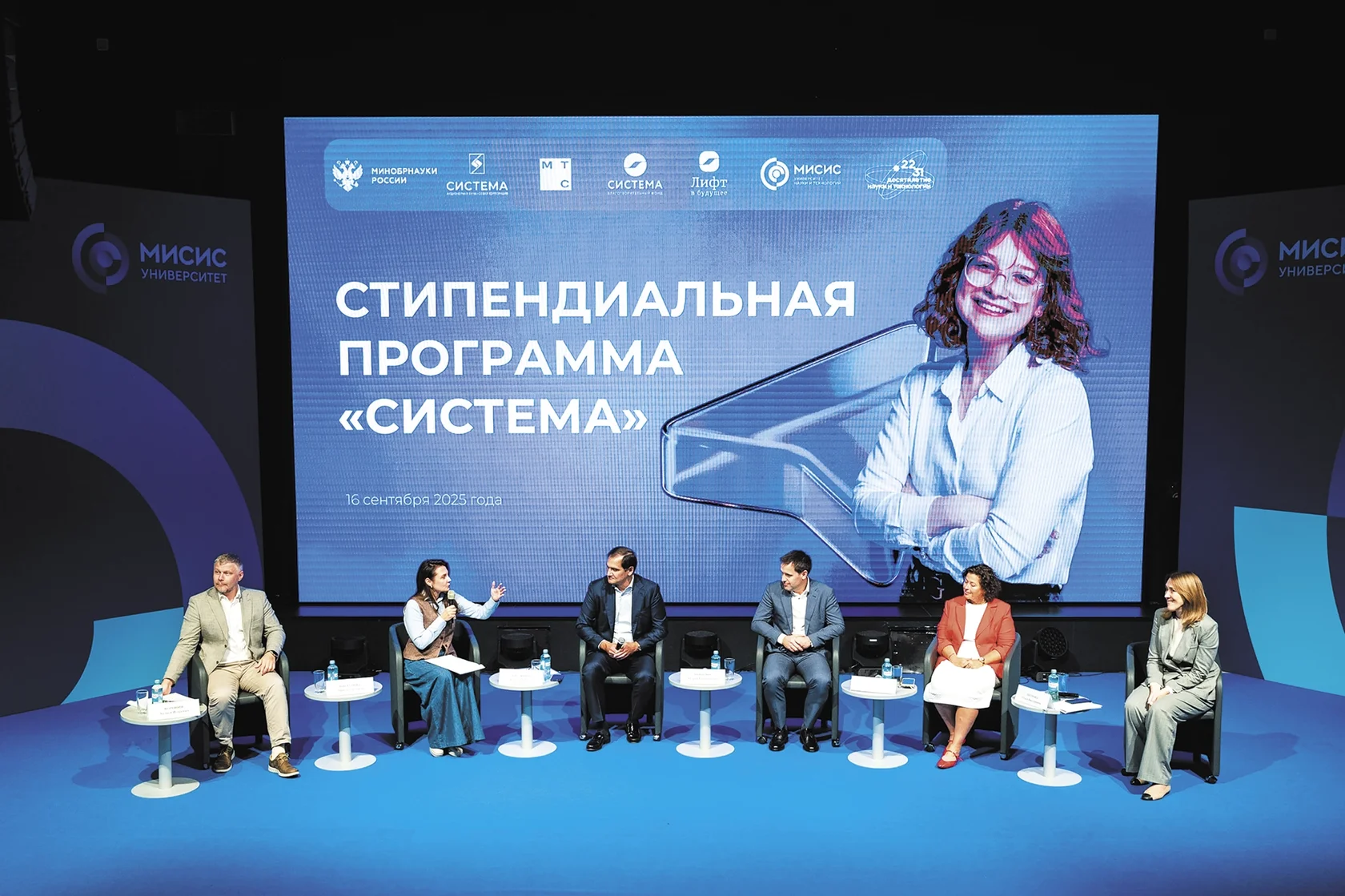
This is precisely why the Foundation creates unique content — Open Lessons on the technologies and professions of the future that organically become part of career guidance (proforientatsiya — the structured system of career counselling and vocational orientation built into Russian education) programmes in schools; interdisciplinary residential courses for school children where they can immerse themselves in the present and future of the industries our country’s economy needs; and it develops a scholarship programme, internship and career visit programmes, and for young scientists — a system of research competitions and scientific summer schools.
Today more than 250,000 specialists work in AFK Sistema companies. Each of them carries enormous professional and personal experience. Many become intellectual volunteers of the Foundation: they visit schools and universities, help with career guidance, and act as mentors.
It is through such sharing of experience that a real connection across generations is formed. And this is no longer just about education — it is about the resilience of society.
— Today everyone is talking about the personnel shortage. What is in shorter supply — talent or the tools to work with it?
— Russia is extraordinarily rich in talent — that is the truth. But the tools for working with talent become outdated at essentially the same pace as the world around us is changing.
Here is a figure. According to our research, more than 70 percent of young people choose their profession while still in school. That means while school children are solving quadratic equations, they already need to imagine what the world of a doctor or an engineer will look like in 2035. A serious challenge, isn’t it? Which means industries and technologies must come into schools and be genuinely useful and accessible to teachers, parents, and the children themselves.
This is precisely why the Foundation creates unique content — Open Lessons on the technologies and professions of the future that organically become part of career guidance (proforientatsiya — the structured system of career counselling and vocational orientation built into Russian education) programmes in schools; interdisciplinary residential courses for school children where they can immerse themselves in the present and future of the industries our country’s economy needs; and it develops a scholarship programme, internship and career visit programmes, and for young scientists — a system of research competitions and scientific summer schools.
Today more than 250,000 specialists work in AFK Sistema companies. Each of them carries enormous professional and personal experience. Many become intellectual volunteers of the Foundation: they visit schools and universities, help with career guidance, and act as mentors.
It is through such sharing of experience that a real connection across generations is formed. And this is no longer just about education — it is about the resilience of society.
ON THE 'ILLUSORY' WINDOW OF OPPORTUNITY FOR YOUNG PEOPLE
— Many people think the personnel shortage has opened all the doors for young people. Is that the case?
— The situation is actually more complex than it seems.
It is not just a shortage of people — it is a shortage of specialists with the right skills and experience. The personnel deficit, which has not disappeared to this day (the country’s unemployment rate stands at 2.2 percent), has transformed from quantitative to structural.
Companies have become less willing to hire people who need time to grow into a role, and much more focused on employees who can hit the ground running.
This is reflected in young people’s experience too. According to our research, 71 percent of young people today consider their career opportunities to be limited — a figure that was significantly lower just a year ago.
The demands placed on young specialists are growing: quality education, practical experience, narrow specialist competencies. This makes the conscious choice of profession and strong internal motivation particularly important right now.
But the role of the employer is also changing. If a ready-made specialist cannot be found in the market, companies have to participate in training them: building relationships with schools, colleges, universities, and research institutes, and creating internship and mentoring programmes.
And the second important task is retaining employees. Because today’s specialist expects not only a salary but also a clear development trajectory, respect, and the opportunity to grow within the company.
— Many people think the personnel shortage has opened all the doors for young people. Is that the case?
— The situation is actually more complex than it seems.
It is not just a shortage of people — it is a shortage of specialists with the right skills and experience. The personnel deficit, which has not disappeared to this day (the country’s unemployment rate stands at 2.2 percent), has transformed from quantitative to structural.
Companies have become less willing to hire people who need time to grow into a role, and much more focused on employees who can hit the ground running.
This is reflected in young people’s experience too. According to our research, 71 percent of young people today consider their career opportunities to be limited — a figure that was significantly lower just a year ago.
The demands placed on young specialists are growing: quality education, practical experience, narrow specialist competencies. This makes the conscious choice of profession and strong internal motivation particularly important right now.
But the role of the employer is also changing. If a ready-made specialist cannot be found in the market, companies have to participate in training them: building relationships with schools, colleges, universities, and research institutes, and creating internship and mentoring programmes.
And the second important task is retaining employees. Because today’s specialist expects not only a salary but also a clear development trajectory, respect, and the opportunity to grow within the company.
ON YOUNG PEOPLE AND THE GENERATIONAL CONFLICT
— Young specialists today often have high expectations and demanding requirements of employers. Is this a generational conflict or the new normal?
— Both. But here is an interesting thing: the 'excessive expectations' of young people may end up shaping new working conditions for everyone.
Let us be candid: young people want honesty. They are straightforward. They do not tolerate falsehood. For example, our research shows that when choosing an employer today, young people primarily focus on their interest in future tasks (73 percent) and career growth opportunities (68 percent). Salary ranks only third (65 percent). A pleasant team (43 percent), opportunities for training and skill enhancement (35 percent), and company values (18 percent) are also important.
The main currency for employers in their relationship with young specialists is no longer money, but attention — to their work, comfort, and development trajectory within the company. Earning a young employee’s trust is indeed becoming harder. We still often hear about a reluctance to work with the younger generation — the eternal problem of fathers and sons (the phrase alludes to Ivan Turgenev’s 1862 novel 'Fathers and sons', which became the defining cultural expression of the generational divide in Russian society). There are only two solutions: continue to deny the inevitable or begin to accept these changes.
— Young specialists today often have high expectations and demanding requirements of employers. Is this a generational conflict or the new normal?
— Both. But here is an interesting thing: the 'excessive expectations' of young people may end up shaping new working conditions for everyone.
Let us be candid: young people want honesty. They are straightforward. They do not tolerate falsehood. For example, our research shows that when choosing an employer today, young people primarily focus on their interest in future tasks (73 percent) and career growth opportunities (68 percent). Salary ranks only third (65 percent). A pleasant team (43 percent), opportunities for training and skill enhancement (35 percent), and company values (18 percent) are also important.
The main currency for employers in their relationship with young specialists is no longer money, but attention — to their work, comfort, and development trajectory within the company. Earning a young employee’s trust is indeed becoming harder. We still often hear about a reluctance to work with the younger generation — the eternal problem of fathers and sons (the phrase alludes to Ivan Turgenev’s 1862 novel 'Fathers and sons', which became the defining cultural expression of the generational divide in Russian society). There are only two solutions: continue to deny the inevitable or begin to accept these changes.
ON WORK CULTURE AND MEANINGS
— So work culture in Russia is changing?
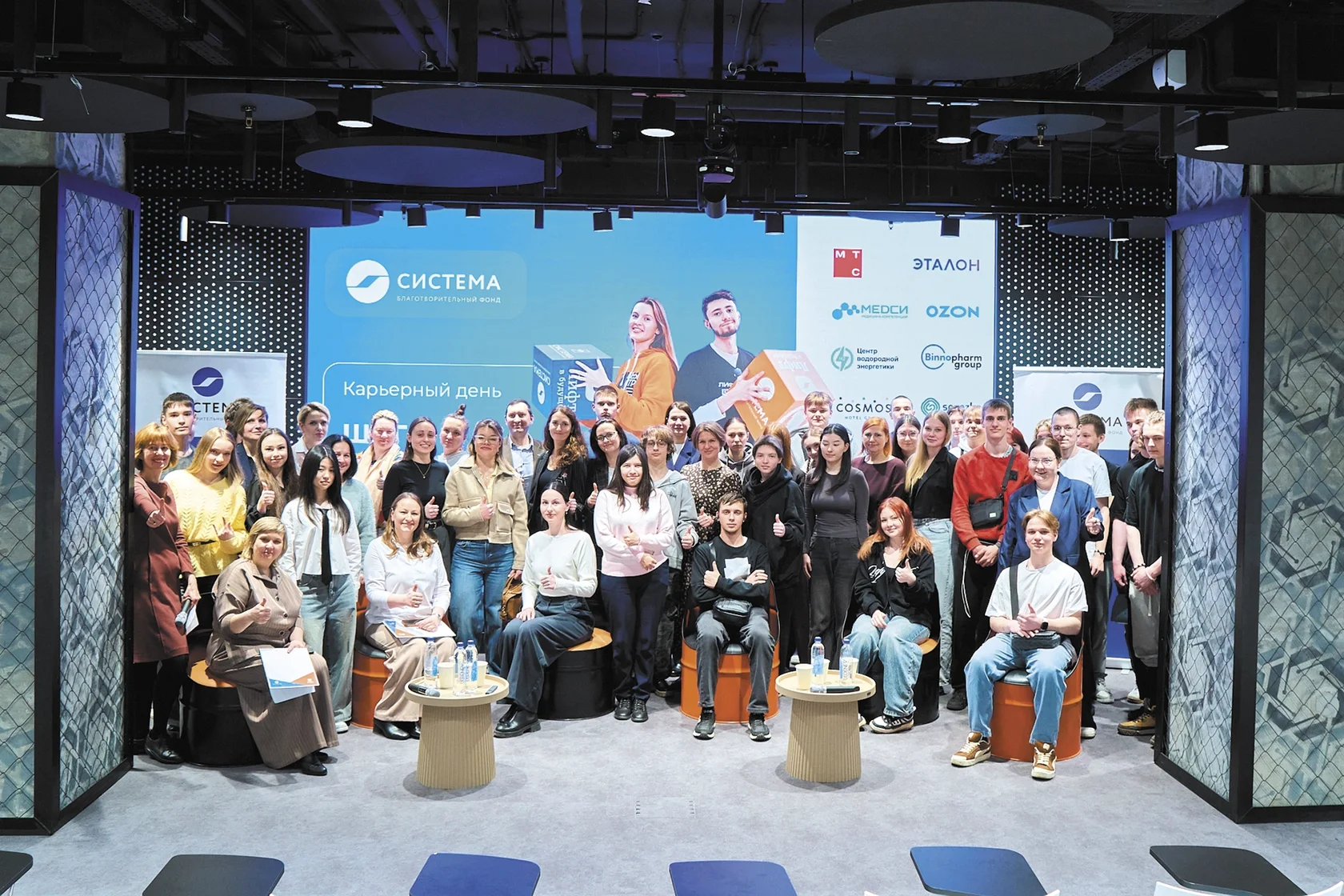
— The expected changes in work culture are the individualisation of approaches and an orientation toward results. This is particularly important for young people today. They want to feel their own value, receive feedback on their work, and see its real-world impact — a significant demand for ‘meaning' is taking shape.
We reflect this in the Foundation’s projects too. For participants, whether a student or a young scientist, what matters is that their work should generate real benefit and be of genuine use to society. Most of our competition formats are built on this principle: in the scholarship programme and the young scientists' competition, participants present projects responding to the challenges set by our industrial partners. Employers not only develop the competition tasks but also mentor the participants, provide feedback, and take part in judging — some of these initiatives are implemented at the competition stage itself, others following the competition in joint work with the companies.
We have many such success stories. For example, a team from Bauman Moscow State Technical University (one of Russia’s leading technical universities, founded in 1830) won the Young Scientists' Competition and, together with our partner, the Hydrogen Technologies Centre, built the country’s first catamaran powered by a hydrogen fuel cell.
The time is coming to recognise and begin to value the importance of multi-generational teams and mentoring — which allow not only the transfer of experience to young people and a seamless transition from education to professional life, but also the passing on of some of young people’s attitudes to older employees.
— So work culture in Russia is changing?
— The expected changes in work culture are the individualisation of approaches and an orientation toward results. This is particularly important for young people today. They want to feel their own value, receive feedback on their work, and see its real-world impact — a significant demand for ‘meaning' is taking shape.
We reflect this in the Foundation’s projects too. For participants, whether a student or a young scientist, what matters is that their work should generate real benefit and be of genuine use to society. Most of our competition formats are built on this principle: in the scholarship programme and the young scientists' competition, participants present projects responding to the challenges set by our industrial partners. Employers not only develop the competition tasks but also mentor the participants, provide feedback, and take part in judging — some of these initiatives are implemented at the competition stage itself, others following the competition in joint work with the companies.
We have many such success stories. For example, a team from Bauman Moscow State Technical University (one of Russia’s leading technical universities, founded in 1830) won the Young Scientists' Competition and, together with our partner, the Hydrogen Technologies Centre, built the country’s first catamaran powered by a hydrogen fuel cell.
The time is coming to recognise and begin to value the importance of multi-generational teams and mentoring — which allow not only the transfer of experience to young people and a seamless transition from education to professional life, but also the passing on of some of young people’s attitudes to older employees.
ON AI AND THE FUTURE
— How is artificial intelligence changing this picture? Many people fear it will replace them.
— It is changing it. But it no longer frightens people the way it did a few years ago.
Where people once feared AI would replace them at work, attitudes are now considerably more relaxed — especially among young people. For the generation that grew up with gadgets in their hands, artificial intelligence is more of a tool than a competitor.
Interestingly, many employees still conceal their use of AI at work — and young people do so more often than others. I think this is driven by a fear of appearing insufficiently competent.
But understanding is gradually taking hold: the competition will not be with artificial intelligence itself but with the people who know how to use it effectively.
Against this backdrop, the value of human qualities rises all the more — empathy, the ability to build relationships, to work in teams, to take responsibility.
The main effect of AI’s development, as I see it, is not even the growth in productivity. It intensifies the demand for humanness.
With the creation of the internet and the development of AI, we have — paradoxically — entered an age of loneliness, in which people need each other more than ever.
— How is artificial intelligence changing this picture? Many people fear it will replace them.
— It is changing it. But it no longer frightens people the way it did a few years ago.
Where people once feared AI would replace them at work, attitudes are now considerably more relaxed — especially among young people. For the generation that grew up with gadgets in their hands, artificial intelligence is more of a tool than a competitor.
Interestingly, many employees still conceal their use of AI at work — and young people do so more often than others. I think this is driven by a fear of appearing insufficiently competent.
But understanding is gradually taking hold: the competition will not be with artificial intelligence itself but with the people who know how to use it effectively.
Against this backdrop, the value of human qualities rises all the more — empathy, the ability to build relationships, to work in teams, to take responsibility.
The main effect of AI’s development, as I see it, is not even the growth in productivity. It intensifies the demand for humanness.
With the creation of the internet and the development of AI, we have — paradoxically — entered an age of loneliness, in which people need each other more than ever.
ON TRUST AND PERSONALISATION
— How should companies approach this new reality?
— You have to accept a simple truth: personalisation has come to the workplace. We are already accustomed to streaming services knowing our tastes and bank cards knowing our habits. Employees expect the same from their employer — and young people shaped by the new reality expect it all the more.
And this is not a whim — it is a competitive advantage. McKinsey data shows that personalising approaches in employee management raises engagement by 40 percent and productivity by 25 percent. Enormous figures.
What does this require? A space of trust. When a person feels valued. When the company’s goals are transparent. And when care extends beyond the office to encompass family, children, and their futures. Without honesty, nothing can be built here.
Our observations show that for today’s young people — many of whom grew up in single-parent families (which are still the majority) — orientation toward family matters in employment relationships too. The sociology confirms this. And here the family policy of Russian companies becomes a competitive advantage in the competition for young, talented employees.
— How should companies approach this new reality?
— You have to accept a simple truth: personalisation has come to the workplace. We are already accustomed to streaming services knowing our tastes and bank cards knowing our habits. Employees expect the same from their employer — and young people shaped by the new reality expect it all the more.
And this is not a whim — it is a competitive advantage. McKinsey data shows that personalising approaches in employee management raises engagement by 40 percent and productivity by 25 percent. Enormous figures.
What does this require? A space of trust. When a person feels valued. When the company’s goals are transparent. And when care extends beyond the office to encompass family, children, and their futures. Without honesty, nothing can be built here.
Our observations show that for today’s young people — many of whom grew up in single-parent families (which are still the majority) — orientation toward family matters in employment relationships too. The sociology confirms this. And here the family policy of Russian companies becomes a competitive advantage in the competition for young, talented employees.
ON FAMILY-CENTRED APPROACH
— So today it is more accurate to speak not about people-centred but about family-centred approach?
— Absolutely. A person is part of a family. An employee is also a mother, a father, a spouse, a son, or a daughter.
We are returning to a good Soviet tradition, but at a new level. Nurseries, specialist summer camps, career guidance support for employees' children. This is no longer an 'option' but a basic need. If a company is thinking about my child, I will be here tomorrow, in a year, and in ten years.
And again, what young people think matters. They want conscious parenthood and equal participation by both partners. For them, work-life balance is not an empty phrase. And if a company offers a flexible schedule for a father on parental leave — that is not an exotic curiosity but a norm that attracts the best people.
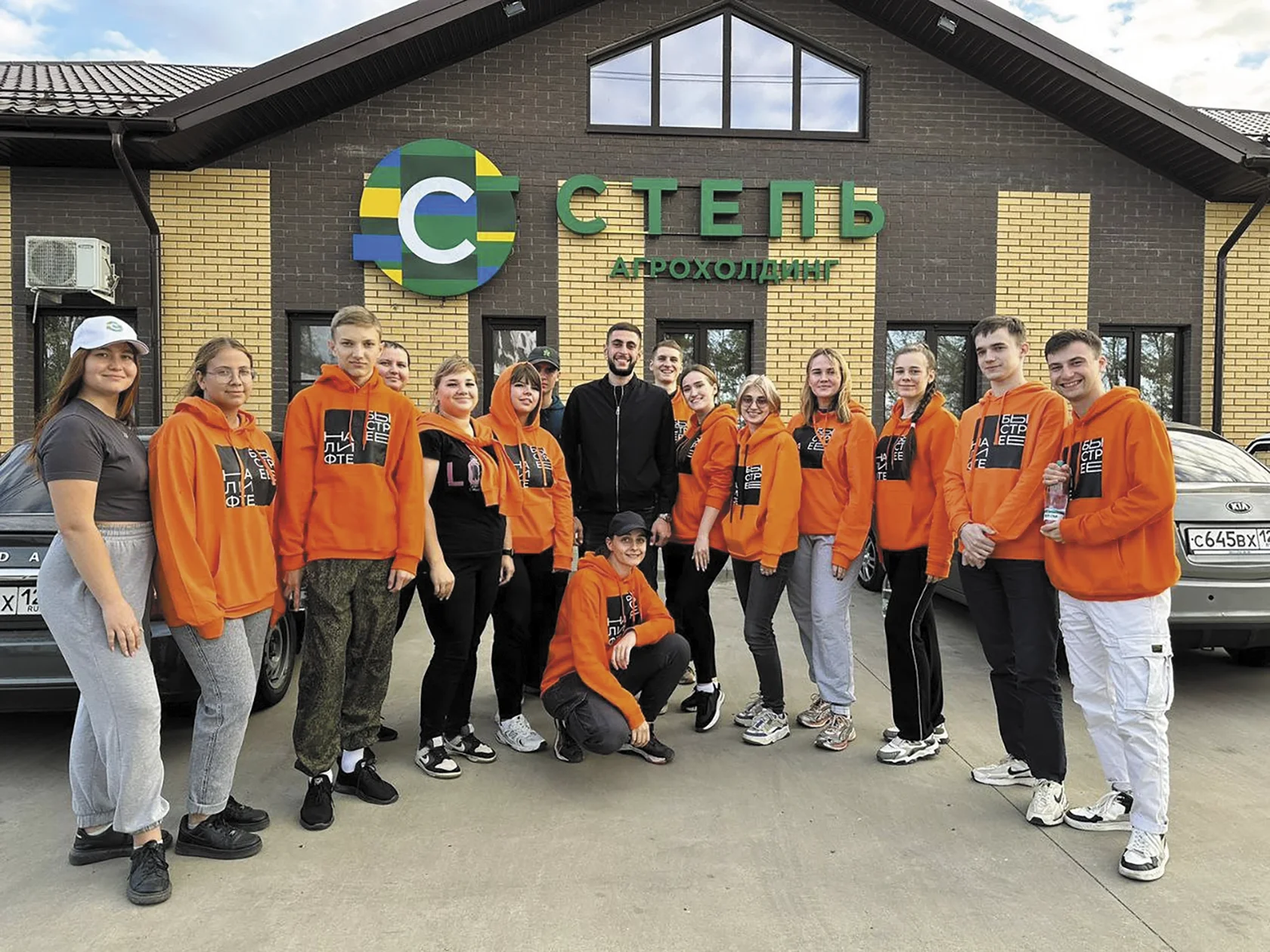
There are also special stories where work becomes not just a professional but a personal choice. Here is one: a participant in our Foundation’s programmes, a graduate of UrFU (Ural Federal University in Yekaterinburg), relocated from Yekaterinburg to Kurgan to work at the pharmaceutical facility of our partner Binnopharm Group. His girlfriend later followed him — she now works at the same plant. Or the lovely story of graduates of the Timiryazev Academy (Russia's oldest and most prestigious agricultural higher education institution) who, during our internship at the STEP agriholding, decided to be together. Last year they sent us a photo from their wedding.
In essence, a professional opportunity can become the point around which an entire family trajectory begins to form. It is important to understand: today employers compete not only for a person’s expertise but for their life choices — for whether the person and their loved ones will find it comfortable to link their future with the company, the city, the region.
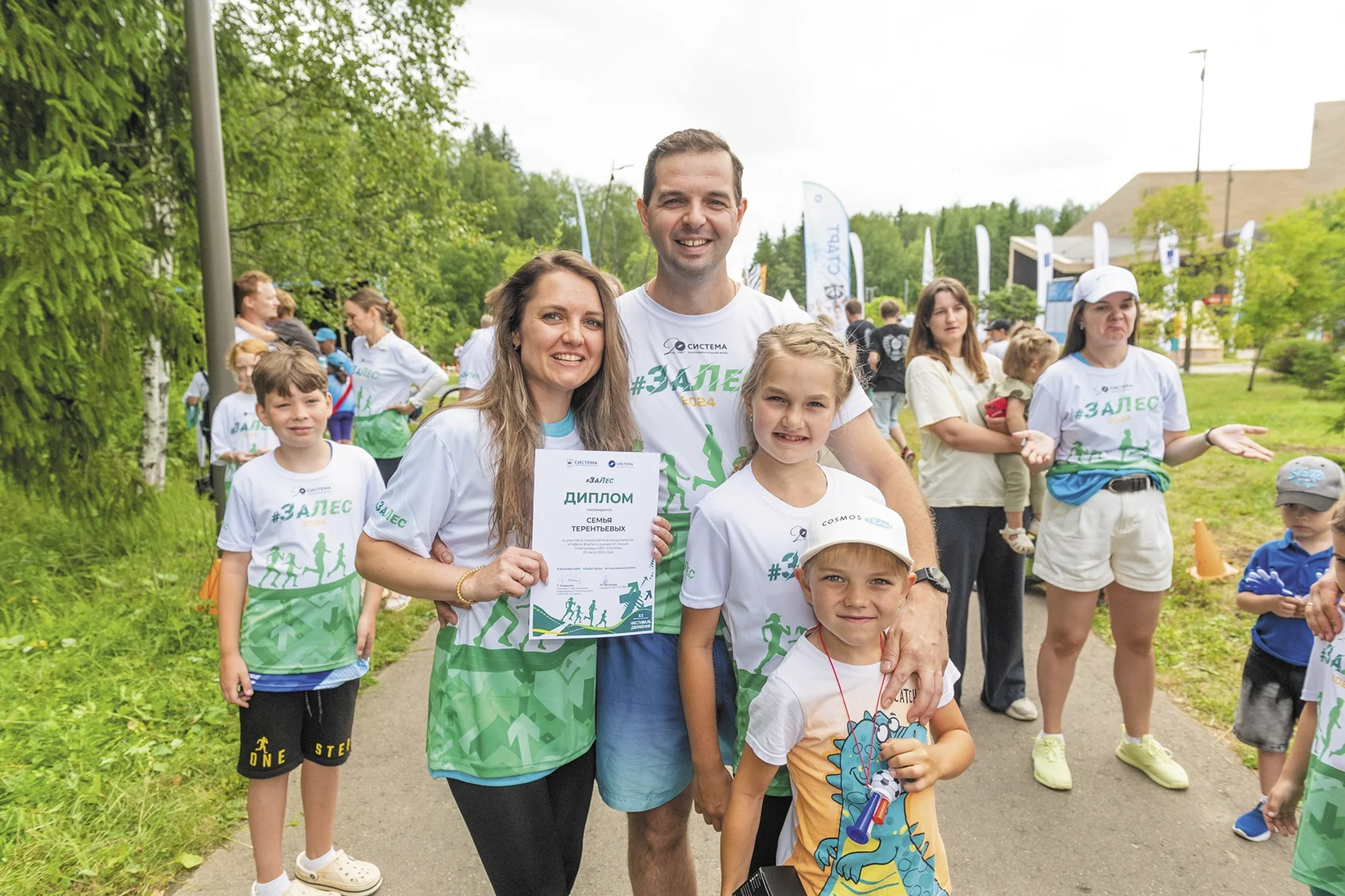
Many of the Foundation’s projects become instruments of this work. Whole families get involved in the Foundation’s sporting and charitable social initiatives, family environmental volunteering, joint support for veterans, and more.
Take, for example, the project of family career-guidance visits. Employees' children come to the Corporation’s companies together with their parents — not simply to see where mum or dad works, but to understand what they actually do and to try on the work of different companies for size. The response has been enormous — many families come on weekends, for them it is a form of family leisure. What does the employer gain? A broadening of horizontal connections between employees, their loyalty, and children’s natural interest in the professions and industries their parents work in.
— So today it is more accurate to speak not about people-centred but about family-centred approach?
— Absolutely. A person is part of a family. An employee is also a mother, a father, a spouse, a son, or a daughter.
We are returning to a good Soviet tradition, but at a new level. Nurseries, specialist summer camps, career guidance support for employees' children. This is no longer an 'option' but a basic need. If a company is thinking about my child, I will be here tomorrow, in a year, and in ten years.
And again, what young people think matters. They want conscious parenthood and equal participation by both partners. For them, work-life balance is not an empty phrase. And if a company offers a flexible schedule for a father on parental leave — that is not an exotic curiosity but a norm that attracts the best people.
There are also special stories where work becomes not just a professional but a personal choice. Here is one: a participant in our Foundation’s programmes, a graduate of UrFU (Ural Federal University in Yekaterinburg), relocated from Yekaterinburg to Kurgan to work at the pharmaceutical facility of our partner Binnopharm Group. His girlfriend later followed him — she now works at the same plant. Or the lovely story of graduates of the Timiryazev Academy (Russia's oldest and most prestigious agricultural higher education institution) who, during our internship at the STEP agriholding, decided to be together. Last year they sent us a photo from their wedding.
In essence, a professional opportunity can become the point around which an entire family trajectory begins to form. It is important to understand: today employers compete not only for a person’s expertise but for their life choices — for whether the person and their loved ones will find it comfortable to link their future with the company, the city, the region.
Many of the Foundation’s projects become instruments of this work. Whole families get involved in the Foundation’s sporting and charitable social initiatives, family environmental volunteering, joint support for veterans, and more.
Take, for example, the project of family career-guidance visits. Employees' children come to the Corporation’s companies together with their parents — not simply to see where mum or dad works, but to understand what they actually do and to try on the work of different companies for size. The response has been enormous — many families come on weekends, for them it is a form of family leisure. What does the employer gain? A broadening of horizontal connections between employees, their loyalty, and children’s natural interest in the professions and industries their parents work in.
ON INCLUSIVITY
— The Foundation’s agenda also includes inclusive projects. Is 'inclusion' today a matter of charity? Or is it more a question of corporate social responsibility and the task of state institutions?
— A conversation about inclusion is, first and foremost, again a conversation about honesty. About inclusion in the deepest sense — about ensuring no one feels surplus to requirements. Broadly understood: people with disabilities, the older generation, parents of young children or children with special needs, and others.
We cannot speak of a personnel shortage while ignoring the 4 million working-age people with disabilities of whom, according to the Ministry of Labour, only 28 percent are formally employed. These are very talented and motivated people. This is precisely why charitable programmes alone are no longer sufficient — this represents a new perspective from business on personnel work.
The expertise of adapting and integrating such employees is coming to the fore. Genuinely successful practices already exist among major market players. We can look at the experience of MTS (Mobile TeleSystems — one of Russia’s largest telecommunications companies), where inclusivity extends beyond the employment of specialists with different needs, becoming part of the company’s policy and overall corporate culture.
The effects of such work can extend far beyond offices, becoming the personal initiatives of employees. We support a number of such social projects: an inclusive puppet theatre for children organised by a Segezha Group employee in her home village in Kirov Oblast; and the project of an Ozon employee from Adygea who runs free judo training sessions for young people with health limitations.
The experience of people with disabilities often helps companies to identify new areas for their own development: to understand people’s real needs better, and to make the corporate environment and the products they create more open and accessible. At MTS there is a wonderful example in Yulia, an employee who works on projects promoting an inclusive environment.
So it is a matter of philanthropy, of corporate social policy — and, of course, of the responsibilities of state institutions.
— The Foundation’s agenda also includes inclusive projects. Is 'inclusion' today a matter of charity? Or is it more a question of corporate social responsibility and the task of state institutions?
— A conversation about inclusion is, first and foremost, again a conversation about honesty. About inclusion in the deepest sense — about ensuring no one feels surplus to requirements. Broadly understood: people with disabilities, the older generation, parents of young children or children with special needs, and others.
We cannot speak of a personnel shortage while ignoring the 4 million working-age people with disabilities of whom, according to the Ministry of Labour, only 28 percent are formally employed. These are very talented and motivated people. This is precisely why charitable programmes alone are no longer sufficient — this represents a new perspective from business on personnel work.
The expertise of adapting and integrating such employees is coming to the fore. Genuinely successful practices already exist among major market players. We can look at the experience of MTS (Mobile TeleSystems — one of Russia’s largest telecommunications companies), where inclusivity extends beyond the employment of specialists with different needs, becoming part of the company’s policy and overall corporate culture.
The effects of such work can extend far beyond offices, becoming the personal initiatives of employees. We support a number of such social projects: an inclusive puppet theatre for children organised by a Segezha Group employee in her home village in Kirov Oblast; and the project of an Ozon employee from Adygea who runs free judo training sessions for young people with health limitations.
The experience of people with disabilities often helps companies to identify new areas for their own development: to understand people’s real needs better, and to make the corporate environment and the products they create more open and accessible. At MTS there is a wonderful example in Yulia, an employee who works on projects promoting an inclusive environment.
So it is a matter of philanthropy, of corporate social policy — and, of course, of the responsibilities of state institutions.
ON TRUST AS THE FOUNDATION OF EVERYTHING
— In addressing complex social problems there is always an intersection of the interests of the state, business, and individuals. How does trust emerge in such a complex system?
— Trust never arises quickly. Especially when people and their futures are at stake.
What matters to us is that partnership should be built not around one-off projects but around shared responsibility. When the state, business, educational organisations, and civil society institutions stop competing with each other and start working as a single system.
It is very important to begin collaboration not at the moment of launching a project but earlier — starting from a shared understanding of the challenges, the needs of the territory, the employer, the educational environment, and the individual.
And then, gradually, what matters most emerges — the sense that all participants are genuinely moving in the same direction.
And in a world that is becoming ever more technological and fast-paced, trust, I believe, will become the principal condition for stability — of a family, a team, an organisation, and society as a whole.
— In addressing complex social problems there is always an intersection of the interests of the state, business, and individuals. How does trust emerge in such a complex system?
— Trust never arises quickly. Especially when people and their futures are at stake.
What matters to us is that partnership should be built not around one-off projects but around shared responsibility. When the state, business, educational organisations, and civil society institutions stop competing with each other and start working as a single system.
It is very important to begin collaboration not at the moment of launching a project but earlier — starting from a shared understanding of the challenges, the needs of the territory, the employer, the educational environment, and the individual.
And then, gradually, what matters most emerges — the sense that all participants are genuinely moving in the same direction.
And in a world that is becoming ever more technological and fast-paced, trust, I believe, will become the principal condition for stability — of a family, a team, an organisation, and society as a whole.