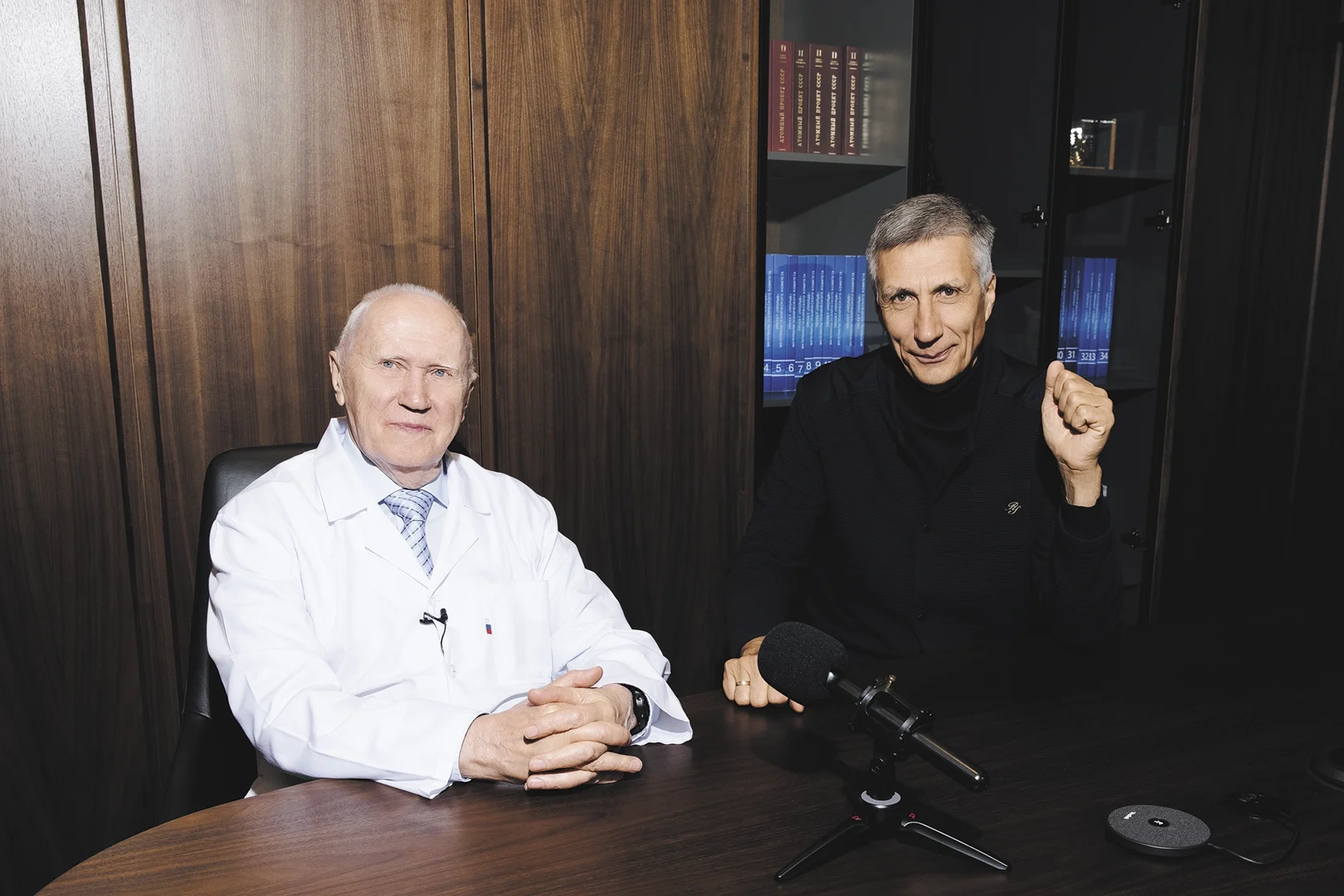
Yevgeny Olegovich Adamov — liquidator of the Chernobyl Nuclear Power Plant accident, Scientific Director of the N. A. Dollezhal Research and Development Institute of Power Engineering (NIKIET) and of the Breakthrough project — talks about what lessons the industry has drawn in forty years, why fear of the atom proved stronger than the accident itself, and how closing the nuclear fuel cycle will power humanity for millennia to come.
This year marks forty years since the accident at Unit 4 of the Chernobyl Nuclear Power Plant. For Yevgeny Olegovich Adamov, this is not merely a historical date. From May to August 1986, he worked on site, surveyed the destroyed reactor, and took part in the design and construction of the Shelter (the Ukrytiye — the massive concrete-and-steel structure erected over the destroyed reactor in 1986, later enclosed by the New Safe Confinement arch completed in 2016). In November of the same year, he became Director of NIKIET — the institute through which all the RBMK safety upgrade programmes were channelled, and where the next-generation reactors BREST-OD‑300 and BR‑1200 are being designed today.
We meet in his office. On the desk lies the master plan of ODEK — the world’s first pilot demonstration Generation IV energy complex, currently under construction in Seversk. The conversation begins with some memories.
We meet in his office. On the desk lies the master plan of ODEK — the world’s first pilot demonstration Generation IV energy complex, currently under construction in Seversk. The conversation begins with some memories.
— Yevgeny Olegovich, this year marks forty years since the accident at the Chernobyl Nuclear Power Plant. You were one of the first people there. What, for you, is most important about that story today, four decades on?
— The most important thing is to call it by its proper name. It was an accident — a large, severe accident with serious consequences— but not a 'global catastrophe', as people still enjoy presenting it. There is an enormous difference between those words, and it bears directly on how we talk about nuclear power today.
I arrived at the plant in May 1986, during the period when the Government Commission was chaired by Yu. D. Maslyukov. I worked under three Government Commissions. Together with colleagues from the Kurchatov Institute (the NRC Kurchatov Institute — Russia’s main nuclear research centre, founded in 1943), we surveyed the actual radiation distribution throughout the reactor building. This was a fundamental question, because it directly determined the volume of the Shelter, the timeline for its construction, and the radiation doses the builders would receive. We were able to show that a significant part of the fuel had remained in the reactor shaft and the sub-reactor spaces, and this made it possible to substantially reduce the size of the sarcophagus. Less material meant fewer people who had to be sent there, and fewer doses they received.
I absorbed 50 rem at head level and 100 rem at leg level. (A rem — roentgen equivalent man — is a unit of radiation dose accounting for biological effect; 100 rem equals 1 Sievert. The liquidators' official exposure limit was set at 25 rem.) That was not heroism — it was work that had to be done by someone. Sending colleagues into such conditions, when the official dose limit for liquidators was 25 rem, was out of the question. We agreed on the maximum safe limit with A. P. Alexandrov (Anatoly Petrovich Alexandrov — President of the USSR Academy of Sciences and Director of the Kurchatov Institute) and L. A. Ilyin (Leonid Andreyevich Ilyin — Director of the Institute of Biophysics and chief radiation safety authority of the USSR) — hence those 100 rem.
— When people discuss the causes of the accident today, accounts still diverge. What is the objective picture, in your view?
— The picture that has emerged from two decades of international analysis — including the work of the IAEA’s INSAG group (International Nuclear Safety Advisory Group), which published the revised report INSAG‑7 in 1992 — is clear enough. The accident was the result of a combination of three factors: an error in the physics design, the design characteristics of the RBMK reactor (Reaktor Bolshoy Moshchnosti Kanalnyy — High-Power Channel-type Reactor), violations of operating procedures by personnel, and systemic shortcomings in the organisation of plant operation.
The RBMK was a brilliant idea from the standpoint of economics and scalability — a single-loop circuit, graphite moderator, the ability to refuel under load. But it had a positive void coefficient of reactivity (when steam bubbles form in the coolant, reactivity increases rather than decreases — the opposite of most Western reactor designs), especially pronounced at low power. Combined with a flawed design in the control and protection system (SUZ — Sistema Upravleniya i Zashchity) rods — whose lower sections were graphite — this meant that in an off-normal state, when the emergency shutdown was triggered, the reactor did not shut down; it briefly spiked upward in reactivity. That is precisely what happened in the early hours of 26 April during that ill-fated test of the turbine generator rundown mode.
One cannot overlook the issue of institutional subordination. In 1986, the Chernobyl plant was under the Ministry of Energy, not even the all-union ministry but the Ukrainian one, and certainly not under Minsredmash (the Ministry of Medium Machine Building — the Soviet ministry responsible for the nuclear weapons programme and, later, the civilian nuclear industry, whose safety culture was radically different). The decision had been made on the grounds that running a coal-fired station and a nuclear station were tasks of the same kind. They are not. The safety cultures in those two ministries were fundamentally different. One of the first lessons of the accident was that nuclear plants were first separated into their own ministry and then returned to the management of nuclear specialists. It seemed a minor point — but it was in fact a systemic shift.
— And yet in the public imagination, Chernobyl is still painted as something almost apocalyptic: tens of thousands dead, poisoned land, mutations. What does the science actually say?
— Science says something entirely different. Twenty-eight people died from acute radiation syndrome (ARS) in the first weeks — the firefighters of the first crews, the reactor operators, those who worked at the epicentre in the first hours. In ARS patients in the years after the accident, the main disabling factor was the long-term consequences of severe radiation burns, requiring repeated surgical procedures. Where radiation cataracts had caused a significant deterioration in vision, lens replacement surgery — fitting an artificial intraocular lens — was performed, with full restoration of sight. According to Russian specialists, of 106 patients who had previously survived ARS, 26 had died from various causes by 2016. This group also showed elevated incidence of malignant blood cancers — 5 of the 26 deaths.
That is a great deal. Every such death is a tragedy. But let us compare. Coal power alone — through air pollution and mining accidents — kills hundreds of thousands of people worldwide every year. Hydroelectric power — the Banqiao dam failure in China in 1975 claimed, by various estimates, between 26,000 and 230,000 lives in a single night. The Bhopal chemical plant disaster in India in 1984 — around 18,000 dead. A train collision in the USSR in 1989: 575 dead. Almost no one remembers those.
At present, the average age of male liquidators is 73, and 52 percent of that cohort have reached that age. According to Russian statistics, only 41 percent of the male population of the Russian Federation as a whole live to 73 — indicating that the liquidators live somewhat longer than the general male population of the country.
The only proven mass health consequence of Chernobyl for the general population is an increase in thyroid cancer among those who were children or adolescents at the time of the accident and drank milk from local cows. The overwhelming majority of those affected were successfully treated. It could have been prevented by the simple, timely distribution of iodine tablets and a ban on milk consumption in the first weeks — and that is the second great lesson of Chernobyl: the skill and willingness to communicate openly with the public during a crisis.
As for the 'poisoned land': over the past forty years, thanks to the natural decay of radionuclides and the decontamination measures carried out, the radiological situation in the affected territories has fundamentally improved. Most of the formerly contaminated agricultural land in Belarus, Russia, and Ukraine now meets normal background radiation levels. The Exclusion Zone remains — yes — but it is by now more of a memorial than an active public health measure. And in ecological terms it has become one of the largest undisturbed nature reserves in Europe, with wolves, wild boar, and elk in greater numbers than the European average.
As for mutants — I never encountered any in the Chernobyl zone, but you can see them at the Kunstkamera in St Petersburg. Peter the Great started collecting his famous curiosities there three centuries ago.
— Returning to the technical lessons — what did the industry actually do after the accident?
— A great deal was done, without exaggeration. And in that I see cause for professional pride — the industry did not try to bury what had happened; it improved.
At NIKIET, an RBMK modernisation programme was completed in the shortest possible time. We substantially reduced the positive void coefficient — partly by increasing the enrichment level of the fuel. The control rod system was completely redesigned to eliminate the 'end effect' (the positive reactivity spike caused by the graphite displacers at the bottom of the rods when inserted). A fast-acting emergency protection system was introduced, capable of shutting the reactor down in two and a half seconds. Modern diagnostics were installed, analogue systems replaced with digital ones, operating procedures overhauled, personnel retrained. In effect, the reactor was rebuilt by around eighty percent — it is not the same RBMK that stood at Chernobyl.
Over the decades that followed, those modernised units completed their service lives and are leaving the scene on schedule — the Leningrad Nuclear Power Plant permanently shut down its first RBMK‑1000 in 2018 and its second one in 2020. They are being replaced by the VVER‑1200 (Vodo-Vodyanoy Energetichesky Reaktor — Water-Water Power Reactor, Russia’s standard pressurised water reactor design) — a Generation III+ design with passive safety systems, a double-containment pressure shell, and a core catcher (a device designed to contain and cool molten reactor core material in the event of a severe accident).
In parallel, in 1988 IBRAE was established — the Nuclear Safety Institute (Institut Bezopasnogo Razvitiya Atomnoy Energetiki), which carries out computational modelling of severe accidents. In 1994, the Convention on Nuclear Safety was signed — an international instrument establishing states' responsibility for safe plant operation. The practice of 'defence in depth' — a sequential chain of independent safety barriers — became standard. A culture of international openness took hold.
And here we come to the second great lesson — one that we are, I fear, visibly losing today. After Chernobyl, after Three Mile Island, after Fukushima, international cooperation on safety expanded enormously. Everyone shared data; everyone learned from others' mistakes. Now, under political pressure, this framework is beginning to break down in places. Beyond that — lunatics have gone so far as to shell the Zaporizhzhia Nuclear Power Plant. And that is dangerous: nuclear safety has no national borders by its very nature.
— You have said many times that fear of the atom is today the main obstacle to the industry’s development. Where does it come from, in your view?
— Radiophobia is not only, and not primarily, the consequence of Chernobyl. It is the consequence of decades during which no one explained to people what radiation is. They cannot see it, hear it, or feel it — so it frightens them. It reached the point of absurdity: when nuclear technology began to enter medicine, the word 'nuclear' was dropped from the name of the scanner. Nuclear Magnetic Resonance — NMR — became simply MRI. Why? Because people who have never been given a proper account of nuclear safety are afraid even of the word 'nuclear'.
And yet every one of us lives in a constant radiation field — there are cosmic rays, natural background radiation, radon in basements, potassium‑40 in our own bones. A transatlantic flight gives a passenger a dose comparable to the annual exposure limit for a resident of the resettlement zone. A single CT scan is the equivalent of dozens of such flights. No one is frightened by that, and rightly so — because it is safe. But the moment someone says 'nuclear power station', part of the audience reacts in a way that has nothing to do with the actual risk profile.
And this radiophobia carries a measurable price. In the 1990s, nuclear power’s share of global electricity generation was around 18 percent. Today, it is around 10 percent. The absolute numbers have barely changed, because new units are being built here and there — but the relative share has nearly halved. That means the world has spent the past twenty-five years expanding primarily coal and gas generation, with all the attendant consequences for the climate and the health of billions of people. That is the real price of fear — not the mythical Chernobyl millions.
The good news is that society is gradually shaking off the 'post-Chernobyl syndrome'. According to VTsIOM (the All-Russian Centre for the Study of Public Opinion — Russia’s main state polling organisation), 68 percent of Russians no longer consider a repeat accident possible. Nuclear power is returning to the agenda: its role in decarbonisation is being discussed today not only in Russia but also in the United States, Britain, France, Japan, South Korea, and the countries of South-East Asia. This is a renaissance, as Alexei Likhachev aptly put it at the last IAEA General Conference (Likhachev has been Director General of Rosatom, Russia’s state nuclear corporation, since 2016). And precisely now it is critically important what shape we give to that renaissance.
— And this is exactly the moment to talk about Breakthrough. How do you formulate the mission of this project?
— The mission of the Breakthrough project is to restore to nuclear power the possibility of leading, large-scale development. Not niche development, as at present, but full-scale development on a timescale of centuries.
This flows from the initiative put forward by Vladimir Putin at the UN Millennium Summit in 2000, where he spoke of nuclear energy as the foundation of sustainable energy development for humanity. The initiative was originally intended to be a joint US-Russian undertaking, and all the preparatory work I was doing with my counterpart at the US Department of Energy, Secretary Richardson (Bill Richardson, US Secretary of Energy 1998−2001), had been completed. At the very last moment, the State Department intervened and demanded a halt to construction of the Bushehr nuclear power plant in Iran. Explanations that there was no basis for such a trade-off — and that the new technology was no less necessary for the Americans than for us — fell on deaf ears. We had to send them packing…
At the same time, IAEA General Conference resolution GC (44)/RES/21 was adopted, and under that mandate the international INPRO project was established — on Innovative Nuclear Reactors and Fuel Cycles. I put forward this initiative at the General Conference in 2000, and fourteen countries were ready to join concrete action toward building a pilot energy complex with a closed nuclear fuel cycle. After my departure from government service, work on developing the new technological platform stalled, and INPRO was reoriented away from practical activity toward what I can only call ‘criteria shuffling'. Ten years were lost, until Sergei Kiriyenko — having finally recognised its potential — gave a powerful impetus to the federal target programme (FTsP — Federal’naya tselevaya programma), and in 2013 work on ODEK began. (ODEK — Opytno-demonstratsionny energokompleks — the Pilot Demonstration Energy Complex in Seversk, Tomsk Oblast, comprising the BREST-OD‑300 fast reactor, a fuel fabrication module, and a spent fuel reprocessing module.)
Breakthrough is the national embodiment of that concept. The idea of closing the nuclear fuel cycle using fast neutrons was developed and theoretically proven long ago. It rests on ideas articulated by Enrico Fermi as early as 1944: in a fast neutron reactor, the surplus of fast neutrons can breed more fissile fuel than is consumed — so-called breeding. To test this, in 1953 Walter Zinn demonstrated experimentally on the EBR‑1 research reactor in Idaho that the breeding of fissile material beyond what was burnt was achievable. Three quarters of a century have passed since then.
Engineers were in no hurry to implement it — held back by adequate stocks of relatively cheap uranium, by the stagnation of the entire nuclear industry, and by that very same radiophobia. In Breakthrough, we are solving a practical problem: taking the concept of cycle closure all the way to industrial realisation and proving its economic competitiveness.
— What exactly does closing the cycle solve? What specific problems?
— There are five, and each of them is critical.
The first is raw material efficiency. In today’s open cycle, we use only the isotope uranium‑235 as fuel, and its natural abundance is a mere 0.7 percent. The remaining 99.3 percent — uranium‑238 — is only partially and indirectly fissioned in the reactor as a by-product. In effect we discard 99 percent of the ore as enrichment tails. If nuclear power stays at its current scale, uranium supplies will last to the end of the century — that is not an issue. But if we want to return to the growth rates of the late 1980s, a uranium shortage — and with it a sharp rise in price — is inevitable in the second half of this century. In the closed cycle, uranium‑238 is put to work, because in a fast neutron reactor it is converted into plutonium‑239 — an excellent fissile fuel. This greatly multiplies the resource base.
By how much? Let us calculate. Proven global uranium reserves are of the order of six million tonnes. In the open cycle, that is enough for 70 to 100 years of nuclear power at current scale. In the closed cycle, those same reserves are not a hundred years but millennia. If we also account for the enrichment tails accumulated over decades — depleted uranium hexafluoride (DUHF, known in Russian as OGFU: obednyonny geksaftorid urana) alone amounts to several million tonnes worldwide — and for uranium dissolved in seawater, which becomes recoverable at moderate price increases, we are talking about an energy source comparable in longevity to solar: on a horizon of tens of thousands of years.
The second problem is waste. Today, the management of spent nuclear fuel (SNF — OYaT in Russian, otrabotavsheye yadernoye toplivo) is what the industry calls the 'deferred problem'. It has been called that for half a century, and in the meantime some 320,000 tonnes of spent fuel have accumulated worldwide. Most of it sits in at-reactor storage ponds; the rest is in centralised storage facilities. Geological repositories do not yet exist anywhere in the world. The 'deferred problem' is gradually becoming a problem with no solution in sight. Breakthrough addresses it in a fundamentally different way: after reprocessing the spent fuel — including fuel that has been irradiated in thermal reactors — the recovered nuclear materials are returned to the cycle as new fuel.
And here is the crucial point. Closure based on fast reactors reduces the biological hazard potential of the waste by several orders of magnitude. How? Through transmutation — 'burning up' the long-lived isotopes: minor actinides, americium, neptunium, in the fast neutron reactor. What currently remains as dead weight for thousands and tens of thousands of years is fissioned in the fast neutron spectrum, releasing energy in the process. The result is what we call radiotoxicity-equivalent waste management: the materials returned to the ground after a comparatively short time have the same radioactivity as the natural uranium ore that was extracted from that same ground in the first place.
The radioecologists of our project — and this work was awarded the special prize of the Chairman of Rosatom’s Supervisory Board for 2020, presented by Sergei Kiriyenko at the Rosatom Person of the Year ceremony — proved the following: if by 2100 fast reactors have completely replaced thermal reactors, the equilibrium of lifetime radiation health risks with natural background levels will be reached within a matter of centuries, rather than tens of millennia required under the open cycle.
The third problem is nuclear non-proliferation. The general public often gets confused here. No country in the world has ever pursued a nuclear weapon through civilian nuclear power — there are far shorter routes, and specialists know them well. But there is a pressure point in the non-proliferation regime: enrichment technology. What is the international community’s concern about Iran? The level to which it is enriching uranium. Fast neutron reactors do not need enriched uranium at all — they operate on a mixture of depleted uranium and plutonium. Eliminating enrichment as a widespread technology moves nuclear power to the periphery of the non-proliferation problem altogether. That is an enormous systemic advantage.
Nuclear power is already safe enough today — as the most severe accidents it has experienced have demonstrated. Safety justification for new plants is conducted through probabilistic risk analysis (PRA). Current standards require that the probability of a severe accident not exceed 10-5 to 10-6 events per reactor per year — meaning no more than one critical incident per 100,000 to 1,000,000 reactor-years of operation. In Breakthrough we have set a different goal: to ensure safety not at a probabilistic but at a deterministic level — to completely eliminate the possibility of accidents requiring evacuation, let alone permanent resettlement of the population. That is the solution to the fourth problem.
The fifth problem — the economic competitiveness of nuclear power — appears to be the most difficult one. Particularly today, when the cost of materials and equipment is rising rapidly. We will solve this one too, probably by around the fifth or sixth serial PEK (PEK — Promyshlenny Energokompleks, Industrial Energy Complex — the commercial-scale successor to ODEK).
— The main argument of the critics is economics. Closure is considered too expensive. What is your answer to that?
— It is the hardest of the problems to solve, yes. And it is made more difficult by the fact that even among some specialists the idea has taken root that fast neutron reactors simply cannot compete with thermal reactors on the cost per kilowatt-hour, and therefore some other application must be found for them — breeding fuel for thermal reactors, transmutation, and so forth. All of that, in my view, is sophistry.
You can indeed breed fuel for thermal reactors in fast reactors — but then the thermal units themselves would need major redesign. And all the accumulated problems would remain. That is a bad idea. As for actinide transmutation — yes, fast reactors can do that, but accelerator-driven systems and fusion neutron sources can do it too. It is not a unique function.
We therefore focused on the main objective: proving the ‘existence theorem' of an economically competitive fast reactor. We have costed the economics, and we have a team of economists tracking every stage. ODEK itself is a pilot demonstration complex — it will not be replicated, and there is no requirement for it to recover either R&D costs (NIOKR — nauchno-issledovatel'skiye i opytno-konstruktorskiye raboty) or capital expenditure (KVL — kapital’niye vlozhenniya). But through the electricity generated by the 300‑megawatt BREST-OD‑300 unit and sold to the grid, it must cover its own operating costs, including those of the entire on-site closed cycle. That is a reasonable objective for a demonstration unit.
The serial industrial energy complexes — PEK — are a completely different economic proposition: a positive one. And the key reasons for that lie in the reactor design itself, with its lead coolant.
— Service life is another point of contention. The VVER‑1200 has a design life of 60 years with the possibility of extension. What about fast reactors?
— In principle, it is unlimited: there are no components analogous to, say, the VVER pressure vessel that are considered irreplaceable. And that is an interesting, instructive story.
Remember: the first industrial reactors built to produce plutonium and tritium were designed for a ten-year service life. And when did they close? After three service lives — that is, after thirty years. The first power reactors were designed for 30 years — because no one knew how the materials would behave beyond that period. You could only model and calculate — and then see for real. Now it turns out to be not 30 or even 40 years, but 60. In Russia, materials for VVER pressure vessels have been developed with a projected 100‑year service life. I suspect that will not be the end of it.
BN‑1200M and BR‑1200 (BN — Bystrye Neytrony, fast neutrons — the sodium-cooled fast reactor line; BR‑1200 — the lead-cooled fast reactor) are being developed with an initial design life of 60 years. Today we can already predict the serviceability of materials, fuel pins (tvely — teplovydelyayushchiye elementy, fuel elements), and in-vessel components over such a period with reasonable confidence. There are some questions around steam generators and pumps — but those are all replaceable components. Service life is limited only by difficult-to-replace assemblies — for BREST that is the reinforced-concrete vessel, but even that is theoretically replaceable. So, 60 years is the initial assessment, with the prospect of extension.
And look at the world’s first reactors — now maintained more as museum pieces than power generators. They have proved the fundamental point: the serviceability of the core structural elements can be sustained virtually indefinitely, either by life extension or by replacement. Today we replace people’s hearts — pumps for circulating blood — not to mention joints. The logic with reactors is exactly the same.
— And a final question. Breakthrough is not solely a Russian task. What significance does it have in a global context?
— A global one. And it takes us directly back to where you began this conversation — to the question of what conclusions we draw from forty years of experience since Chernobyl.
The accident showed that nuclear power cannot develop blindly — scaling up for scale’s sake. It must be safe by design, not by instruction. It must realise the full energy potential of the uranium resource, close its own cycle, and not leave unsolvable problems for future generations. It must be protected against proliferation by its very architecture, not only by a safeguards regime. And it must return to the earth exactly the radioactivity it took from it, at the same level. It will be pointless unless it becomes economically competitive. Those are the principles of Generation IV, and that is precisely what we are implementing in Breakthrough.
If this work is brought to an industrial-scale result — and it will be, I have no doubt of that — humanity will have a practically inexhaustible source of energy. Not for a hundred years, as now, but for millennia. By that time, commercially viable fusion will have caught up. The new nuclear power technological platform — clean, safe, economically competitive, and strengthening the non-proliferation regime — will be the foundation for the planet’s sustainable energy future, in exactly the sense in which President Putin formulated that goal at the Millennium Summit twenty-five years ago.
That, if you like, is our technological answer to Chernobyl. Not to forget, not to repress — but to draw the full professional and human lesson, and move forward.
When, in 2028, the BREST-OD‑300 delivers its first kilowatt-hours to the grid, and, by 2034, the industrial PEKs follow, we will see the beginning of this new era with our own eyes. I very much intend to live long enough to see it — and to keep working until then.
— The most important thing is to call it by its proper name. It was an accident — a large, severe accident with serious consequences— but not a 'global catastrophe', as people still enjoy presenting it. There is an enormous difference between those words, and it bears directly on how we talk about nuclear power today.
I arrived at the plant in May 1986, during the period when the Government Commission was chaired by Yu. D. Maslyukov. I worked under three Government Commissions. Together with colleagues from the Kurchatov Institute (the NRC Kurchatov Institute — Russia’s main nuclear research centre, founded in 1943), we surveyed the actual radiation distribution throughout the reactor building. This was a fundamental question, because it directly determined the volume of the Shelter, the timeline for its construction, and the radiation doses the builders would receive. We were able to show that a significant part of the fuel had remained in the reactor shaft and the sub-reactor spaces, and this made it possible to substantially reduce the size of the sarcophagus. Less material meant fewer people who had to be sent there, and fewer doses they received.
I absorbed 50 rem at head level and 100 rem at leg level. (A rem — roentgen equivalent man — is a unit of radiation dose accounting for biological effect; 100 rem equals 1 Sievert. The liquidators' official exposure limit was set at 25 rem.) That was not heroism — it was work that had to be done by someone. Sending colleagues into such conditions, when the official dose limit for liquidators was 25 rem, was out of the question. We agreed on the maximum safe limit with A. P. Alexandrov (Anatoly Petrovich Alexandrov — President of the USSR Academy of Sciences and Director of the Kurchatov Institute) and L. A. Ilyin (Leonid Andreyevich Ilyin — Director of the Institute of Biophysics and chief radiation safety authority of the USSR) — hence those 100 rem.
— When people discuss the causes of the accident today, accounts still diverge. What is the objective picture, in your view?
— The picture that has emerged from two decades of international analysis — including the work of the IAEA’s INSAG group (International Nuclear Safety Advisory Group), which published the revised report INSAG‑7 in 1992 — is clear enough. The accident was the result of a combination of three factors: an error in the physics design, the design characteristics of the RBMK reactor (Reaktor Bolshoy Moshchnosti Kanalnyy — High-Power Channel-type Reactor), violations of operating procedures by personnel, and systemic shortcomings in the organisation of plant operation.
The RBMK was a brilliant idea from the standpoint of economics and scalability — a single-loop circuit, graphite moderator, the ability to refuel under load. But it had a positive void coefficient of reactivity (when steam bubbles form in the coolant, reactivity increases rather than decreases — the opposite of most Western reactor designs), especially pronounced at low power. Combined with a flawed design in the control and protection system (SUZ — Sistema Upravleniya i Zashchity) rods — whose lower sections were graphite — this meant that in an off-normal state, when the emergency shutdown was triggered, the reactor did not shut down; it briefly spiked upward in reactivity. That is precisely what happened in the early hours of 26 April during that ill-fated test of the turbine generator rundown mode.
One cannot overlook the issue of institutional subordination. In 1986, the Chernobyl plant was under the Ministry of Energy, not even the all-union ministry but the Ukrainian one, and certainly not under Minsredmash (the Ministry of Medium Machine Building — the Soviet ministry responsible for the nuclear weapons programme and, later, the civilian nuclear industry, whose safety culture was radically different). The decision had been made on the grounds that running a coal-fired station and a nuclear station were tasks of the same kind. They are not. The safety cultures in those two ministries were fundamentally different. One of the first lessons of the accident was that nuclear plants were first separated into their own ministry and then returned to the management of nuclear specialists. It seemed a minor point — but it was in fact a systemic shift.
— And yet in the public imagination, Chernobyl is still painted as something almost apocalyptic: tens of thousands dead, poisoned land, mutations. What does the science actually say?
— Science says something entirely different. Twenty-eight people died from acute radiation syndrome (ARS) in the first weeks — the firefighters of the first crews, the reactor operators, those who worked at the epicentre in the first hours. In ARS patients in the years after the accident, the main disabling factor was the long-term consequences of severe radiation burns, requiring repeated surgical procedures. Where radiation cataracts had caused a significant deterioration in vision, lens replacement surgery — fitting an artificial intraocular lens — was performed, with full restoration of sight. According to Russian specialists, of 106 patients who had previously survived ARS, 26 had died from various causes by 2016. This group also showed elevated incidence of malignant blood cancers — 5 of the 26 deaths.
That is a great deal. Every such death is a tragedy. But let us compare. Coal power alone — through air pollution and mining accidents — kills hundreds of thousands of people worldwide every year. Hydroelectric power — the Banqiao dam failure in China in 1975 claimed, by various estimates, between 26,000 and 230,000 lives in a single night. The Bhopal chemical plant disaster in India in 1984 — around 18,000 dead. A train collision in the USSR in 1989: 575 dead. Almost no one remembers those.
At present, the average age of male liquidators is 73, and 52 percent of that cohort have reached that age. According to Russian statistics, only 41 percent of the male population of the Russian Federation as a whole live to 73 — indicating that the liquidators live somewhat longer than the general male population of the country.
The only proven mass health consequence of Chernobyl for the general population is an increase in thyroid cancer among those who were children or adolescents at the time of the accident and drank milk from local cows. The overwhelming majority of those affected were successfully treated. It could have been prevented by the simple, timely distribution of iodine tablets and a ban on milk consumption in the first weeks — and that is the second great lesson of Chernobyl: the skill and willingness to communicate openly with the public during a crisis.
As for the 'poisoned land': over the past forty years, thanks to the natural decay of radionuclides and the decontamination measures carried out, the radiological situation in the affected territories has fundamentally improved. Most of the formerly contaminated agricultural land in Belarus, Russia, and Ukraine now meets normal background radiation levels. The Exclusion Zone remains — yes — but it is by now more of a memorial than an active public health measure. And in ecological terms it has become one of the largest undisturbed nature reserves in Europe, with wolves, wild boar, and elk in greater numbers than the European average.
As for mutants — I never encountered any in the Chernobyl zone, but you can see them at the Kunstkamera in St Petersburg. Peter the Great started collecting his famous curiosities there three centuries ago.
— Returning to the technical lessons — what did the industry actually do after the accident?
— A great deal was done, without exaggeration. And in that I see cause for professional pride — the industry did not try to bury what had happened; it improved.
At NIKIET, an RBMK modernisation programme was completed in the shortest possible time. We substantially reduced the positive void coefficient — partly by increasing the enrichment level of the fuel. The control rod system was completely redesigned to eliminate the 'end effect' (the positive reactivity spike caused by the graphite displacers at the bottom of the rods when inserted). A fast-acting emergency protection system was introduced, capable of shutting the reactor down in two and a half seconds. Modern diagnostics were installed, analogue systems replaced with digital ones, operating procedures overhauled, personnel retrained. In effect, the reactor was rebuilt by around eighty percent — it is not the same RBMK that stood at Chernobyl.
Over the decades that followed, those modernised units completed their service lives and are leaving the scene on schedule — the Leningrad Nuclear Power Plant permanently shut down its first RBMK‑1000 in 2018 and its second one in 2020. They are being replaced by the VVER‑1200 (Vodo-Vodyanoy Energetichesky Reaktor — Water-Water Power Reactor, Russia’s standard pressurised water reactor design) — a Generation III+ design with passive safety systems, a double-containment pressure shell, and a core catcher (a device designed to contain and cool molten reactor core material in the event of a severe accident).
In parallel, in 1988 IBRAE was established — the Nuclear Safety Institute (Institut Bezopasnogo Razvitiya Atomnoy Energetiki), which carries out computational modelling of severe accidents. In 1994, the Convention on Nuclear Safety was signed — an international instrument establishing states' responsibility for safe plant operation. The practice of 'defence in depth' — a sequential chain of independent safety barriers — became standard. A culture of international openness took hold.
And here we come to the second great lesson — one that we are, I fear, visibly losing today. After Chernobyl, after Three Mile Island, after Fukushima, international cooperation on safety expanded enormously. Everyone shared data; everyone learned from others' mistakes. Now, under political pressure, this framework is beginning to break down in places. Beyond that — lunatics have gone so far as to shell the Zaporizhzhia Nuclear Power Plant. And that is dangerous: nuclear safety has no national borders by its very nature.
— You have said many times that fear of the atom is today the main obstacle to the industry’s development. Where does it come from, in your view?
— Radiophobia is not only, and not primarily, the consequence of Chernobyl. It is the consequence of decades during which no one explained to people what radiation is. They cannot see it, hear it, or feel it — so it frightens them. It reached the point of absurdity: when nuclear technology began to enter medicine, the word 'nuclear' was dropped from the name of the scanner. Nuclear Magnetic Resonance — NMR — became simply MRI. Why? Because people who have never been given a proper account of nuclear safety are afraid even of the word 'nuclear'.
And yet every one of us lives in a constant radiation field — there are cosmic rays, natural background radiation, radon in basements, potassium‑40 in our own bones. A transatlantic flight gives a passenger a dose comparable to the annual exposure limit for a resident of the resettlement zone. A single CT scan is the equivalent of dozens of such flights. No one is frightened by that, and rightly so — because it is safe. But the moment someone says 'nuclear power station', part of the audience reacts in a way that has nothing to do with the actual risk profile.
And this radiophobia carries a measurable price. In the 1990s, nuclear power’s share of global electricity generation was around 18 percent. Today, it is around 10 percent. The absolute numbers have barely changed, because new units are being built here and there — but the relative share has nearly halved. That means the world has spent the past twenty-five years expanding primarily coal and gas generation, with all the attendant consequences for the climate and the health of billions of people. That is the real price of fear — not the mythical Chernobyl millions.
The good news is that society is gradually shaking off the 'post-Chernobyl syndrome'. According to VTsIOM (the All-Russian Centre for the Study of Public Opinion — Russia’s main state polling organisation), 68 percent of Russians no longer consider a repeat accident possible. Nuclear power is returning to the agenda: its role in decarbonisation is being discussed today not only in Russia but also in the United States, Britain, France, Japan, South Korea, and the countries of South-East Asia. This is a renaissance, as Alexei Likhachev aptly put it at the last IAEA General Conference (Likhachev has been Director General of Rosatom, Russia’s state nuclear corporation, since 2016). And precisely now it is critically important what shape we give to that renaissance.
— And this is exactly the moment to talk about Breakthrough. How do you formulate the mission of this project?
— The mission of the Breakthrough project is to restore to nuclear power the possibility of leading, large-scale development. Not niche development, as at present, but full-scale development on a timescale of centuries.
This flows from the initiative put forward by Vladimir Putin at the UN Millennium Summit in 2000, where he spoke of nuclear energy as the foundation of sustainable energy development for humanity. The initiative was originally intended to be a joint US-Russian undertaking, and all the preparatory work I was doing with my counterpart at the US Department of Energy, Secretary Richardson (Bill Richardson, US Secretary of Energy 1998−2001), had been completed. At the very last moment, the State Department intervened and demanded a halt to construction of the Bushehr nuclear power plant in Iran. Explanations that there was no basis for such a trade-off — and that the new technology was no less necessary for the Americans than for us — fell on deaf ears. We had to send them packing…
At the same time, IAEA General Conference resolution GC (44)/RES/21 was adopted, and under that mandate the international INPRO project was established — on Innovative Nuclear Reactors and Fuel Cycles. I put forward this initiative at the General Conference in 2000, and fourteen countries were ready to join concrete action toward building a pilot energy complex with a closed nuclear fuel cycle. After my departure from government service, work on developing the new technological platform stalled, and INPRO was reoriented away from practical activity toward what I can only call ‘criteria shuffling'. Ten years were lost, until Sergei Kiriyenko — having finally recognised its potential — gave a powerful impetus to the federal target programme (FTsP — Federal’naya tselevaya programma), and in 2013 work on ODEK began. (ODEK — Opytno-demonstratsionny energokompleks — the Pilot Demonstration Energy Complex in Seversk, Tomsk Oblast, comprising the BREST-OD‑300 fast reactor, a fuel fabrication module, and a spent fuel reprocessing module.)
Breakthrough is the national embodiment of that concept. The idea of closing the nuclear fuel cycle using fast neutrons was developed and theoretically proven long ago. It rests on ideas articulated by Enrico Fermi as early as 1944: in a fast neutron reactor, the surplus of fast neutrons can breed more fissile fuel than is consumed — so-called breeding. To test this, in 1953 Walter Zinn demonstrated experimentally on the EBR‑1 research reactor in Idaho that the breeding of fissile material beyond what was burnt was achievable. Three quarters of a century have passed since then.
Engineers were in no hurry to implement it — held back by adequate stocks of relatively cheap uranium, by the stagnation of the entire nuclear industry, and by that very same radiophobia. In Breakthrough, we are solving a practical problem: taking the concept of cycle closure all the way to industrial realisation and proving its economic competitiveness.
— What exactly does closing the cycle solve? What specific problems?
— There are five, and each of them is critical.
The first is raw material efficiency. In today’s open cycle, we use only the isotope uranium‑235 as fuel, and its natural abundance is a mere 0.7 percent. The remaining 99.3 percent — uranium‑238 — is only partially and indirectly fissioned in the reactor as a by-product. In effect we discard 99 percent of the ore as enrichment tails. If nuclear power stays at its current scale, uranium supplies will last to the end of the century — that is not an issue. But if we want to return to the growth rates of the late 1980s, a uranium shortage — and with it a sharp rise in price — is inevitable in the second half of this century. In the closed cycle, uranium‑238 is put to work, because in a fast neutron reactor it is converted into plutonium‑239 — an excellent fissile fuel. This greatly multiplies the resource base.
By how much? Let us calculate. Proven global uranium reserves are of the order of six million tonnes. In the open cycle, that is enough for 70 to 100 years of nuclear power at current scale. In the closed cycle, those same reserves are not a hundred years but millennia. If we also account for the enrichment tails accumulated over decades — depleted uranium hexafluoride (DUHF, known in Russian as OGFU: obednyonny geksaftorid urana) alone amounts to several million tonnes worldwide — and for uranium dissolved in seawater, which becomes recoverable at moderate price increases, we are talking about an energy source comparable in longevity to solar: on a horizon of tens of thousands of years.
The second problem is waste. Today, the management of spent nuclear fuel (SNF — OYaT in Russian, otrabotavsheye yadernoye toplivo) is what the industry calls the 'deferred problem'. It has been called that for half a century, and in the meantime some 320,000 tonnes of spent fuel have accumulated worldwide. Most of it sits in at-reactor storage ponds; the rest is in centralised storage facilities. Geological repositories do not yet exist anywhere in the world. The 'deferred problem' is gradually becoming a problem with no solution in sight. Breakthrough addresses it in a fundamentally different way: after reprocessing the spent fuel — including fuel that has been irradiated in thermal reactors — the recovered nuclear materials are returned to the cycle as new fuel.
And here is the crucial point. Closure based on fast reactors reduces the biological hazard potential of the waste by several orders of magnitude. How? Through transmutation — 'burning up' the long-lived isotopes: minor actinides, americium, neptunium, in the fast neutron reactor. What currently remains as dead weight for thousands and tens of thousands of years is fissioned in the fast neutron spectrum, releasing energy in the process. The result is what we call radiotoxicity-equivalent waste management: the materials returned to the ground after a comparatively short time have the same radioactivity as the natural uranium ore that was extracted from that same ground in the first place.
The radioecologists of our project — and this work was awarded the special prize of the Chairman of Rosatom’s Supervisory Board for 2020, presented by Sergei Kiriyenko at the Rosatom Person of the Year ceremony — proved the following: if by 2100 fast reactors have completely replaced thermal reactors, the equilibrium of lifetime radiation health risks with natural background levels will be reached within a matter of centuries, rather than tens of millennia required under the open cycle.
The third problem is nuclear non-proliferation. The general public often gets confused here. No country in the world has ever pursued a nuclear weapon through civilian nuclear power — there are far shorter routes, and specialists know them well. But there is a pressure point in the non-proliferation regime: enrichment technology. What is the international community’s concern about Iran? The level to which it is enriching uranium. Fast neutron reactors do not need enriched uranium at all — they operate on a mixture of depleted uranium and plutonium. Eliminating enrichment as a widespread technology moves nuclear power to the periphery of the non-proliferation problem altogether. That is an enormous systemic advantage.
Nuclear power is already safe enough today — as the most severe accidents it has experienced have demonstrated. Safety justification for new plants is conducted through probabilistic risk analysis (PRA). Current standards require that the probability of a severe accident not exceed 10-5 to 10-6 events per reactor per year — meaning no more than one critical incident per 100,000 to 1,000,000 reactor-years of operation. In Breakthrough we have set a different goal: to ensure safety not at a probabilistic but at a deterministic level — to completely eliminate the possibility of accidents requiring evacuation, let alone permanent resettlement of the population. That is the solution to the fourth problem.
The fifth problem — the economic competitiveness of nuclear power — appears to be the most difficult one. Particularly today, when the cost of materials and equipment is rising rapidly. We will solve this one too, probably by around the fifth or sixth serial PEK (PEK — Promyshlenny Energokompleks, Industrial Energy Complex — the commercial-scale successor to ODEK).
— The main argument of the critics is economics. Closure is considered too expensive. What is your answer to that?
— It is the hardest of the problems to solve, yes. And it is made more difficult by the fact that even among some specialists the idea has taken root that fast neutron reactors simply cannot compete with thermal reactors on the cost per kilowatt-hour, and therefore some other application must be found for them — breeding fuel for thermal reactors, transmutation, and so forth. All of that, in my view, is sophistry.
You can indeed breed fuel for thermal reactors in fast reactors — but then the thermal units themselves would need major redesign. And all the accumulated problems would remain. That is a bad idea. As for actinide transmutation — yes, fast reactors can do that, but accelerator-driven systems and fusion neutron sources can do it too. It is not a unique function.
We therefore focused on the main objective: proving the ‘existence theorem' of an economically competitive fast reactor. We have costed the economics, and we have a team of economists tracking every stage. ODEK itself is a pilot demonstration complex — it will not be replicated, and there is no requirement for it to recover either R&D costs (NIOKR — nauchno-issledovatel'skiye i opytno-konstruktorskiye raboty) or capital expenditure (KVL — kapital’niye vlozhenniya). But through the electricity generated by the 300‑megawatt BREST-OD‑300 unit and sold to the grid, it must cover its own operating costs, including those of the entire on-site closed cycle. That is a reasonable objective for a demonstration unit.
The serial industrial energy complexes — PEK — are a completely different economic proposition: a positive one. And the key reasons for that lie in the reactor design itself, with its lead coolant.
— Service life is another point of contention. The VVER‑1200 has a design life of 60 years with the possibility of extension. What about fast reactors?
— In principle, it is unlimited: there are no components analogous to, say, the VVER pressure vessel that are considered irreplaceable. And that is an interesting, instructive story.
Remember: the first industrial reactors built to produce plutonium and tritium were designed for a ten-year service life. And when did they close? After three service lives — that is, after thirty years. The first power reactors were designed for 30 years — because no one knew how the materials would behave beyond that period. You could only model and calculate — and then see for real. Now it turns out to be not 30 or even 40 years, but 60. In Russia, materials for VVER pressure vessels have been developed with a projected 100‑year service life. I suspect that will not be the end of it.
BN‑1200M and BR‑1200 (BN — Bystrye Neytrony, fast neutrons — the sodium-cooled fast reactor line; BR‑1200 — the lead-cooled fast reactor) are being developed with an initial design life of 60 years. Today we can already predict the serviceability of materials, fuel pins (tvely — teplovydelyayushchiye elementy, fuel elements), and in-vessel components over such a period with reasonable confidence. There are some questions around steam generators and pumps — but those are all replaceable components. Service life is limited only by difficult-to-replace assemblies — for BREST that is the reinforced-concrete vessel, but even that is theoretically replaceable. So, 60 years is the initial assessment, with the prospect of extension.
And look at the world’s first reactors — now maintained more as museum pieces than power generators. They have proved the fundamental point: the serviceability of the core structural elements can be sustained virtually indefinitely, either by life extension or by replacement. Today we replace people’s hearts — pumps for circulating blood — not to mention joints. The logic with reactors is exactly the same.
— And a final question. Breakthrough is not solely a Russian task. What significance does it have in a global context?
— A global one. And it takes us directly back to where you began this conversation — to the question of what conclusions we draw from forty years of experience since Chernobyl.
The accident showed that nuclear power cannot develop blindly — scaling up for scale’s sake. It must be safe by design, not by instruction. It must realise the full energy potential of the uranium resource, close its own cycle, and not leave unsolvable problems for future generations. It must be protected against proliferation by its very architecture, not only by a safeguards regime. And it must return to the earth exactly the radioactivity it took from it, at the same level. It will be pointless unless it becomes economically competitive. Those are the principles of Generation IV, and that is precisely what we are implementing in Breakthrough.
If this work is brought to an industrial-scale result — and it will be, I have no doubt of that — humanity will have a practically inexhaustible source of energy. Not for a hundred years, as now, but for millennia. By that time, commercially viable fusion will have caught up. The new nuclear power technological platform — clean, safe, economically competitive, and strengthening the non-proliferation regime — will be the foundation for the planet’s sustainable energy future, in exactly the sense in which President Putin formulated that goal at the Millennium Summit twenty-five years ago.
That, if you like, is our technological answer to Chernobyl. Not to forget, not to repress — but to draw the full professional and human lesson, and move forward.
When, in 2028, the BREST-OD‑300 delivers its first kilowatt-hours to the grid, and, by 2034, the industrial PEKs follow, we will see the beginning of this new era with our own eyes. I very much intend to live long enough to see it — and to keep working until then.
Interview by Andrei Reznichenko