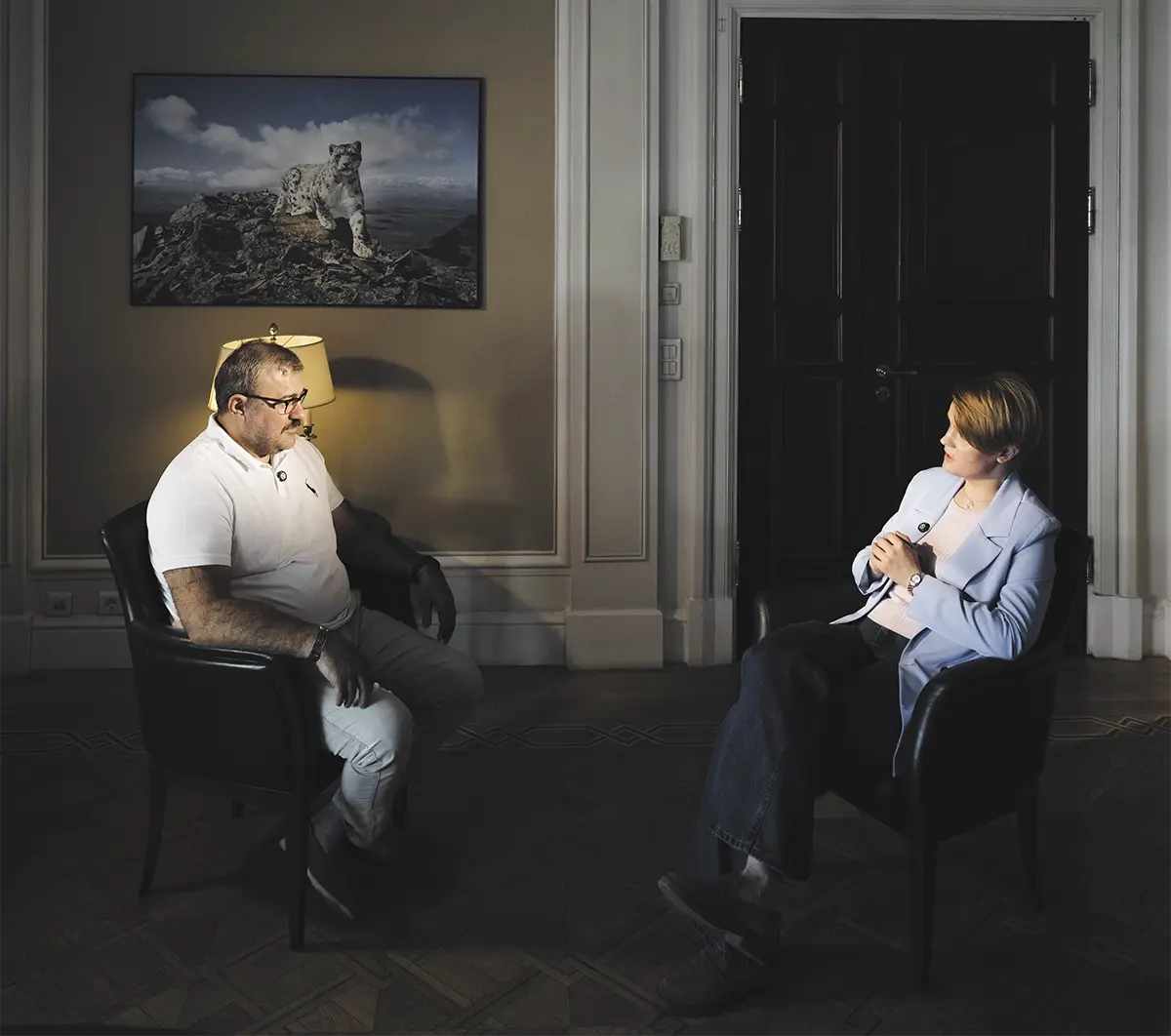
The biography of Mikhail Porechenkov, People’s Artist of Russia, could itself make the screenplay for a gripping film. A military career was prepared for him, but he followed his childhood dream and shaped an entirely different destiny. His credits run to two hundred roles and appearances in hit television productions that have made him one of the most recognisable actors in the country. But the most interesting things, as always, remain off-screen. How did the actor Porechenkov become a director; why did he choose a remake of an action film starring ‘Iron Arnie' Schwarzenegger as his debut; whom of his colleagues does he consider role models? What shaped his decision to support the Crimean Spring (‘Krymskaya vesna' in Russian, the term used in Russia for the events surrounding the 2014 Crimea’s reunification with Russia)? Why does he consider the phrase ‘Western counterparts' a mistake? How did he become a trusted representative of Vladimir Putin, and what does it feel like to be an ambassador for the head of state? What people living in Russia should believe in today, how to take a punch, and why Russians need to go back to the land: Mikhail Porechenkov told Evrazimut magazine all of this and more.
A Tour of St Petersburg from ‘Uncle Gilyai'
— Mikhail, we are speaking on the eve of the St Petersburg International Economic Forum. You are from Leningrad (present-day St Petersburg). And you played Vladimir Gilyarovsky, ‘Uncle Gilyai', the supreme connoisseur of Moscow. Imagine you are the supreme connoisseur of St Petersburg. Where would you take a Chinese delegation?
— To the embankment, of course: to the Spit of Vasilyevsky Island. I would definitely take them to the Rostral Columns (the two monumental lighthouses on the Spit, built in 1810 and decorated with ships' prows, rostra, symbolising Russia’s naval power). The Neva there is magnificent! You have to understand what kind of river it is, and how it behaves. It is a mighty river, short but extraordinarily powerful. And if you happen to be there in the season when St Petersburg smells of fresh cucumbers, when they’re catching koryushka (the Russian term for smelt, a small silvery fish, a beloved St Petersburg spring tradition) — that is sheer happiness!
Then I’d drive them over the Vantovy Bridge (officially called the Bolshoy Obukhovsky Bridge, a cable-stayed bridge across the Neva, one of the longest in Russia), so they could see the sports arena, where FC Zenit (a Russian football club from St Petersburg) play, and the Lakhta Centre, where two more enormous towers are due to go up. It is breath-taking. When it’s warm and sunny, and a huge number of motorboats and yachts are sailing along the Neva toward the Gulf of Finland, it is magnificent. You can walk past the Smolny Cathedral, over to the Alexander Column (the monumental granite pillar in Palace Square, the world’s tallest freestanding column); then there is the Kazan Cathedral and the St Isaac's Cathedral — they are wonderful. And if you go up (a delegation absolutely must get a bite to eat) to the top floor of the Dom Knigi, the Singer Building with the globe on its roof, there’s the splendid Café René with a view of the Kazan Cathedral. They can eat there, then come back down and head for Konyushennaya Street, along the Griboedov Canal.
— Excellent! And where would you take a native of Moscow to completely change their view of the city and make them fall in love with the Northern Capital (an unofficial name of St Petersburg) forever?
— I'd take them straight toward the Fontanka River, because Mokhovaya Street is there, where the Leningrad State Institute of Theatre, Music, and Cinema (now the Russian State Institute of Performing Arts) that I graduated from is located. First along Mokhovaya, then on to Pestelya Street and Ryleeva Street. There are very interesting places: the Transfiguration Cathedral, the Mukhina College (now the Stieglitz St Petersburg State Academy of Art and Design). To look at that beautiful glass dome, to walk along the Fontanka embankment, to look at the gardens, to walk across the little bridges to the other side, over to the circus, where there are small garden squares, and, finally, to the St Michael's Castle (known also as the Engineers' Castle built by Emperor Paul I, who was assassinated there in 1801). To take in the grandeur of that castle — the castle where Tsar Paul was killed, which sealed England’s hold over Russia. The whole thing was the work of British subjects, the British intelligence service. We spent a long time trying to shake off that influence.
— The ‘English' (a reference to the old Russian saying ‘Anglichanka gadit' meaning ‘the English are up to no good', dating back to the 19th century and used to describe perceived British interference in Russian affairs) seem to have never changed their attitude toward us over the centuries.
— Yes, the English are always up to no good, we know that. It has come into common use. What can we do? We live with such a mindset.
— Mikhail, we are speaking on the eve of the St Petersburg International Economic Forum. You are from Leningrad (present-day St Petersburg). And you played Vladimir Gilyarovsky, ‘Uncle Gilyai', the supreme connoisseur of Moscow. Imagine you are the supreme connoisseur of St Petersburg. Where would you take a Chinese delegation?
— To the embankment, of course: to the Spit of Vasilyevsky Island. I would definitely take them to the Rostral Columns (the two monumental lighthouses on the Spit, built in 1810 and decorated with ships' prows, rostra, symbolising Russia’s naval power). The Neva there is magnificent! You have to understand what kind of river it is, and how it behaves. It is a mighty river, short but extraordinarily powerful. And if you happen to be there in the season when St Petersburg smells of fresh cucumbers, when they’re catching koryushka (the Russian term for smelt, a small silvery fish, a beloved St Petersburg spring tradition) — that is sheer happiness!
Then I’d drive them over the Vantovy Bridge (officially called the Bolshoy Obukhovsky Bridge, a cable-stayed bridge across the Neva, one of the longest in Russia), so they could see the sports arena, where FC Zenit (a Russian football club from St Petersburg) play, and the Lakhta Centre, where two more enormous towers are due to go up. It is breath-taking. When it’s warm and sunny, and a huge number of motorboats and yachts are sailing along the Neva toward the Gulf of Finland, it is magnificent. You can walk past the Smolny Cathedral, over to the Alexander Column (the monumental granite pillar in Palace Square, the world’s tallest freestanding column); then there is the Kazan Cathedral and the St Isaac's Cathedral — they are wonderful. And if you go up (a delegation absolutely must get a bite to eat) to the top floor of the Dom Knigi, the Singer Building with the globe on its roof, there’s the splendid Café René with a view of the Kazan Cathedral. They can eat there, then come back down and head for Konyushennaya Street, along the Griboedov Canal.
— Excellent! And where would you take a native of Moscow to completely change their view of the city and make them fall in love with the Northern Capital (an unofficial name of St Petersburg) forever?
— I'd take them straight toward the Fontanka River, because Mokhovaya Street is there, where the Leningrad State Institute of Theatre, Music, and Cinema (now the Russian State Institute of Performing Arts) that I graduated from is located. First along Mokhovaya, then on to Pestelya Street and Ryleeva Street. There are very interesting places: the Transfiguration Cathedral, the Mukhina College (now the Stieglitz St Petersburg State Academy of Art and Design). To look at that beautiful glass dome, to walk along the Fontanka embankment, to look at the gardens, to walk across the little bridges to the other side, over to the circus, where there are small garden squares, and, finally, to the St Michael's Castle (known also as the Engineers' Castle built by Emperor Paul I, who was assassinated there in 1801). To take in the grandeur of that castle — the castle where Tsar Paul was killed, which sealed England’s hold over Russia. The whole thing was the work of British subjects, the British intelligence service. We spent a long time trying to shake off that influence.
— The ‘English' (a reference to the old Russian saying ‘Anglichanka gadit' meaning ‘the English are up to no good', dating back to the 19th century and used to describe perceived British interference in Russian affairs) seem to have never changed their attitude toward us over the centuries.
— Yes, the English are always up to no good, we know that. It has come into common use. What can we do? We live with such a mindset.
‘A Ticket To A Great Life'
— You mentioned the institute you graduated from. But that was not your first higher education institution. You were originally to become a military man. Why didn’t it work out?
— I quit. I stopped studying and doing anything. I realised that the military career was not for me after all, but I did see it through to the end, as they say, spending all four years at the Tallinn Higher Military-Political Construction School. And ten days before graduation I submitted an application for withdrawal on the grounds of no desire to continue, because the times were what they were: it was the year 1990, everything collapsing. By 1991, the Soviet Union had actually ceased to exist. Everything was heading that way: the collapse of the army, a catastrophe which extent, I think, we still feel to this day. In my view, it was a disastrous mistake. Reforms were probably needed. But completely destroying everything our fathers and grandfathers had built was a mistake. Even then, in the school, they were telling us: ‘If you want to study, study; if you don’t want to, don’t. Everyone has turned their back on both the army and the country, so, find your own road.' In 1993, the school ceased to exist, as well.
So, we were told: ‘Feel free to take your tickets and go out into a great life,' because no one could see what lay ahead. We were being trained as ‘zampolity' (political officers, deputy commanders for political affairs, the ideological commissar role in Soviet military units) for military construction units. But the military construction corps itself disappeared completely. I gather that there are attempts to revive them now. But we have no military construction troops any more. Everything is built by civilians, which is rather strange when it comes to military facilities.
— When quitting the military school, did you already know where you wanted to go?
— I think that always, from my childhood, from the very first time I started thinking about what I wanted to be, the answer was always the same: I wanted to be an actor. That dream was always mine. And after finishing my tenth year of school, I told it to my mother, Galina Nikolayevna.
— How did your mother take it?
— She was extremely surprised and said: ‘Listen, there isn’t a single actor in our family, not a creative person anywhere! We have builders, sailors, and military men. We don’t even know how to come to this point.' I said: ‘I'll probably manage on my own somehow.' But the family meeting ruled that, to live a reasonably decent life, one should become a military man. It was a respected profession: military men were held in high regard, then and now. At that difficult time, it seemed like the only sensible decision.
— When you realised you had no future as a military man, did you see it as a lucky break?
— No. I went to work for my mother. She was running a construction company at the time, during the very difficult 1990s. She ran it for a long time. She is an earnest woman, bless her heart. I came to her and said: ‘Mum, I need to work.' She said: ‘Go and work.' So, I went to work in a picture-framing studio. And since I was under my mother’s authority, I was treated as any beginner at a company when the boss’s eyes are fixed on you. No easy time for me: she was quite strict with me. I think that was fair: she was the boss; there was no special treatment. I’d worked for a year, and then she called me in for a talk and said: ‘Come on, go back to studying.' That was the most important thing to her. I had to get a higher education. So, I went to apply. There were two options: a teacher training college — either the psychology department or the physical education department.
— You mentioned the institute you graduated from. But that was not your first higher education institution. You were originally to become a military man. Why didn’t it work out?
— I quit. I stopped studying and doing anything. I realised that the military career was not for me after all, but I did see it through to the end, as they say, spending all four years at the Tallinn Higher Military-Political Construction School. And ten days before graduation I submitted an application for withdrawal on the grounds of no desire to continue, because the times were what they were: it was the year 1990, everything collapsing. By 1991, the Soviet Union had actually ceased to exist. Everything was heading that way: the collapse of the army, a catastrophe which extent, I think, we still feel to this day. In my view, it was a disastrous mistake. Reforms were probably needed. But completely destroying everything our fathers and grandfathers had built was a mistake. Even then, in the school, they were telling us: ‘If you want to study, study; if you don’t want to, don’t. Everyone has turned their back on both the army and the country, so, find your own road.' In 1993, the school ceased to exist, as well.
So, we were told: ‘Feel free to take your tickets and go out into a great life,' because no one could see what lay ahead. We were being trained as ‘zampolity' (political officers, deputy commanders for political affairs, the ideological commissar role in Soviet military units) for military construction units. But the military construction corps itself disappeared completely. I gather that there are attempts to revive them now. But we have no military construction troops any more. Everything is built by civilians, which is rather strange when it comes to military facilities.
— When quitting the military school, did you already know where you wanted to go?
— I think that always, from my childhood, from the very first time I started thinking about what I wanted to be, the answer was always the same: I wanted to be an actor. That dream was always mine. And after finishing my tenth year of school, I told it to my mother, Galina Nikolayevna.
— How did your mother take it?
— She was extremely surprised and said: ‘Listen, there isn’t a single actor in our family, not a creative person anywhere! We have builders, sailors, and military men. We don’t even know how to come to this point.' I said: ‘I'll probably manage on my own somehow.' But the family meeting ruled that, to live a reasonably decent life, one should become a military man. It was a respected profession: military men were held in high regard, then and now. At that difficult time, it seemed like the only sensible decision.
— When you realised you had no future as a military man, did you see it as a lucky break?
— No. I went to work for my mother. She was running a construction company at the time, during the very difficult 1990s. She ran it for a long time. She is an earnest woman, bless her heart. I came to her and said: ‘Mum, I need to work.' She said: ‘Go and work.' So, I went to work in a picture-framing studio. And since I was under my mother’s authority, I was treated as any beginner at a company when the boss’s eyes are fixed on you. No easy time for me: she was quite strict with me. I think that was fair: she was the boss; there was no special treatment. I’d worked for a year, and then she called me in for a talk and said: ‘Come on, go back to studying.' That was the most important thing to her. I had to get a higher education. So, I went to apply. There were two options: a teacher training college — either the psychology department or the physical education department.
‘There Is No Fate but What You Make for Yourself'
— Why psychology or physical education?
— We had psychology at the military school, and besides I was an athlete. My mother said that at least I could be a PE teacher. So, I set off with my documents, wandering gloomily from building to building, dragging my feet. Then fate took a hand and landed me on Mokhovaya Street. I was wandering around when I suddenly saw a long queue. I realised that I reached the theatre institute. I joined the queue and handed in all my documents.
— Was that fate? Do you believe in fate at all?
— No, I was preparing for fate. I took the money I earned at the picture-framing studio and went to the classes run by Tolya Slivnikov and Seryozha Russkin. Tolya Slivnikov played in a great many Soviet films, for instance, ‘Blondinka za uglom' (The Blonde Around the Corner, 1984), where he played Gena the ‘Crocodile' (the brother of the main character Nadezhda). Seryozha Russkin appeared in ‘Osobennosti natsionalnoy okhoty' (Peculiarities of the National Hunt, 1995) and its sequel ‘Osobennosti natsionalnoy rybalki' (Peculiarities of the National Fishing, 1998). They are wonderful teachers and wonderful, remarkable people. I worked with them for two months without telling anyone. With my own hard-earned money, asking nothing from my parents. I paid for those classes because somewhere deep inside I was sure that I was going to the theatre institute. That dream was guiding me. When I auditioned, my master Veniamin Mikhailovich Filshtinsky noticed me and took me onto his course along with other students: Kostya Khabensky, Misha Trukhin, Andryusha Zibrov. It was a course with brilliant teachers. This is how my student life began — the best time of my life.
— So, it’s like in Terminator: there is no fate but what you make for yourself. You made a remake of ‘Commando' — ‘Den D' (‘D-Day', 2008), where you were both the director and the star. Did you want to try on the role of ‘Iron Arnie'?
— It wasn’t just Arnie; it was a greeting to all the films I watched in my youth. Arnie, Bruce Lee — those films we watched with bated breath. So, it was a love letter to my youth. It got a lot of television airplay. I was satisfied. Of course, I took a beating for it: criticism from every direction. And I took it too much to heart and said I’d leave the director’s chair for the next generation. Now my son Mikhail wants to try his hand at it. I made my attempt and saw how it all works. Maybe, I’ll come back to it one day, but right now the desire isn’t there.
Besides, I had a challenge for myself: to transform physically. I pushed myself as hard as I could and got into pretty good shape. I was both a producer and a director, working alongside the wonderful director Katya Pobedinskaya. It was good, serious work, and I gained a skill that brought me to different understanding of what filmmaking is.
— Given your experience, would you like to come back to the director’s chair? And if so, would you be a dictator?
— No, only collaboration. I’m already getting on: I’ve played in about 200 films. When the wonderful director Sergei Vladimirovich Ursuliak was making ‘Odesskiy Parokhod' (‘The Odessa Steamer', a film adaptation of Mikhail Zhvanetsky’s stories), he called and said: ‘Mikha, there’s no big part; would you play this one?' I said: ‘Sergei Vladimirovich, what are we talking about?' It’s a good thing when actors come and say: ‘I have an idea.' That has to be handled delicately, but many directors agree, because not everything is visible right away. When there is a search going on, it is a pleasure. When there is no search, but only rigid dictatorship, that is hard. But that is also a path. In short, what is needed is a search. A search for truth, for creativity, for God. Those are the essential things toward which a director, an actor, and simply a person must move.
— You have boxed for a long time. What skill is the most necessary in life, in your opinion: landing a precise punch, slipping a blow, or taking a punch without being knocked out?
— Slipping a punch is useless: it will catch up with you anyway, one way or another. Hitting requires a particular inner competitive fury and the right to do it. But taking a punch is useful for everyone. Because sometimes the blows don’t come from fists, and yet they’re far more painful. You need to be able to take a punch mentally, too, when people are talking about you or when you’re being treated unfairly. Life can hit you harder than anything in the boxing ring. So, the ability to take a punch, to manage your own inner world is the most important thing.
— Why psychology or physical education?
— We had psychology at the military school, and besides I was an athlete. My mother said that at least I could be a PE teacher. So, I set off with my documents, wandering gloomily from building to building, dragging my feet. Then fate took a hand and landed me on Mokhovaya Street. I was wandering around when I suddenly saw a long queue. I realised that I reached the theatre institute. I joined the queue and handed in all my documents.
— Was that fate? Do you believe in fate at all?
— No, I was preparing for fate. I took the money I earned at the picture-framing studio and went to the classes run by Tolya Slivnikov and Seryozha Russkin. Tolya Slivnikov played in a great many Soviet films, for instance, ‘Blondinka za uglom' (The Blonde Around the Corner, 1984), where he played Gena the ‘Crocodile' (the brother of the main character Nadezhda). Seryozha Russkin appeared in ‘Osobennosti natsionalnoy okhoty' (Peculiarities of the National Hunt, 1995) and its sequel ‘Osobennosti natsionalnoy rybalki' (Peculiarities of the National Fishing, 1998). They are wonderful teachers and wonderful, remarkable people. I worked with them for two months without telling anyone. With my own hard-earned money, asking nothing from my parents. I paid for those classes because somewhere deep inside I was sure that I was going to the theatre institute. That dream was guiding me. When I auditioned, my master Veniamin Mikhailovich Filshtinsky noticed me and took me onto his course along with other students: Kostya Khabensky, Misha Trukhin, Andryusha Zibrov. It was a course with brilliant teachers. This is how my student life began — the best time of my life.
— So, it’s like in Terminator: there is no fate but what you make for yourself. You made a remake of ‘Commando' — ‘Den D' (‘D-Day', 2008), where you were both the director and the star. Did you want to try on the role of ‘Iron Arnie'?
— It wasn’t just Arnie; it was a greeting to all the films I watched in my youth. Arnie, Bruce Lee — those films we watched with bated breath. So, it was a love letter to my youth. It got a lot of television airplay. I was satisfied. Of course, I took a beating for it: criticism from every direction. And I took it too much to heart and said I’d leave the director’s chair for the next generation. Now my son Mikhail wants to try his hand at it. I made my attempt and saw how it all works. Maybe, I’ll come back to it one day, but right now the desire isn’t there.
Besides, I had a challenge for myself: to transform physically. I pushed myself as hard as I could and got into pretty good shape. I was both a producer and a director, working alongside the wonderful director Katya Pobedinskaya. It was good, serious work, and I gained a skill that brought me to different understanding of what filmmaking is.
— Given your experience, would you like to come back to the director’s chair? And if so, would you be a dictator?
— No, only collaboration. I’m already getting on: I’ve played in about 200 films. When the wonderful director Sergei Vladimirovich Ursuliak was making ‘Odesskiy Parokhod' (‘The Odessa Steamer', a film adaptation of Mikhail Zhvanetsky’s stories), he called and said: ‘Mikha, there’s no big part; would you play this one?' I said: ‘Sergei Vladimirovich, what are we talking about?' It’s a good thing when actors come and say: ‘I have an idea.' That has to be handled delicately, but many directors agree, because not everything is visible right away. When there is a search going on, it is a pleasure. When there is no search, but only rigid dictatorship, that is hard. But that is also a path. In short, what is needed is a search. A search for truth, for creativity, for God. Those are the essential things toward which a director, an actor, and simply a person must move.
— You have boxed for a long time. What skill is the most necessary in life, in your opinion: landing a precise punch, slipping a blow, or taking a punch without being knocked out?
— Slipping a punch is useless: it will catch up with you anyway, one way or another. Hitting requires a particular inner competitive fury and the right to do it. But taking a punch is useful for everyone. Because sometimes the blows don’t come from fists, and yet they’re far more painful. You need to be able to take a punch mentally, too, when people are talking about you or when you’re being treated unfairly. Life can hit you harder than anything in the boxing ring. So, the ability to take a punch, to manage your own inner world is the most important thing.
‘Hello, Tenth Company!'
— Let's go back to your childhood for a moment. You lived and studied in Warsaw. How did you end up in Poland?
— My parents worked there. My father Yevgeny Mikhailovich worked at the Lenin Shipyard (the Gdańsk shipyard that became the birthplace of the Solidarity trade union movement in 1980). My mother Galina Nikolayevna worked at the trade mission. But they lived in Gdańsk, while I was in Warsaw for three years, from the end of the seventh year through the tenth year, in a boarding school.
— So, at the most difficult, awkward age, you were without parental oversight…
— Oh, there was no shortage of oversight! There was plenty of control. But my parents came constantly; on holidays and weekends. I was never overlooked by parents.
— Was this a school only for Russian-speaking children, or were there Poles, too?
— A few. There were not many Poles. But there were Yugoslavs, Germans, Cubans, Koreans, Czechs, Slovaks; a great many students from different countries.
— What was the atmosphere like there at the time? Nowadays we talk about Russophobia in other countries, especially in Europe. Did you feel any negativity from the Poles, or was it an atmosphere of friendship between peoples?
— You see, Russophobia is something that is deployed to serve certain political goals. But at the level of ordinary people, no, there was nothing of the sort. I simply didn’t have many Polish friends. Though I did have a friend, Andrzej Richard. He was older than me, and our families were in touch, visiting each other’s homes. So, we had barbecues and went fishing, everything was perfectly fine with the lads from Germany, Czechoslovakia, the Koreans, or the Cubans.
For instance, Robert Fernandez, the Cuban who studied with me, became a head chef at a top restaurant. He came on my show ‘Kulinarny Poyedinok' (Culinary Duel, a popular Russian cooking competition show hosted by Mikhail Porechenkov in 2008−2010). Of course, fate scattered everyone. But echoes appear here and there. There were Ukrainian lads, too, but there was no friction whatsoever. We had a brilliant crowd: everyone played football, hung from the bars, went in for sports, studied, cribbed at school, and fell in love. A wonderful school time.
— No one had any interest in politics?
— Absolutely none. We didn’t discuss it. We were friends: we had fun, sneaked off, bought wine, and hung around with girls. We played football and basketball. The Yugoslav lads played basketball brilliantly. We were into music, went to concerts, and watched films.
— Did everyone speak Russian?
— Yes, Russian, and everything was fine. Everyone had a decent command of Polish, too. When we needed to, we went out and spoke Polish. I still understand it all to this day. If I listen to Polish radio for two or three days, I’ll be speaking it again. The military school was also multi-national: lads from Central Asia, Armenia, Kazakhstan, Moldova. Today these are separate countries; back then it was the great Soviet Union. We all studied together and there was no difference whatsoever. Estonians too, of course. There were no tensions over nationality; we were all friends. We all went to the firing range together and rode out to military exercises together. We were mastering the military profession. We had an enormous amount of technical drawing. But, like all normal 18‑year-old lads, we went AWOL, fried potatoes, swiped butter from the canteen, and went together to the banya or to the laundry room. It was fun. I look back on that time as one of the best of my life. So, a big hello to all the Tallinn lads, tenth company!
— Let's go back to your childhood for a moment. You lived and studied in Warsaw. How did you end up in Poland?
— My parents worked there. My father Yevgeny Mikhailovich worked at the Lenin Shipyard (the Gdańsk shipyard that became the birthplace of the Solidarity trade union movement in 1980). My mother Galina Nikolayevna worked at the trade mission. But they lived in Gdańsk, while I was in Warsaw for three years, from the end of the seventh year through the tenth year, in a boarding school.
— So, at the most difficult, awkward age, you were without parental oversight…
— Oh, there was no shortage of oversight! There was plenty of control. But my parents came constantly; on holidays and weekends. I was never overlooked by parents.
— Was this a school only for Russian-speaking children, or were there Poles, too?
— A few. There were not many Poles. But there were Yugoslavs, Germans, Cubans, Koreans, Czechs, Slovaks; a great many students from different countries.
— What was the atmosphere like there at the time? Nowadays we talk about Russophobia in other countries, especially in Europe. Did you feel any negativity from the Poles, or was it an atmosphere of friendship between peoples?
— You see, Russophobia is something that is deployed to serve certain political goals. But at the level of ordinary people, no, there was nothing of the sort. I simply didn’t have many Polish friends. Though I did have a friend, Andrzej Richard. He was older than me, and our families were in touch, visiting each other’s homes. So, we had barbecues and went fishing, everything was perfectly fine with the lads from Germany, Czechoslovakia, the Koreans, or the Cubans.
For instance, Robert Fernandez, the Cuban who studied with me, became a head chef at a top restaurant. He came on my show ‘Kulinarny Poyedinok' (Culinary Duel, a popular Russian cooking competition show hosted by Mikhail Porechenkov in 2008−2010). Of course, fate scattered everyone. But echoes appear here and there. There were Ukrainian lads, too, but there was no friction whatsoever. We had a brilliant crowd: everyone played football, hung from the bars, went in for sports, studied, cribbed at school, and fell in love. A wonderful school time.
— No one had any interest in politics?
— Absolutely none. We didn’t discuss it. We were friends: we had fun, sneaked off, bought wine, and hung around with girls. We played football and basketball. The Yugoslav lads played basketball brilliantly. We were into music, went to concerts, and watched films.
— Did everyone speak Russian?
— Yes, Russian, and everything was fine. Everyone had a decent command of Polish, too. When we needed to, we went out and spoke Polish. I still understand it all to this day. If I listen to Polish radio for two or three days, I’ll be speaking it again. The military school was also multi-national: lads from Central Asia, Armenia, Kazakhstan, Moldova. Today these are separate countries; back then it was the great Soviet Union. We all studied together and there was no difference whatsoever. Estonians too, of course. There were no tensions over nationality; we were all friends. We all went to the firing range together and rode out to military exercises together. We were mastering the military profession. We had an enormous amount of technical drawing. But, like all normal 18‑year-old lads, we went AWOL, fried potatoes, swiped butter from the canteen, and went together to the banya or to the laundry room. It was fun. I look back on that time as one of the best of my life. So, a big hello to all the Tallinn lads, tenth company!
‘The Russian World Has No Right to Collapse'
— Since the SVO (Special Military Operation) started, Russia has talked a great deal about the Russian World. Do we have a chance of recapturing the atmosphere you just described? What do we need to do to revive the prestige of the Russian language and culture?
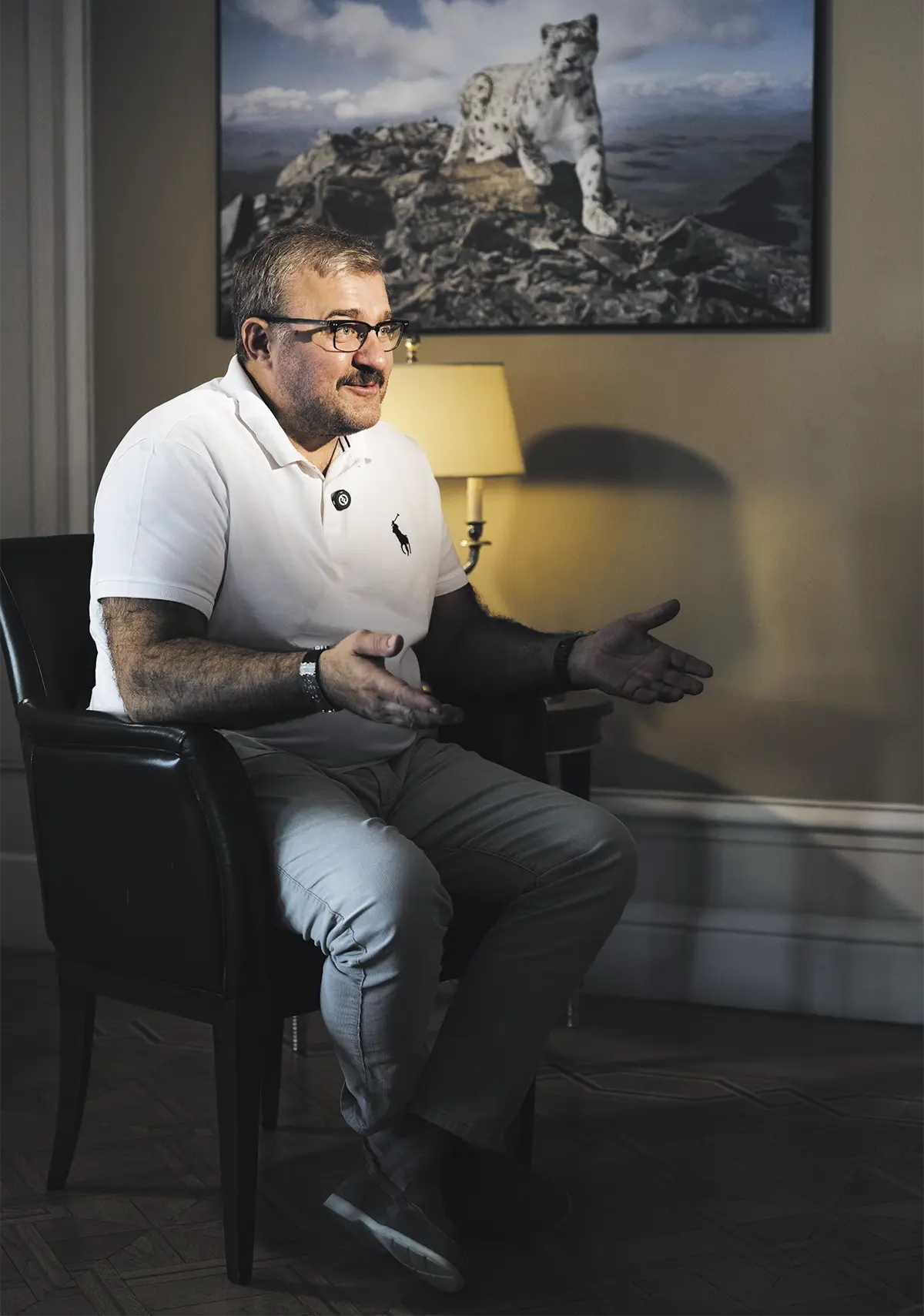
— First of all, we must not betray ourselves. We must remain Russians to the end. Remain who we are.
— What does ‘being Russian' mean to you?
— We're talking about my Motherland, about my home area, about what ties me to this land: where I can be and where I cannot be; what I feel here, what I do for it, what work I do, and how I am embedded in this world we call the Russian one. For me, all the lads at the SVO — Dagestanis, Chechens, Kalmyks, Buryats, Chuvash — are all Russian people in spirit and according to conviction. So, I think the Russian World must not collapse, it has no right to collapse.
We are a fairly gentle people. Our gentleness and goodness are often mistaken for weakness. But that is not the case. Now we keep saying ‘Western counterparts'. No, they are presumed adversaries. That is what we were taught at the military school. That is how they should be treated. If you call them presumed adversaries, everything falls into place. Of course, there are good people among them, but the Western side is poisoned by Russophobia; they are hard to negotiate with. Yet there are also remarkable people there with whom we should build friendly, business, and personal relationships. We have to make efforts and build those relationships where possible. But never forget that among the large mass of those people there are also presumed adversaries. We should not relax our guard; we should look at everything with clear eyes. We need to sort things out in our home and develop from within.
— And what needs to be done internally?
— We need to respect ourselves. We need to make others want to come to us and sit at the same table. We need to stick to our own business: science, education, literature, and art. We need to work on the economy. To make good cars, in the end.
We are talking about the things that are plain to see. We have to work honestly. For example, there is a remarkable document by Stanislavski, written at a moment of crisis in the theatre. It is called ‘Help!' (‘Karaul!' in Russian meaning literally ‘Guards!' or ‘Help!'). It has 18 points. There are a few examples: ‘The superhuman labour of directors who give actors the finest particles of their artistic soul is valued only in words, not in deeds.' Then Stanislavski says: ‘The artistic, administrative, ethical, and disciplinary life of the theatre is sustained by a small group of selfless workers. Their strength and patience are being exhausted.' So, start with yourself. It is all very simple. The theatre is a cross-section of society and the state. In some sense, the country is itself a theatre. So, we can learn from the great Konstantin Sergeyevich.
— Since the SVO (Special Military Operation) started, Russia has talked a great deal about the Russian World. Do we have a chance of recapturing the atmosphere you just described? What do we need to do to revive the prestige of the Russian language and culture?
— First of all, we must not betray ourselves. We must remain Russians to the end. Remain who we are.
— What does ‘being Russian' mean to you?
— We're talking about my Motherland, about my home area, about what ties me to this land: where I can be and where I cannot be; what I feel here, what I do for it, what work I do, and how I am embedded in this world we call the Russian one. For me, all the lads at the SVO — Dagestanis, Chechens, Kalmyks, Buryats, Chuvash — are all Russian people in spirit and according to conviction. So, I think the Russian World must not collapse, it has no right to collapse.
We are a fairly gentle people. Our gentleness and goodness are often mistaken for weakness. But that is not the case. Now we keep saying ‘Western counterparts'. No, they are presumed adversaries. That is what we were taught at the military school. That is how they should be treated. If you call them presumed adversaries, everything falls into place. Of course, there are good people among them, but the Western side is poisoned by Russophobia; they are hard to negotiate with. Yet there are also remarkable people there with whom we should build friendly, business, and personal relationships. We have to make efforts and build those relationships where possible. But never forget that among the large mass of those people there are also presumed adversaries. We should not relax our guard; we should look at everything with clear eyes. We need to sort things out in our home and develop from within.
— And what needs to be done internally?
— We need to respect ourselves. We need to make others want to come to us and sit at the same table. We need to stick to our own business: science, education, literature, and art. We need to work on the economy. To make good cars, in the end.
We are talking about the things that are plain to see. We have to work honestly. For example, there is a remarkable document by Stanislavski, written at a moment of crisis in the theatre. It is called ‘Help!' (‘Karaul!' in Russian meaning literally ‘Guards!' or ‘Help!'). It has 18 points. There are a few examples: ‘The superhuman labour of directors who give actors the finest particles of their artistic soul is valued only in words, not in deeds.' Then Stanislavski says: ‘The artistic, administrative, ethical, and disciplinary life of the theatre is sustained by a small group of selfless workers. Their strength and patience are being exhausted.' So, start with yourself. It is all very simple. The theatre is a cross-section of society and the state. In some sense, the country is itself a theatre. So, we can learn from the great Konstantin Sergeyevich.
‘As If Gagarin Had Flown into Space Again'
— You were one of those who supported the Crimean Spring and events in Donbass. You faced sharp criticism for it. Did it affect you?
— Look, there will always be criticism! What are we to do? We have to take it calmly, hold our ground, and do our work. My position has not changed at all. I am a Russian person, I live here. I witnessed all the events in Crimea. We were filming there during the complete blockade, when all the electricity and water had been cut off. I was there on the ground, seeing from the inside how people felt about it. Some people say: ‘No, it was an illegitimate referendum.' No, lads, the people rose up and said: ‘No, we don’t want this.' That’s all there is to it. I spoke to the people; I went to see them. Once I had a ride with a driver, a mature man, and I asked what he felt after the referendum. He said: ‘I had the feeling that Gagarin had flown into space again.'
— A new world had opened for him. A new era.
— A new world, a new chapter, coming back home. So, no, my feelings are exactly what they have always been.
— Twice, in 2018 and 2024, you served as a trusted representative of Vladimir Putin in the presidential elections. What did your duties involve?
— We represent the head of state: the person on whom the entirety of foreign and domestic policy depends. We must understand that our responsibility is personal. I took part in debates, attended round tables, and met people; we talked and visited various gatherings. It was an election campaign. We are media personalities; our mere presence is already work. So, measuring up to the head of state and supporting him in his election campaign are essential.
— Does that status leave a mark on your film career?
— We try to be discerning. All kinds of scripts come in. For sure, we don’t take on work that lacks creative merit. We take part in films and productions that interest us artistically. That is probably the primary reason we join any given project, and it has nothing to do with whether you represented the President or not. There are creative ambitions, aspirations, and roles you want to play. That is the main criterion for choosing work.
— You were one of those who supported the Crimean Spring and events in Donbass. You faced sharp criticism for it. Did it affect you?
— Look, there will always be criticism! What are we to do? We have to take it calmly, hold our ground, and do our work. My position has not changed at all. I am a Russian person, I live here. I witnessed all the events in Crimea. We were filming there during the complete blockade, when all the electricity and water had been cut off. I was there on the ground, seeing from the inside how people felt about it. Some people say: ‘No, it was an illegitimate referendum.' No, lads, the people rose up and said: ‘No, we don’t want this.' That’s all there is to it. I spoke to the people; I went to see them. Once I had a ride with a driver, a mature man, and I asked what he felt after the referendum. He said: ‘I had the feeling that Gagarin had flown into space again.'
— A new world had opened for him. A new era.
— A new world, a new chapter, coming back home. So, no, my feelings are exactly what they have always been.
— Twice, in 2018 and 2024, you served as a trusted representative of Vladimir Putin in the presidential elections. What did your duties involve?
— We represent the head of state: the person on whom the entirety of foreign and domestic policy depends. We must understand that our responsibility is personal. I took part in debates, attended round tables, and met people; we talked and visited various gatherings. It was an election campaign. We are media personalities; our mere presence is already work. So, measuring up to the head of state and supporting him in his election campaign are essential.
— Does that status leave a mark on your film career?
— We try to be discerning. All kinds of scripts come in. For sure, we don’t take on work that lacks creative merit. We take part in films and productions that interest us artistically. That is probably the primary reason we join any given project, and it has nothing to do with whether you represented the President or not. There are creative ambitions, aspirations, and roles you want to play. That is the main criterion for choosing work.
‘Mikha, There’s No Big Part'
— Please, recall the moment when Karen Shakhnazarov called and offered you the role of Gilyarovsky in the series ‘Khitrovka. Znak chetyryokh' (Khitrovka. The Sign of Four, 2023). How did you react?
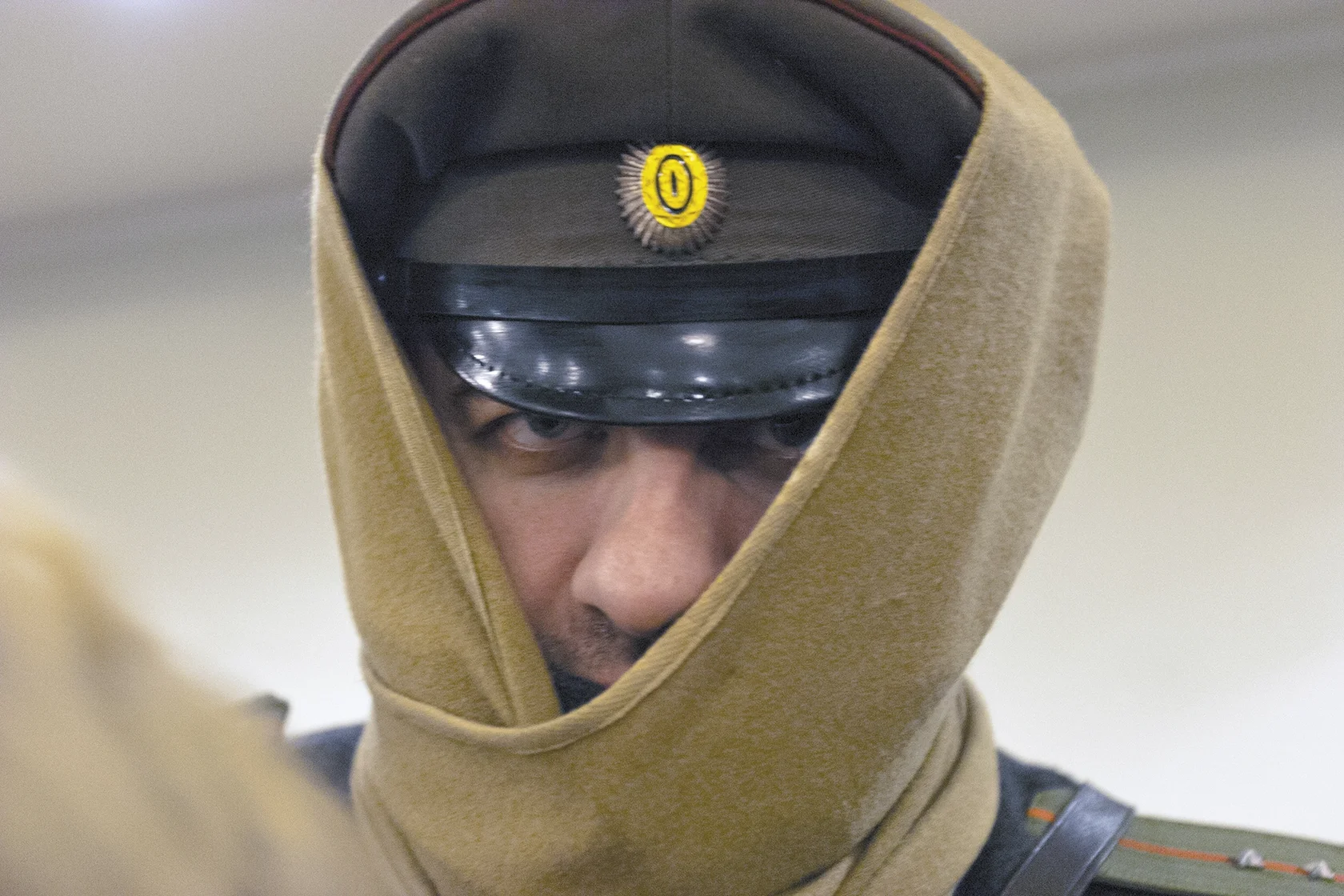
— I was pleased that Karen Georgiyevich called and invited me to this role. He is a major director, a great master, whose films I was watching back in my youth. He invited me and I was happy. We worked together beautifully. Let’s open Gilyarovsky’s book. (Vladimir Gilyarovsky, 1855−1935, journalist and writer, legendary chronicler of Moscow’s underworld and street life, best known for his book ‘Moskva i moskvichi' or ‘Moscow and Muscovites'). We know that he ran these very tours through Khitrovka (the notorious slum marketplace in nineteenth-century Moscow). We know that he was a respected man, ‘Uncle Gilyai'. Everyone knew him. Could such a thing have happened hypothetically? It could. When I was offered this role, it was sheer happiness. Especially, Gilyarovsky and ‘Moscow and Muscovites'. I love that kind of spirited historical romp. It could even have sequels.
— In ‘Khitrovka', you had a wonderful partnership with Konstantin Kryukov. Who is your ideal partner on set?
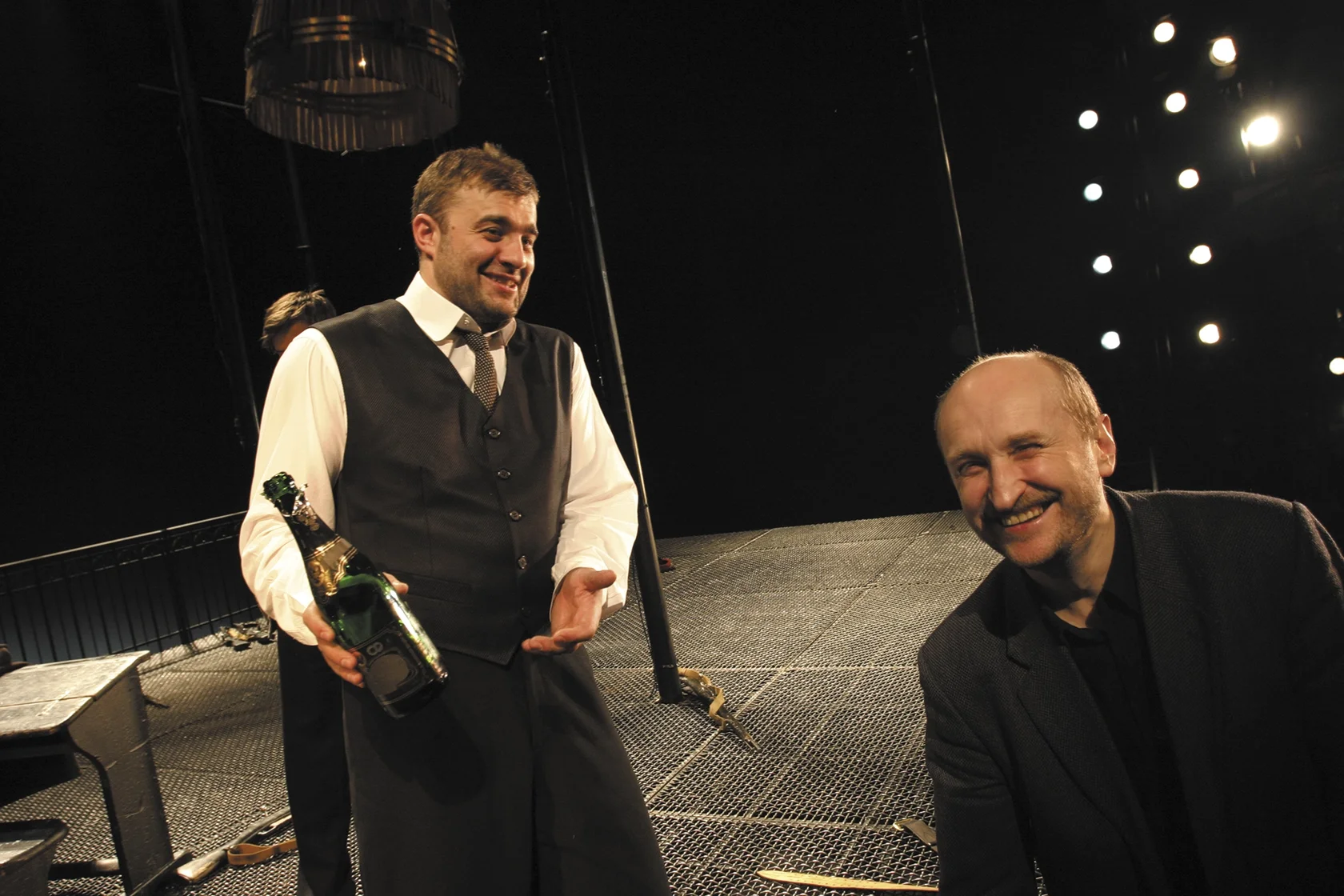
— Kostya Kryukov and I worked together beautifully. If there were another offer, I’d happily work with him again. In theatre, my ideal partners are everyone I graduated with. Konstantin Yuryevich Khabensky, Mikhail Nikolayevich Trukhin, Andryusha Zibrov. The lads with whom we staged ‘Waiting for Godot' directed by Yuri Nikolayevich Butusov, ‘Hamlet', ‘Tarelkin's Death' (Sukhovo-Kobylin's classic Russian farce), ‘Caligula', and ‘The Bedbug' (Mayakovsky's satirical play). These are productions that have already left their mark on the theatrical life of St Petersburg, Moscow, and indeed the whole country. Those are probably my ideal partners: we played on the stage together many times and were on the same wave. It was wonderful. Perhaps we’ll get together again and do something.
It was a colossal experience, of course, when I met up with Volodya Mashkov (Vladimir Mashkov is one of Russia’s leading actors and theatre directors). For me, he was a powerful beacon. And I stole a great deal from him afterwards, from what he did. But stealing is permitted in our profession.
— Did Mashkov know you were copying him?
— He was absolutely generous. Those are the people I love meeting on set.
But there are many young actors who are wonderful to work with, too: Zoya Berber, Kirill Kyaro. There’s a lot of talk about Nikita Kologrivy right now, for instance. He is wonderful, remarkable; a very subtle actor and human being, very respectful. He calls me Uncle Misha; I call him Nikisha. Right now, we’re filming a picture about Yuri Khoy, the leader of the band Sektor Gaza (the hugely popular Russian rock band of the late Soviet and post-Soviet period, known for their raw, darkly humorous lyrics; their lead singer Yuri Khoy died in 2000). The film is directed by Vladimir Shchegolkov. Nikita plays Khoy and I play his manager, Privalov. We have a wonderful relationship, a great creative atmosphere: jokes, conversations, delicate work. It’s all marvellous.
— Please, recall the moment when Karen Shakhnazarov called and offered you the role of Gilyarovsky in the series ‘Khitrovka. Znak chetyryokh' (Khitrovka. The Sign of Four, 2023). How did you react?
— I was pleased that Karen Georgiyevich called and invited me to this role. He is a major director, a great master, whose films I was watching back in my youth. He invited me and I was happy. We worked together beautifully. Let’s open Gilyarovsky’s book. (Vladimir Gilyarovsky, 1855−1935, journalist and writer, legendary chronicler of Moscow’s underworld and street life, best known for his book ‘Moskva i moskvichi' or ‘Moscow and Muscovites'). We know that he ran these very tours through Khitrovka (the notorious slum marketplace in nineteenth-century Moscow). We know that he was a respected man, ‘Uncle Gilyai'. Everyone knew him. Could such a thing have happened hypothetically? It could. When I was offered this role, it was sheer happiness. Especially, Gilyarovsky and ‘Moscow and Muscovites'. I love that kind of spirited historical romp. It could even have sequels.
— In ‘Khitrovka', you had a wonderful partnership with Konstantin Kryukov. Who is your ideal partner on set?
— Kostya Kryukov and I worked together beautifully. If there were another offer, I’d happily work with him again. In theatre, my ideal partners are everyone I graduated with. Konstantin Yuryevich Khabensky, Mikhail Nikolayevich Trukhin, Andryusha Zibrov. The lads with whom we staged ‘Waiting for Godot' directed by Yuri Nikolayevich Butusov, ‘Hamlet', ‘Tarelkin's Death' (Sukhovo-Kobylin's classic Russian farce), ‘Caligula', and ‘The Bedbug' (Mayakovsky's satirical play). These are productions that have already left their mark on the theatrical life of St Petersburg, Moscow, and indeed the whole country. Those are probably my ideal partners: we played on the stage together many times and were on the same wave. It was wonderful. Perhaps we’ll get together again and do something.
It was a colossal experience, of course, when I met up with Volodya Mashkov (Vladimir Mashkov is one of Russia’s leading actors and theatre directors). For me, he was a powerful beacon. And I stole a great deal from him afterwards, from what he did. But stealing is permitted in our profession.
— Did Mashkov know you were copying him?
— He was absolutely generous. Those are the people I love meeting on set.
But there are many young actors who are wonderful to work with, too: Zoya Berber, Kirill Kyaro. There’s a lot of talk about Nikita Kologrivy right now, for instance. He is wonderful, remarkable; a very subtle actor and human being, very respectful. He calls me Uncle Misha; I call him Nikisha. Right now, we’re filming a picture about Yuri Khoy, the leader of the band Sektor Gaza (the hugely popular Russian rock band of the late Soviet and post-Soviet period, known for their raw, darkly humorous lyrics; their lead singer Yuri Khoy died in 2000). The film is directed by Vladimir Shchegolkov. Nikita plays Khoy and I play his manager, Privalov. We have a wonderful relationship, a great creative atmosphere: jokes, conversations, delicate work. It’s all marvellous.
‘You Have To Work With The Lord, Too'
— There is one fact from your biography that somehow slips through the net in your many interviews. I am talking about your passion for aircraft of the Great Patriotic War. Why did it captivate you?
— I wouldn't call it a passion specifically for aircraft. My real interest is in the history of the Second World War and what happened there. We made a documentary series based on Vladimir Medinsky’s book ‘Voyna i mify' (‘The War and the Myths'). History grips me, I’m into it, because 17 people from my father's village alone with my surname did not come back from the war. Seventeen! That is the greatest tragedy. My grandfather didn’t come back either: he was killed liberating Poland. That is why I am always troubled by why it happened; the causes of the war, its consequences, its lessons. And the Allies, why did they change so completely, just the moment the war ended? The main thing is that this history goes hand in hand with our present day.
— On 9 May 1945, when Churchill raised his glass to ‘the health of the great Stalin', Operation Unthinkable was already lying on his desk. Do you think the Allies' double-dealing strategy was caused by the lack of our pragmatism? Are we too ingenuous?
— For better or worse, yes, we are ingenuous. Our country is enormous, and we feel that there will always be another limit somewhere, and then another limit beyond that. And again, we live hoping that the Lord governs our territory, our country, directly.
— If that’s so, does it mean people don’t really need to get involved much?
— No, people need to work constantly, and we have to work with the Lord, too. Try it. It looks easy. You have to work; you have to lay your soul at the altar in order to believe. How should we work? It isn’t ‘come, ask, pray'. That doesn’t work. There is always inner work required. It is difficult work.
— There is one fact from your biography that somehow slips through the net in your many interviews. I am talking about your passion for aircraft of the Great Patriotic War. Why did it captivate you?
— I wouldn't call it a passion specifically for aircraft. My real interest is in the history of the Second World War and what happened there. We made a documentary series based on Vladimir Medinsky’s book ‘Voyna i mify' (‘The War and the Myths'). History grips me, I’m into it, because 17 people from my father's village alone with my surname did not come back from the war. Seventeen! That is the greatest tragedy. My grandfather didn’t come back either: he was killed liberating Poland. That is why I am always troubled by why it happened; the causes of the war, its consequences, its lessons. And the Allies, why did they change so completely, just the moment the war ended? The main thing is that this history goes hand in hand with our present day.
— On 9 May 1945, when Churchill raised his glass to ‘the health of the great Stalin', Operation Unthinkable was already lying on his desk. Do you think the Allies' double-dealing strategy was caused by the lack of our pragmatism? Are we too ingenuous?
— For better or worse, yes, we are ingenuous. Our country is enormous, and we feel that there will always be another limit somewhere, and then another limit beyond that. And again, we live hoping that the Lord governs our territory, our country, directly.
— If that’s so, does it mean people don’t really need to get involved much?
— No, people need to work constantly, and we have to work with the Lord, too. Try it. It looks easy. You have to work; you have to lay your soul at the altar in order to believe. How should we work? It isn’t ‘come, ask, pray'. That doesn’t work. There is always inner work required. It is difficult work.
— You have many children. A study has just come out suggesting that Generation Z are the first generation to show lower cognitive abilities than their parents. Do you think young people are genuinely getting less intelligent? Perhaps, we made mistakes with upbringing in the 90s?
— There is research suggesting that each successive generation is less adapted to life than the one before. Not less or more intelligent, simply less adapted. Why? The advance of progress. Large cities. We are disconnected from the land. Can you milk a cow?
— No. But I can cut grass with a scythe.
— That's already something. But you’re not from the Generation Z cohort. None of them now know how to catch a fish or build a fire. We have become so disconnected from the land! Nearly half the population of our country is concentrated in the European part, in the major cities. We need to go back to the land. There should to be some form of state support.
They say now: let’s settle apart the people, let’s build small towns, let’s build towns in Siberia, let’s go back to the land. A wonderful idea. Maybe, the zero element, ‘Newtonium', will appear in Mendeleev’s periodic table of elements. Maybe, we will re-examine everything science has told us. Maybe, we will understand that the planet’s magnetic fields have enormous impact on us, and that we need to walk barefoot on the earth. We need to preserve it for the next generations.
— Do you become younger inwardly with the birth of each child?
— We turn into children altogether, that’s 100 percent true. We never grow up. It’s just that the first 50 years are hard on a teenager.
— Is that why they say the first forty years of childhood are the hardest for a man?
— Yes, the first 40, or even 50 years of childhood are rather tough.
— How can we encourage young people to start families and have children?
— When my children were born, I was not wealthy. It was passion, love, something else altogether, but not wealth. There were no conditions, there was nothing at all, but there was love.
— And how can we make love happen?
— Sometimes — and perhaps always — we need to turn to the Creator. We have to believe heartily and pray for love to be in our life. After that, it will reveal everything on its own. And again, as I said, we need to be closer to the land, closer to nature. Barefoot on the grass.
— There is research suggesting that each successive generation is less adapted to life than the one before. Not less or more intelligent, simply less adapted. Why? The advance of progress. Large cities. We are disconnected from the land. Can you milk a cow?
— No. But I can cut grass with a scythe.
— That's already something. But you’re not from the Generation Z cohort. None of them now know how to catch a fish or build a fire. We have become so disconnected from the land! Nearly half the population of our country is concentrated in the European part, in the major cities. We need to go back to the land. There should to be some form of state support.
They say now: let’s settle apart the people, let’s build small towns, let’s build towns in Siberia, let’s go back to the land. A wonderful idea. Maybe, the zero element, ‘Newtonium', will appear in Mendeleev’s periodic table of elements. Maybe, we will re-examine everything science has told us. Maybe, we will understand that the planet’s magnetic fields have enormous impact on us, and that we need to walk barefoot on the earth. We need to preserve it for the next generations.
— Do you become younger inwardly with the birth of each child?
— We turn into children altogether, that’s 100 percent true. We never grow up. It’s just that the first 50 years are hard on a teenager.
— Is that why they say the first forty years of childhood are the hardest for a man?
— Yes, the first 40, or even 50 years of childhood are rather tough.
— How can we encourage young people to start families and have children?
— When my children were born, I was not wealthy. It was passion, love, something else altogether, but not wealth. There were no conditions, there was nothing at all, but there was love.
— And how can we make love happen?
— Sometimes — and perhaps always — we need to turn to the Creator. We have to believe heartily and pray for love to be in our life. After that, it will reveal everything on its own. And again, as I said, we need to be closer to the land, closer to nature. Barefoot on the grass.
The interview was conducted by Tatiana Antonova