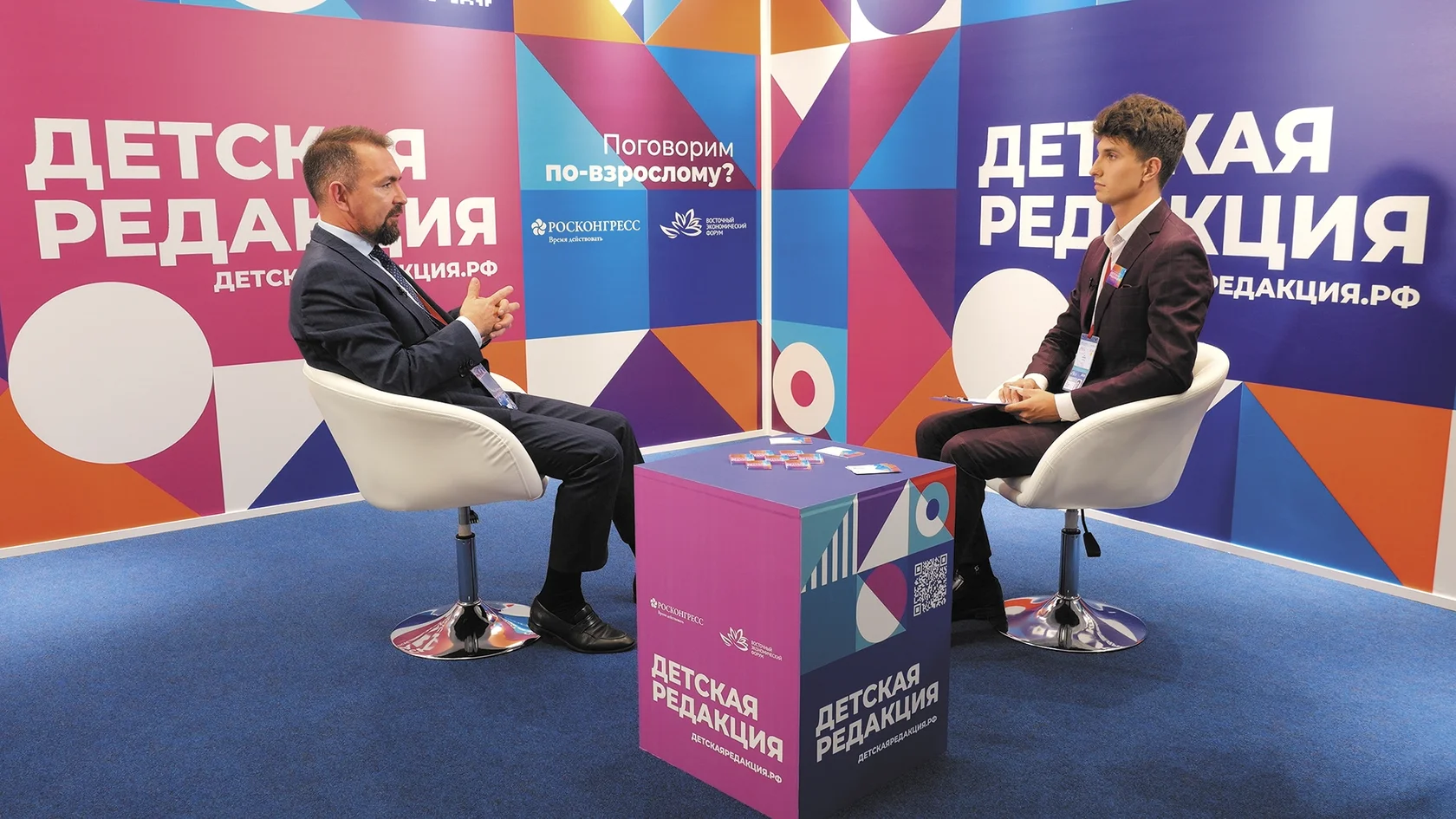
At SPIEF (St. Petersburg International Economic Forum), where thousands of experienced journalists work, it is Olga Trubacheva’s Children’s Editorial (Detskaya Redaktsiya) that has, for the fifth year running, brought schoolchildren to the forefront: they are conducting interviews with federal ministers, regional governors, business leaders, and even putting a question directly to the President.
— Olga, there is a stereotype that has been forming for decades: that content for children is either light and entertaining, or strictly educational — like a supplement to school. How did the idea arise of immersing schoolchildren in the country’s political, economic, and social agenda?
— If you look at history beyond the school textbook, Russia has a fairly long tradition of early youth engagement with ‘large' ideas. The Imperial Lycée students, the Pioneers, the Komsomol (Kommunistichesky Soyuz Molodezhi — the All-Union Leninist Young Communist League, the Soviet youth organisation for those aged 14−28) — those are very different projects ideologically, but they are united by a single purpose: to give young people an understanding of how the state works and what role a young person can play in it. What was fundamentally important to me was not to reproduce the forms of the past but to create a modern infrastructure where teenagers and adults meet in honest, professional conversation — not in an ideological monologue.
What teenagers want today is very rational. Entertainment and 'supplementary textbooks' are no longer enough for them. Young people want to understand how the economy actually works, how decisions are made, what career paths exist, and where their personal interests intersect with those of the country and business. What adults want mirrors this: to pass on experience and values, to warn about risks — but to be heard by people who are used to getting their information from social media rather than from official press releases. In essence, the Children’s Editorial has become the platform where these two demands — from teenagers and from adults — finally meet in live, structured dialogue rather than in parallel realities.
Looking at it globally, all developed societies today face the same problem: young people inhabit a different information ecosystem and trust traditional institutions far less than the generations before them. If this communications gap is not closed, it becomes not only a cultural but also a political and economic risk. We offer one possible structural response to this challenge — a managed public environment in which intergenerational conversation is built into the agenda of key decisions, rather than existing somewhere on the periphery.
— Five years ago, the Children’s Editorial arrived at SPIEF for the first time to cover the forum on an equal footing with the ‘adult' media. What preceded that debut? How did the team and the necessary competencies take shape?
— First came the School of Communications under the same brand — a separate, systematic track for developing transferable skills (nadprofessional'nye navyki — the Russian term for competencies that transcend a specific profession, equivalent to 'soft skills' or 'transversal skills') in teenagers and students. We teach not only how to speak on camera but, above all, how to think, how to ask questions, how to negotiate, how to structure a presentation, how to handle sensitive subjects. Only after that, in partnership with the Roscongress Foundation (the state foundation that organises SPIEF, the Eastern Economic Forum, and other major Russian forums), did we take the best students into the business arena. It was a bold and innovative decision, and I am very grateful for the support of Anton Anatolyevich Kobyakov, Adviser to the President of the Russian Federation, who chairs the Board of Trustees of the Children’s Editorial.
In essence, a new format of youth participation was born: not as spectators or crowd fillers, but as partners in discussing the agenda. It was undoubtedly a risk — to entrust teenagers with the right to ask questions of ministers and corporate heads at venues of the scale of SPIEF and the EEF (Eastern Economic Forum — Vostochny Ekonomichesky Forum, held annually in Vladivostok). Five years on, one can speak of an established model: the School as preparation, and the forums as both a testing ground and as infrastructure of intergenerational dialogue.
For Roscongress and the other organisers this is also a strategic experiment. Forums are assembly points for elites, and the appearance of a considered youth voice changes the dynamics of the space: teenagers cease to be an invited audience and become full participants in the discussion. The international conversation has for several years been grappling with the question of how to involve young people in decision-making without imitation or populism. Our experience is Russia’s answer to that challenge.
— If you look at history beyond the school textbook, Russia has a fairly long tradition of early youth engagement with ‘large' ideas. The Imperial Lycée students, the Pioneers, the Komsomol (Kommunistichesky Soyuz Molodezhi — the All-Union Leninist Young Communist League, the Soviet youth organisation for those aged 14−28) — those are very different projects ideologically, but they are united by a single purpose: to give young people an understanding of how the state works and what role a young person can play in it. What was fundamentally important to me was not to reproduce the forms of the past but to create a modern infrastructure where teenagers and adults meet in honest, professional conversation — not in an ideological monologue.
What teenagers want today is very rational. Entertainment and 'supplementary textbooks' are no longer enough for them. Young people want to understand how the economy actually works, how decisions are made, what career paths exist, and where their personal interests intersect with those of the country and business. What adults want mirrors this: to pass on experience and values, to warn about risks — but to be heard by people who are used to getting their information from social media rather than from official press releases. In essence, the Children’s Editorial has become the platform where these two demands — from teenagers and from adults — finally meet in live, structured dialogue rather than in parallel realities.
Looking at it globally, all developed societies today face the same problem: young people inhabit a different information ecosystem and trust traditional institutions far less than the generations before them. If this communications gap is not closed, it becomes not only a cultural but also a political and economic risk. We offer one possible structural response to this challenge — a managed public environment in which intergenerational conversation is built into the agenda of key decisions, rather than existing somewhere on the periphery.
— Five years ago, the Children’s Editorial arrived at SPIEF for the first time to cover the forum on an equal footing with the ‘adult' media. What preceded that debut? How did the team and the necessary competencies take shape?
— First came the School of Communications under the same brand — a separate, systematic track for developing transferable skills (nadprofessional'nye navyki — the Russian term for competencies that transcend a specific profession, equivalent to 'soft skills' or 'transversal skills') in teenagers and students. We teach not only how to speak on camera but, above all, how to think, how to ask questions, how to negotiate, how to structure a presentation, how to handle sensitive subjects. Only after that, in partnership with the Roscongress Foundation (the state foundation that organises SPIEF, the Eastern Economic Forum, and other major Russian forums), did we take the best students into the business arena. It was a bold and innovative decision, and I am very grateful for the support of Anton Anatolyevich Kobyakov, Adviser to the President of the Russian Federation, who chairs the Board of Trustees of the Children’s Editorial.
In essence, a new format of youth participation was born: not as spectators or crowd fillers, but as partners in discussing the agenda. It was undoubtedly a risk — to entrust teenagers with the right to ask questions of ministers and corporate heads at venues of the scale of SPIEF and the EEF (Eastern Economic Forum — Vostochny Ekonomichesky Forum, held annually in Vladivostok). Five years on, one can speak of an established model: the School as preparation, and the forums as both a testing ground and as infrastructure of intergenerational dialogue.
For Roscongress and the other organisers this is also a strategic experiment. Forums are assembly points for elites, and the appearance of a considered youth voice changes the dynamics of the space: teenagers cease to be an invited audience and become full participants in the discussion. The international conversation has for several years been grappling with the question of how to involve young people in decision-making without imitation or populism. Our experience is Russia’s answer to that challenge.
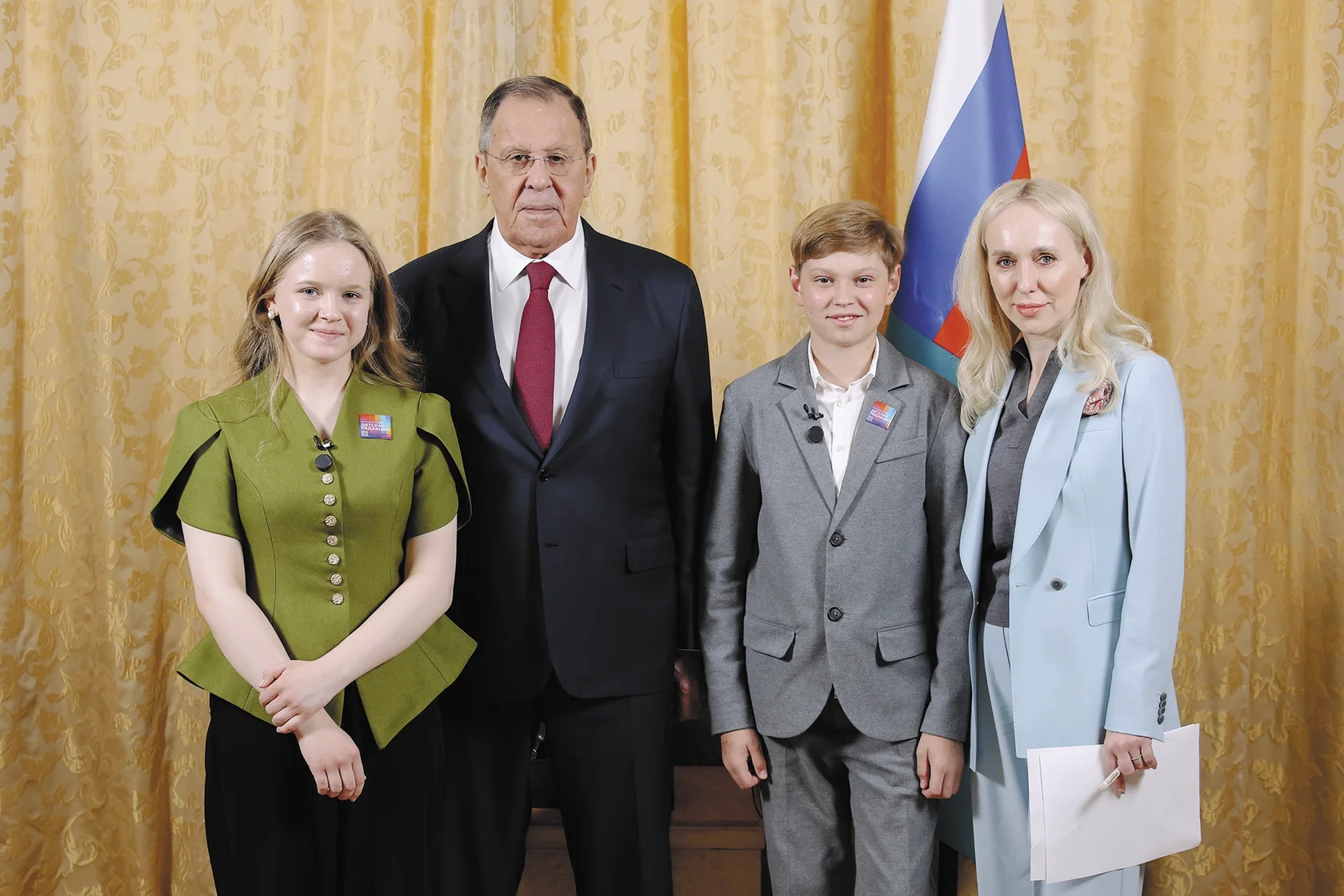
— How did you, as an interviewer, media manager, and entrepreneur, come to the idea of creating a School of Communications for teenagers and young people? What mattered more: the business potential or the mentorship?
— In today’s communications environment, these things cannot be placed on separate shelves. A viable media project today is built on audience trust, and trust arises where there is genuine usefulness and substance. In my case, the Children’s Editorial is a logical continuation of twenty years of work in media and communications — it was not a spontaneous idea.
I travelled the path from regional television to my own media holding, WBCMedia; founded the multimedia platform WBCMedia.ru for entrepreneurs and businesses; and personally conducted more than a thousand interviews with company founders and executives. At a certain point it became obvious: the next area of growth lay in working with the generation that, in ten years' time, will determine the shape of the country’s business landscape. For me, the Children’s Editorial is an investment in the human capital of the next wave —the people with whom the state, corporations, and the creative industries will have to work in the future.
— You emphasise that the Children’s Editorial is not a 'star factory' for the media market. Where do you see its main mission?
— We deliberately do not set ourselves the goal of 'producing' as many journalists and bloggers as possible. Our task is broader: to develop in teenagers and young people durable communicative competencies, critical thinking, and the skill of purposeful participation in the public sphere. These are what business schools call transferable skills and leadership competencies: the ability to speak, to listen, to ask difficult questions, to take responsibility for one’s words.
We create an environment in which young people learn to be active agents rather than mere consumers of information — and that matters not only for future media professionals but for future entrepreneurs, managers, and civil servants. In this sense, the Children’s Editorial is not a sector-specific project but an element of the country’s development infrastructure.
In the long term, this is not only about the development of individual children but about the resilience of institutions. People who from adolescence grow accustomed to speaking with the state and business in a normal, non-confrontational, and non-ceremonial format are far less inclined to perceive those institutions as alien. This is a question not only of upbringing but of strategic security: the more channels of honest conversation a society has, the less temptation there is to resolve contradictions through destruction.
— In today’s communications environment, these things cannot be placed on separate shelves. A viable media project today is built on audience trust, and trust arises where there is genuine usefulness and substance. In my case, the Children’s Editorial is a logical continuation of twenty years of work in media and communications — it was not a spontaneous idea.
I travelled the path from regional television to my own media holding, WBCMedia; founded the multimedia platform WBCMedia.ru for entrepreneurs and businesses; and personally conducted more than a thousand interviews with company founders and executives. At a certain point it became obvious: the next area of growth lay in working with the generation that, in ten years' time, will determine the shape of the country’s business landscape. For me, the Children’s Editorial is an investment in the human capital of the next wave —the people with whom the state, corporations, and the creative industries will have to work in the future.
— You emphasise that the Children’s Editorial is not a 'star factory' for the media market. Where do you see its main mission?
— We deliberately do not set ourselves the goal of 'producing' as many journalists and bloggers as possible. Our task is broader: to develop in teenagers and young people durable communicative competencies, critical thinking, and the skill of purposeful participation in the public sphere. These are what business schools call transferable skills and leadership competencies: the ability to speak, to listen, to ask difficult questions, to take responsibility for one’s words.
We create an environment in which young people learn to be active agents rather than mere consumers of information — and that matters not only for future media professionals but for future entrepreneurs, managers, and civil servants. In this sense, the Children’s Editorial is not a sector-specific project but an element of the country’s development infrastructure.
In the long term, this is not only about the development of individual children but about the resilience of institutions. People who from adolescence grow accustomed to speaking with the state and business in a normal, non-confrontational, and non-ceremonial format are far less inclined to perceive those institutions as alien. This is a question not only of upbringing but of strategic security: the more channels of honest conversation a society has, the less temptation there is to resolve contradictions through destruction.

— What proved most difficult in launching an intergenerational dialogue?
— The most difficult thing was overcoming the inertia of adult scepticism. At the outset we genuinely had to explain at some length to federal ministers, regional governors, major entrepreneurs, and senior executives that teenagers are capable of carrying on a substantive conversation and of asking questions every bit as precise as those of adult professional journalists. There was anxiety about what this would look like, whether it would trivialise the agenda, and whether everything would dissolve into a 'feel-good picture'.
On our side, there was not only enthusiasm but also a fairly rigorous methodology. We do not bring just any group of schoolchildren to the forums 'for appearances'. The students go through a selection process, study at the School of Communications, work with editors and producers, prepare their questions, and understand the background and role of their guests. What the viewer sees as spontaneous conversation is in fact the result of serious preparation. In this sense, the model is closer not to a children’s club but to an adult school of public affairs.
Today, many guests themselves initiate participation in our studio, because they see several simultaneous benefits: the opportunity to explain complex matters in accessible language, the opportunity to hear live, unfiltered questions, and the opportunity to shape their image in the eyes of the younger generation — not through rumour and memes but through personal conversation. For the authorities and for business, this is a very precise instrument for managing reputation and shaping the future agenda.
There is also an important point that is rarely stated directly: if the authorities and business do not create such platforms, the conversation happens anyway, but in other spaces, without moderation or accountability. In that case, any crisis and any sharp move can only be interpreted through the lens of distrust. We think it is strategically sound to ensure that the authorities and businesses have a civilised, public, and regular platform for conversation with young people — and that is precisely what we offer.
— You have listed many venues and formats. Which achievements do you consider fundamentally significant?
— I would divide the achievements into quantitative and qualitative. On the quantitative side: the Children’s Editorial has become the first and, so far, the only youth media outlet in Russia to work for the fifth consecutive year at SPIEF and the country’s other major forums on an equal footing with the leading editorial teams. We are regularly present at the Eastern Economic Forum, the Caucasus Investment Forum, Russian Energy Week, the Forum of Future Technologies, the International Forum of Education Ministers, the Russia — A Sports Power forum, and a number of other major events.
Over this period, we have conducted more than 900 interviews with public officials, business leaders, scientists, cultural figures, and athletes, and produced over 350 creative reports that immerse young audiences in the agenda of key forum events.
These figures matter not only as a measure of scale. Over five years, a body of material has accumulated that is already being used as an analytical resource: what questions teenagers ask, how their formulations change year on year, which subjects generate the strongest response from guests. This is a living sociology of intergenerational dialogue, not in the form of surveys and reports but in the format of real conversations. And it is something that can and should be used in developing education, youth, and cultural policies.
And beyond that, we have effectively built a new channel of public communication: teenagers regularly speak directly to decision-makers, who in turn gain the opportunity to talk with future voters, employees, and partners in a safe but honest environment.
Special projects deserve a separate mention. Children in Big Business, Let’s Ask Moscow, and the research project with Airports of the Regions (Aeroporty Regionov — a major Russian regional airport management company) — these are not simply media products but models of interaction that can be scaled to other sectors, from housing and utilities (ZhKKh — zhilishchno-kommunalnoye khozyaystvo, the housing and communal services sector) to high technology. For partners, these are ready-made formats through which youth audiences can be engaged systematically, rather than from one forum to the next.
— The most difficult thing was overcoming the inertia of adult scepticism. At the outset we genuinely had to explain at some length to federal ministers, regional governors, major entrepreneurs, and senior executives that teenagers are capable of carrying on a substantive conversation and of asking questions every bit as precise as those of adult professional journalists. There was anxiety about what this would look like, whether it would trivialise the agenda, and whether everything would dissolve into a 'feel-good picture'.
On our side, there was not only enthusiasm but also a fairly rigorous methodology. We do not bring just any group of schoolchildren to the forums 'for appearances'. The students go through a selection process, study at the School of Communications, work with editors and producers, prepare their questions, and understand the background and role of their guests. What the viewer sees as spontaneous conversation is in fact the result of serious preparation. In this sense, the model is closer not to a children’s club but to an adult school of public affairs.
Today, many guests themselves initiate participation in our studio, because they see several simultaneous benefits: the opportunity to explain complex matters in accessible language, the opportunity to hear live, unfiltered questions, and the opportunity to shape their image in the eyes of the younger generation — not through rumour and memes but through personal conversation. For the authorities and for business, this is a very precise instrument for managing reputation and shaping the future agenda.
There is also an important point that is rarely stated directly: if the authorities and business do not create such platforms, the conversation happens anyway, but in other spaces, without moderation or accountability. In that case, any crisis and any sharp move can only be interpreted through the lens of distrust. We think it is strategically sound to ensure that the authorities and businesses have a civilised, public, and regular platform for conversation with young people — and that is precisely what we offer.
— You have listed many venues and formats. Which achievements do you consider fundamentally significant?
— I would divide the achievements into quantitative and qualitative. On the quantitative side: the Children’s Editorial has become the first and, so far, the only youth media outlet in Russia to work for the fifth consecutive year at SPIEF and the country’s other major forums on an equal footing with the leading editorial teams. We are regularly present at the Eastern Economic Forum, the Caucasus Investment Forum, Russian Energy Week, the Forum of Future Technologies, the International Forum of Education Ministers, the Russia — A Sports Power forum, and a number of other major events.
Over this period, we have conducted more than 900 interviews with public officials, business leaders, scientists, cultural figures, and athletes, and produced over 350 creative reports that immerse young audiences in the agenda of key forum events.
These figures matter not only as a measure of scale. Over five years, a body of material has accumulated that is already being used as an analytical resource: what questions teenagers ask, how their formulations change year on year, which subjects generate the strongest response from guests. This is a living sociology of intergenerational dialogue, not in the form of surveys and reports but in the format of real conversations. And it is something that can and should be used in developing education, youth, and cultural policies.
And beyond that, we have effectively built a new channel of public communication: teenagers regularly speak directly to decision-makers, who in turn gain the opportunity to talk with future voters, employees, and partners in a safe but honest environment.
Special projects deserve a separate mention. Children in Big Business, Let’s Ask Moscow, and the research project with Airports of the Regions (Aeroporty Regionov — a major Russian regional airport management company) — these are not simply media products but models of interaction that can be scaled to other sectors, from housing and utilities (ZhKKh — zhilishchno-kommunalnoye khozyaystvo, the housing and communal services sector) to high technology. For partners, these are ready-made formats through which youth audiences can be engaged systematically, rather than from one forum to the next.
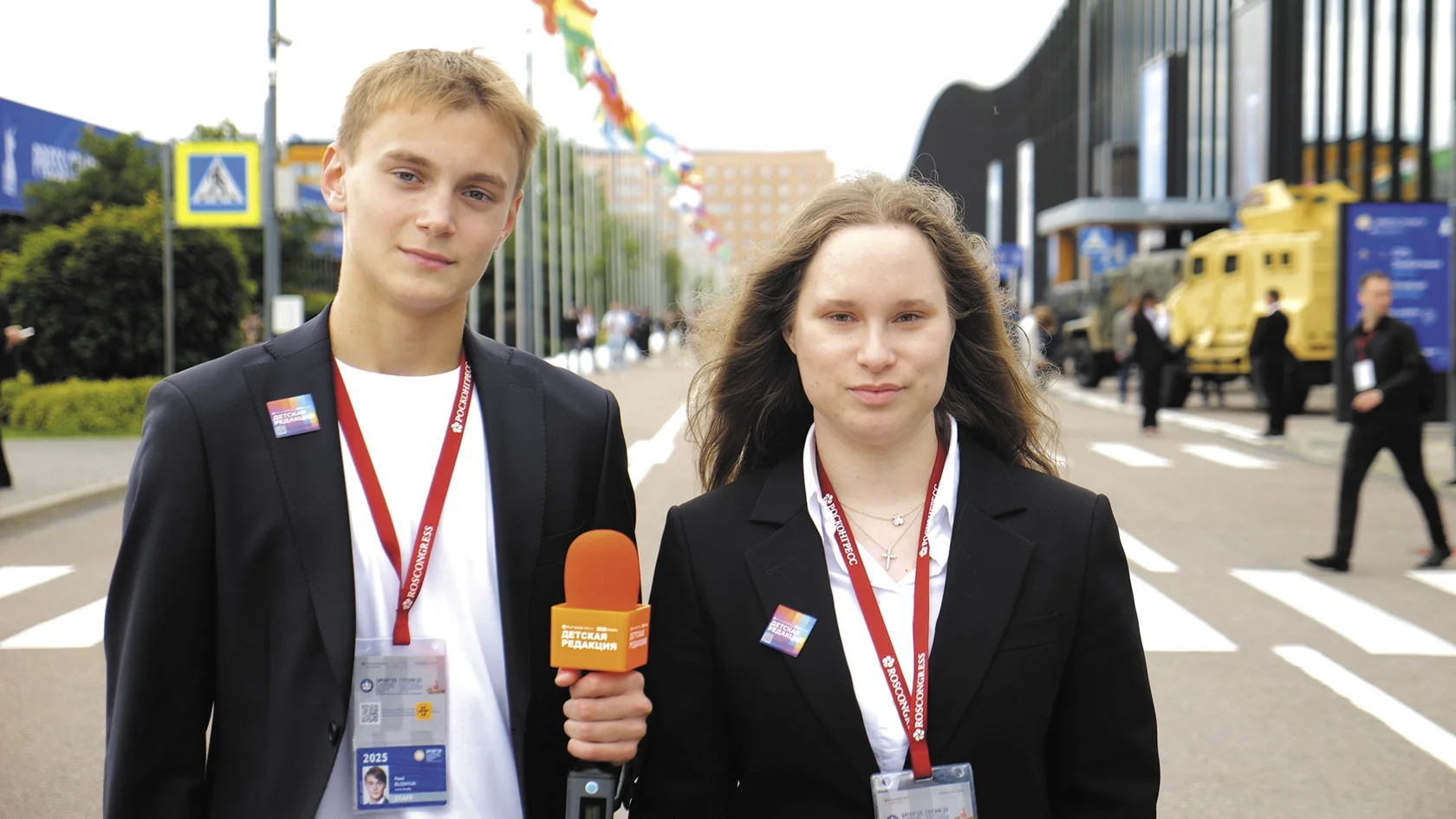
— Speaking of dialogue between the authorities and young people: which Russian politicians and public figures have already been guests of the studio, and which moments would you consider especially significant?
— Without a doubt, the most symbolic event was the participation of our correspondents Masha Panina and Maxim Zakharov in the annual live broadcast Itogi goda s Vladimirom Putinym ('Year in Review with Vladimir Putin') in December 2025. The President himself addressed the students, and his remark — 'The Children’s Editorial — how could one not pay attention?' — became our unofficial motto. The reply to Maxim’s question about where the head of state obtains information about people’s real lives was picked up by every federal media outlet and demonstrated that questions from teenagers can shape the news agenda on equal terms with questions from adult journalists.
There are other episodes that illustrate our role well. At the St. Petersburg International Legal Forum (SPILF — Peterburgsky Mezhdunarodny Yuridichesky Forum, one of Russia’s major annual forums on law and justice), Nikita Mikhalkov (the celebrated Russian film director), in conversation with our correspondent Sofya Kurasheva, compiled his personal list of films essential to every young person’s development; the clip went viral. This year, we have held meaningful conversations with Transport Minister Andrei Nikitin, and we work regularly with the MFA (Ministerstvo inostrannykh del — Ministry of Foreign Affairs) team: Maria Zakharova and Dmitry Birichevsky. For government structures, this is an opportunity not simply to 'deliver a message' but to be heard by a youth audience accustomed to an entirely different perspective and pace of information.
— What questions do teenagers most often put to ministers and regional governors? What genuinely concerns them?
— The most predictable topics are, of course, education, career paths, the professions of the future, entrepreneurship, and the personal qualities that help one 'reach such a position'. But the students also very frequently engage with substantive policy issues: from cultural identity and the development of cinema to the prospects of regional economies, infrastructure, and social programmes.
At SPIEF‑2025, for example, there was a very strong conversation with Culture Minister Olga Lubimova: in language accessible to teenagers, she explained what cultural identity means, using the hit film Cheburashka (the 2023 Russian animated feature film, which became one of the highest-grossing domestic films in Russian cinema history) to illustrate the strategy for developing home-grown cinema. Economic Affairs Minister Maxim Reshetnikov spoke with the students about the real risks and opportunities that youth start-ups face, and why ‘economic thinking' matters even for those who are not planning to go into business. In these dialogues, we see how complex matters of state and economics cease to be 'someone else’s agenda' for teenagers and become part of their own planning horizon.
— You frequently invite regional governors to the studio. What do teenagers discuss with them, and what does it give both sides?
— With regional governors, our correspondents discuss a broad range of topics: from youth policy and educational projects to infrastructure, support for local initiatives, and tourism. The portal DetskayaRedaktsiya. RF currently hosts interviews with the heads of more than 30 federal subjects (sub'ekty Federatsii — the constituent units of the Russian Federation, of which there are 89, including republics, oblasts, krais, federal cities, and autonomous districts). For teenagers, this is like a practical course in how the country works: they begin to see Russia not only through the lens of Moscow but as a collection of very different regions, each with its own strategies and opportunities.
For regional heads, it is also a valuable instrument. Each such conversation is a mini focus group with the region’s future residents and leaders. The questions teenagers ask reveal what genuinely concerns them: the quality of the environment, transport, culture, and opportunities for self-realisation. We are seriously considering the idea of bringing these interviews together into a dedicated special project: 'Russia for Young People Through the Eyes of the Governors'.
— How do you manage to attract guests of that calibre, given that even reputable adult media do not always succeed in doing so?
— Several factors are at work. First, accumulated trust capital: over five years, the Children’s Editorial has shown that it knows how to work carefully, professionally, and yet with vitality. Second, the right-moment effect: today both the authorities and business understand that without direct dialogue with young people it is impossible to build a long-term strategy. We offer a format for that dialogue that is comfortable for all parties.
And perhaps the most important factor is the quality of the questions. Teenagers do not play at being 'tough interviewers' and do not try to catch their guest out. They ask what they genuinely want to understand: How do you make decisions? What does success mean to you? What do you think of mistakes? What would you advise to your younger self? As a result, officials, politicians, and business leaders in our studio frequently reveal themselves as people rather than job titles. We have more than once heard from adult viewers: 'You have to visit the DetskayaRedaktsiya. rf portal if you want to see the humans behind the high positions.' For partners, this is a subtle but powerful reputational resource.
— Without a doubt, the most symbolic event was the participation of our correspondents Masha Panina and Maxim Zakharov in the annual live broadcast Itogi goda s Vladimirom Putinym ('Year in Review with Vladimir Putin') in December 2025. The President himself addressed the students, and his remark — 'The Children’s Editorial — how could one not pay attention?' — became our unofficial motto. The reply to Maxim’s question about where the head of state obtains information about people’s real lives was picked up by every federal media outlet and demonstrated that questions from teenagers can shape the news agenda on equal terms with questions from adult journalists.
There are other episodes that illustrate our role well. At the St. Petersburg International Legal Forum (SPILF — Peterburgsky Mezhdunarodny Yuridichesky Forum, one of Russia’s major annual forums on law and justice), Nikita Mikhalkov (the celebrated Russian film director), in conversation with our correspondent Sofya Kurasheva, compiled his personal list of films essential to every young person’s development; the clip went viral. This year, we have held meaningful conversations with Transport Minister Andrei Nikitin, and we work regularly with the MFA (Ministerstvo inostrannykh del — Ministry of Foreign Affairs) team: Maria Zakharova and Dmitry Birichevsky. For government structures, this is an opportunity not simply to 'deliver a message' but to be heard by a youth audience accustomed to an entirely different perspective and pace of information.
— What questions do teenagers most often put to ministers and regional governors? What genuinely concerns them?
— The most predictable topics are, of course, education, career paths, the professions of the future, entrepreneurship, and the personal qualities that help one 'reach such a position'. But the students also very frequently engage with substantive policy issues: from cultural identity and the development of cinema to the prospects of regional economies, infrastructure, and social programmes.
At SPIEF‑2025, for example, there was a very strong conversation with Culture Minister Olga Lubimova: in language accessible to teenagers, she explained what cultural identity means, using the hit film Cheburashka (the 2023 Russian animated feature film, which became one of the highest-grossing domestic films in Russian cinema history) to illustrate the strategy for developing home-grown cinema. Economic Affairs Minister Maxim Reshetnikov spoke with the students about the real risks and opportunities that youth start-ups face, and why ‘economic thinking' matters even for those who are not planning to go into business. In these dialogues, we see how complex matters of state and economics cease to be 'someone else’s agenda' for teenagers and become part of their own planning horizon.
— You frequently invite regional governors to the studio. What do teenagers discuss with them, and what does it give both sides?
— With regional governors, our correspondents discuss a broad range of topics: from youth policy and educational projects to infrastructure, support for local initiatives, and tourism. The portal DetskayaRedaktsiya. RF currently hosts interviews with the heads of more than 30 federal subjects (sub'ekty Federatsii — the constituent units of the Russian Federation, of which there are 89, including republics, oblasts, krais, federal cities, and autonomous districts). For teenagers, this is like a practical course in how the country works: they begin to see Russia not only through the lens of Moscow but as a collection of very different regions, each with its own strategies and opportunities.
For regional heads, it is also a valuable instrument. Each such conversation is a mini focus group with the region’s future residents and leaders. The questions teenagers ask reveal what genuinely concerns them: the quality of the environment, transport, culture, and opportunities for self-realisation. We are seriously considering the idea of bringing these interviews together into a dedicated special project: 'Russia for Young People Through the Eyes of the Governors'.
— How do you manage to attract guests of that calibre, given that even reputable adult media do not always succeed in doing so?
— Several factors are at work. First, accumulated trust capital: over five years, the Children’s Editorial has shown that it knows how to work carefully, professionally, and yet with vitality. Second, the right-moment effect: today both the authorities and business understand that without direct dialogue with young people it is impossible to build a long-term strategy. We offer a format for that dialogue that is comfortable for all parties.
And perhaps the most important factor is the quality of the questions. Teenagers do not play at being 'tough interviewers' and do not try to catch their guest out. They ask what they genuinely want to understand: How do you make decisions? What does success mean to you? What do you think of mistakes? What would you advise to your younger self? As a result, officials, politicians, and business leaders in our studio frequently reveal themselves as people rather than job titles. We have more than once heard from adult viewers: 'You have to visit the DetskayaRedaktsiya. rf portal if you want to see the humans behind the high positions.' For partners, this is a subtle but powerful reputational resource.
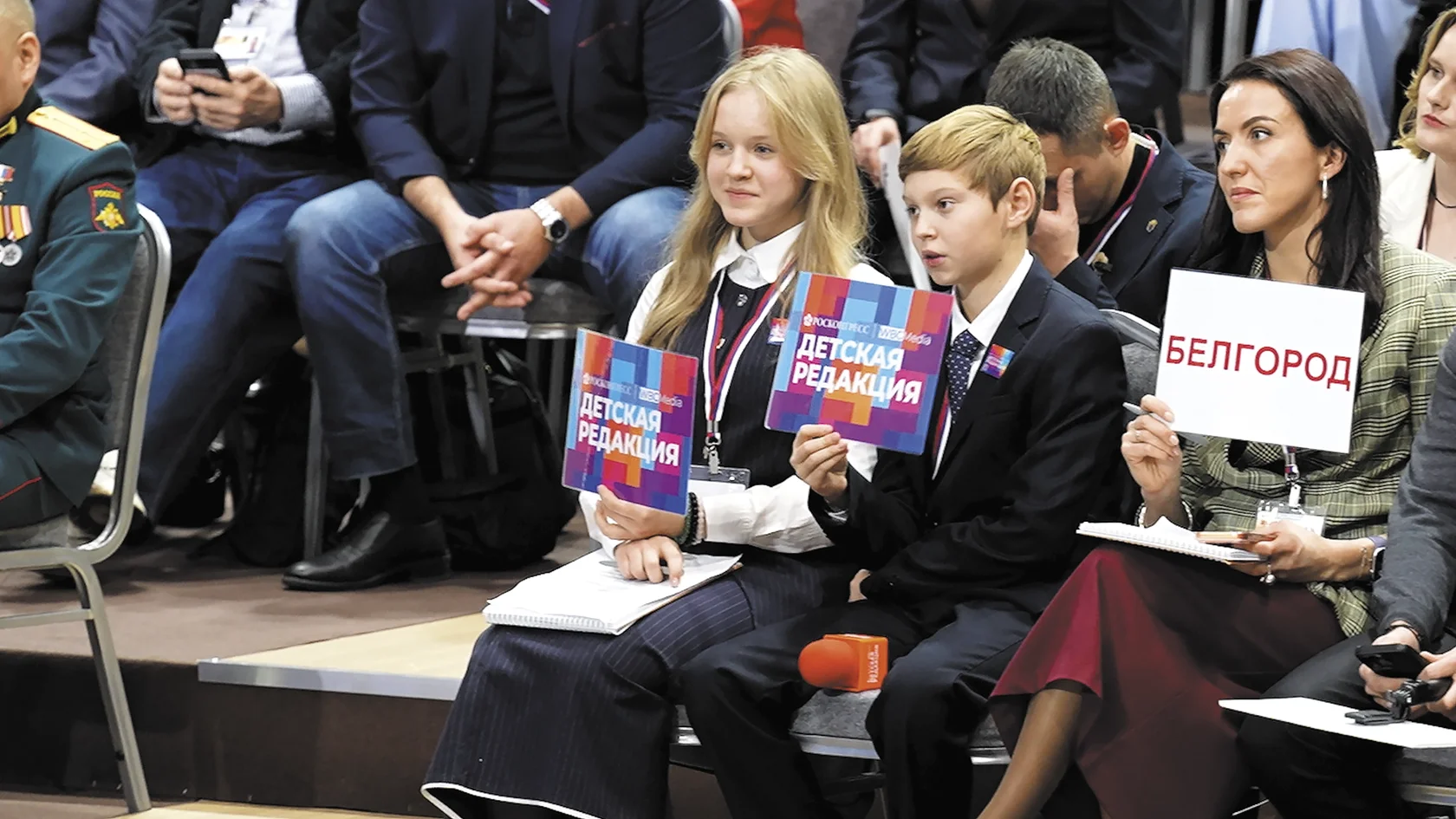
— This year, the Children’s Editorial marks two milestones at once: the fifth anniversary of working at SPIEF, and the hundredth studio guest within the framework of the forum. What are your plans, and what can partners and guests expect?
— The fifth anniversary for us is not simply an occasion to celebrate the format’s durability but an opportunity to set a new benchmark. At SPIEF‑2026, we plan to strengthen the international agenda, develop cooperation with the Diplomatic Academy of MGIMO (Moscow State Institute of International Relations — Russia’s leading university for diplomacy and international affairs, affiliated with the Ministry of Foreign Affairs) and with the Russian Children’s and Youth Centre, and give greater voice to schoolchildren from the regions — including through the format of virtual correspondents. For partners, this is a chance to join the project not as a one-off sponsor but as a co-author of new formats: industry laboratories with youth participation, research projects, and regional programmes.
We look at SPIEF‑2026 not only as a first anniversary but as the start of the next cycle. If the first five years proved that the model works, the next phase is scaling and deepening: a regional dimension, international formats, joint research with academic and business partners. We are open to collaboration with those who are ready to engage with young people in a substantive and long-term way, rather than limiting themselves to one-off events and attractive photo reports.
We will find out closer to the forum who the hundredth studio guest at SPIEF will be. We will be glad to welcome all forum participants to our open studio. We are easy to find: wherever there are many people quietly watching young correspondents at work. And as the President once said: 'The Children’s Editorial — how could one not pay attention?'
— The fifth anniversary for us is not simply an occasion to celebrate the format’s durability but an opportunity to set a new benchmark. At SPIEF‑2026, we plan to strengthen the international agenda, develop cooperation with the Diplomatic Academy of MGIMO (Moscow State Institute of International Relations — Russia’s leading university for diplomacy and international affairs, affiliated with the Ministry of Foreign Affairs) and with the Russian Children’s and Youth Centre, and give greater voice to schoolchildren from the regions — including through the format of virtual correspondents. For partners, this is a chance to join the project not as a one-off sponsor but as a co-author of new formats: industry laboratories with youth participation, research projects, and regional programmes.
We look at SPIEF‑2026 not only as a first anniversary but as the start of the next cycle. If the first five years proved that the model works, the next phase is scaling and deepening: a regional dimension, international formats, joint research with academic and business partners. We are open to collaboration with those who are ready to engage with young people in a substantive and long-term way, rather than limiting themselves to one-off events and attractive photo reports.
We will find out closer to the forum who the hundredth studio guest at SPIEF will be. We will be glad to welcome all forum participants to our open studio. We are easy to find: wherever there are many people quietly watching young correspondents at work. And as the President once said: 'The Children’s Editorial — how could one not pay attention?'