In the 1990s, it became fashionable and prestigious in the CIS (Commonwealth of Independent States, the loose grouping of post-Soviet republics established in December 1991) to attend business forums abroad. The World Economic Forum in Davos, Switzerland, was particularly sought-after. The focus of such events frequently fell on the economic and political reforms under way in the Russian Federation and the CIS countries as a whole. For reasons that were never entirely clear, it was assumed that politicians and business people from our countries had to examine their domestic affairs necessarily outside the CIS. There was also an obvious shortage of home-grown platforms for wide-ranging discussion of the issues faced by the former Soviet republics. Recognising this, St Petersburg Mayor Anatoly Aleksandrovich Sobchak repeatedly proposed holding world-class forums in Russia’s Northern Capital (an unofficial name of St Petersburg), citing as an argument the successful hosting of the third Annual Meeting of the European Bank for Reconstruction and Development at the Tauride Palace (‘Tavrichesky Dvorets' in Russian, the magnificent 18th-century palace in St Petersburg built for Prince Potemkin, which served as the seat of Russia’s Imperial State Duma and now houses the Inter-Parliamentary Assembly of the CIS) in 1994.
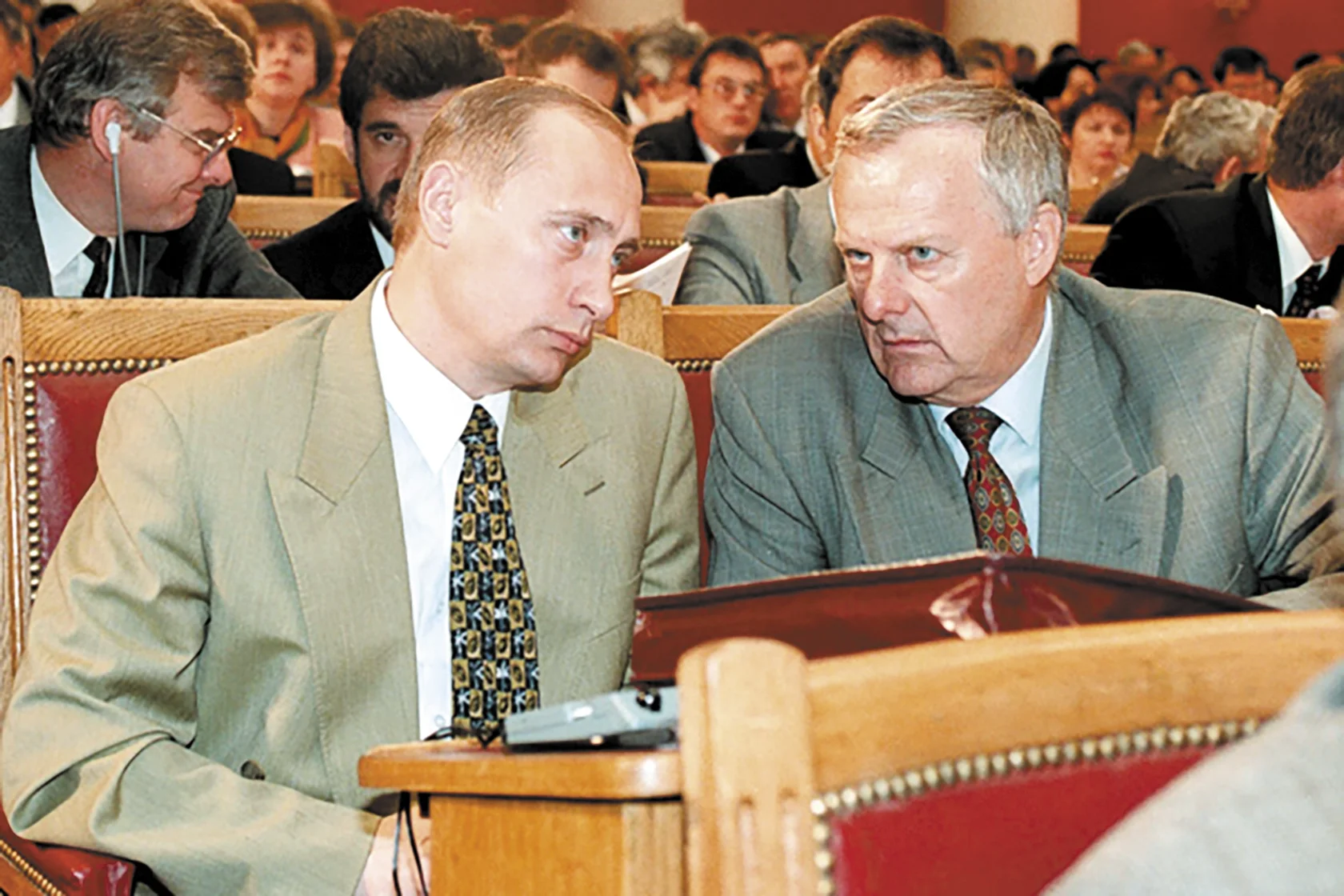
In 1997, Sobchak’s ideas were fulfilled in the first St Petersburg Economic Forum. More than 1,500 people took part: heads of governments and parliaments of the CIS countries, heads of the constituent entities of the Russian Federation, business representatives, entrepreneurs, banking and financial professionals, trade union officials, and public figures. They all gathered at the Tauride Palace to chart paths for expanding economic cooperation between Russia and other CIS countries and the financial and industrial groups of the world’s leading states, to strengthen the inflow of foreign investment, and to find additional sources to sustain integration processes in the CIS states as the new millennium approached.
What the first St Petersburg Economic Forum was chiefly remembered for, and what subsequently became its principal distinguishing feature among comparable events, was actual practical effect: 650 investment projects were created and numerous agreements and contracts were made between heads of states, regions, and individual enterprises. The governments of the Republic of Belarus and the Russian Federation, for instance, signed a credit agreement for ten billion roubles at the Tauride Palace.
The first summit showed that the St Petersburg Economic Forum differed substantially from the ‘elitist' Davos forum. First, it was more democratic: beyond politicians and economic figures, experts from the widest range of industries gathered at its round tables. Second, our forum was directly connected to real-life experience, with three major industrial exhibitions timed to coincide with it. Third, the regions of Russia led by their governors were broadly represented.
It was significant and symbolic, too, that the Tauride Palace, 95 years after hosting the All-Russia Handicraft and Industrial Exhibition of 1902, once again became a meeting place for industrialists and entrepreneurs.
Subsequent forums saw the geography of participants broaden and their status rise. The guests of the second St Petersburg Economic Forum (17−19 June 1998) were particularly struck by the addresses of President of the Republic of Belarus Aleksandr Grigoryevich Lukashenko and Chairman of the Government of the Russian Federation Sergey Vladilеnovich Kiriyenko. In his address, Lukashenko predicted for the forum the future of ‘a Slavic Davos, to which the leaders of states, governments, and business circles from every country in the world will seek to be invited'.
The first four summits were chaired by Speaker of the Federation Council Egor Semenovich Stroyev (Chairman of the Federation Council, 1996−2001); from the fifth to the ninth, the St Petersburg Forum was led by his successor in that post, Sergey Mikhailovich Mironov (Chairman of the Federation Council, 2001−2011). From the fourth forum onward, President Vladimir Vladimirovich Putin issued an annual Executive Order for the holding of the St Petersburg Economic Forum, thereby affirming its status as Russia’s principal economic summit. From the seventh forum, in recognition of the event’s ever-growing scale, it acquired a new name: the St Petersburg International Economic Forum, or SPIEF.
What the first St Petersburg Economic Forum was chiefly remembered for, and what subsequently became its principal distinguishing feature among comparable events, was actual practical effect: 650 investment projects were created and numerous agreements and contracts were made between heads of states, regions, and individual enterprises. The governments of the Republic of Belarus and the Russian Federation, for instance, signed a credit agreement for ten billion roubles at the Tauride Palace.
The first summit showed that the St Petersburg Economic Forum differed substantially from the ‘elitist' Davos forum. First, it was more democratic: beyond politicians and economic figures, experts from the widest range of industries gathered at its round tables. Second, our forum was directly connected to real-life experience, with three major industrial exhibitions timed to coincide with it. Third, the regions of Russia led by their governors were broadly represented.
It was significant and symbolic, too, that the Tauride Palace, 95 years after hosting the All-Russia Handicraft and Industrial Exhibition of 1902, once again became a meeting place for industrialists and entrepreneurs.
Subsequent forums saw the geography of participants broaden and their status rise. The guests of the second St Petersburg Economic Forum (17−19 June 1998) were particularly struck by the addresses of President of the Republic of Belarus Aleksandr Grigoryevich Lukashenko and Chairman of the Government of the Russian Federation Sergey Vladilеnovich Kiriyenko. In his address, Lukashenko predicted for the forum the future of ‘a Slavic Davos, to which the leaders of states, governments, and business circles from every country in the world will seek to be invited'.
The first four summits were chaired by Speaker of the Federation Council Egor Semenovich Stroyev (Chairman of the Federation Council, 1996−2001); from the fifth to the ninth, the St Petersburg Forum was led by his successor in that post, Sergey Mikhailovich Mironov (Chairman of the Federation Council, 2001−2011). From the fourth forum onward, President Vladimir Vladimirovich Putin issued an annual Executive Order for the holding of the St Petersburg Economic Forum, thereby affirming its status as Russia’s principal economic summit. From the seventh forum, in recognition of the event’s ever-growing scale, it acquired a new name: the St Petersburg International Economic Forum, or SPIEF.
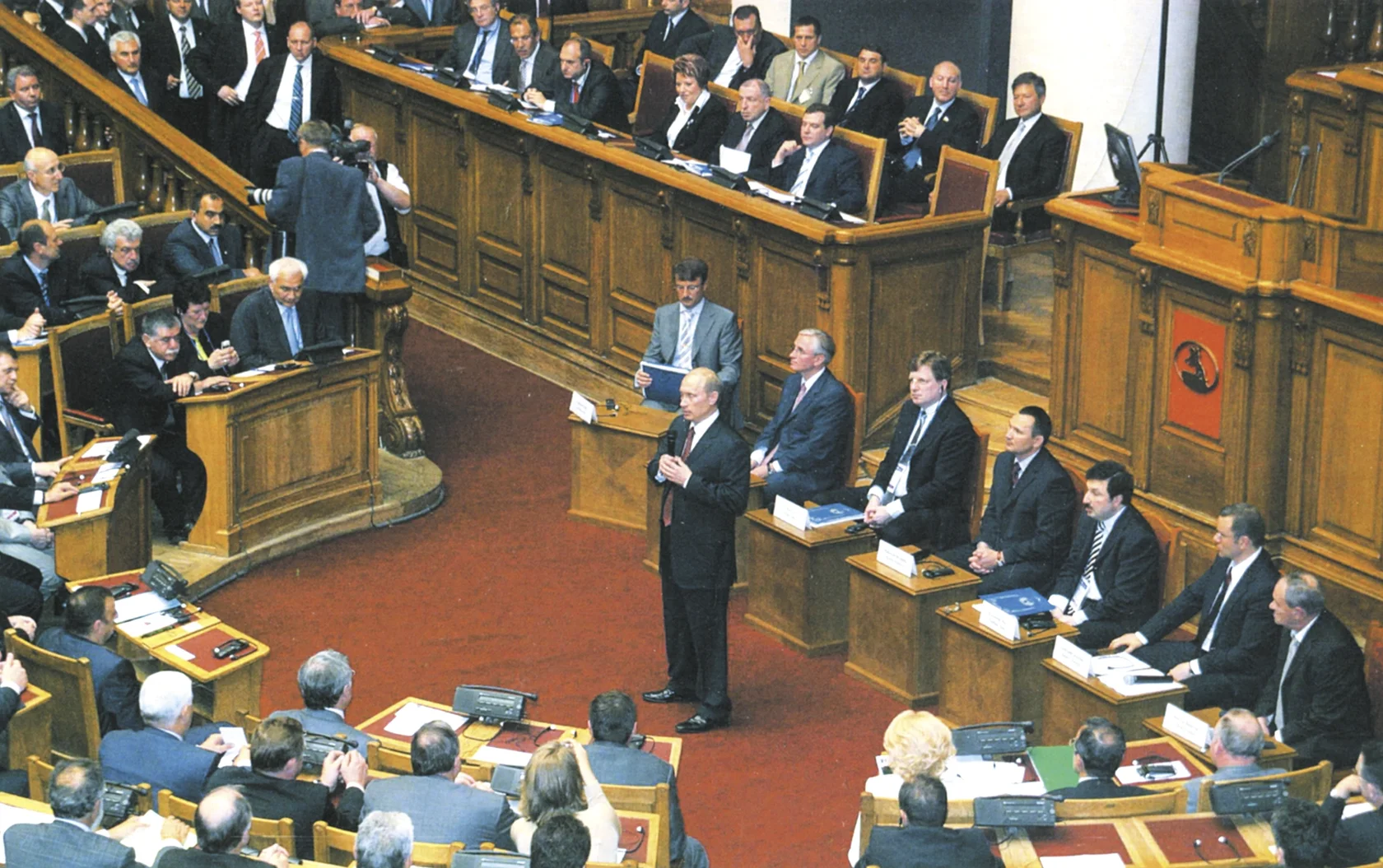
From year to year, the SPIEF’s international standing grew further. The most representative and substantive was the ninth forum (14−16 June 2005). It was attended by President of Russia Vladimir Vladimirovich Putin and President of Azerbaijan Ilham Heydar oglu Aliyev. Upon concluding their addresses, to the surprise of many, they joined Mironov in leaving the presidium and took seats in the hall on equal terms with all other participants. Directly in front of the main platform, the participants in a discussion on ‘Models of Economic Development; Paternalism or Liberalism?' sat at specially arranged tables. The discussion was moderated by Minister of Economic Development and Trade of the Russian Federation G. О. Gref (German Gref, subsequently the President of Sberbank), and its conclusions were drawn by President Putin himself.
Addressing the audience of a thousand in the Duma Hall (the main ceremonial hall of the Tauride Palace, named after the Imperial State Duma convened there) and the millions watching on television, he noted the dialectic between two development trends: the paternalistic one favouring a larger role for the state in the economy and the liberal one, observing that the optimal combination can differ according to historical conditions. The paramount objective that forms and methods of governance must serve, Putin emphasised, was to ensure high rates of growth in the Russian economy. ‘In the context of globalisation, this cannot be done without integrating Russia into the world economy and world economic system — but on one indispensable condition: preserving and guaranteeing the sovereignty of our state,' he concluded.
The mere presence of the President of Russia in the stalls of the Duma Hall already lifted the spirits of those present and attuned them to active participation in a debate on one of the world economy’s most profound philosophical subject matters. When Putin unexpectedly rose and addressed the hall, the emotional charge seemed to reach its peak. And when the forum’s participants realised that the President’s words were not a formality or a tribute to protocol, but the result of serious and reflective thought — thought that a leader who genuinely cares about the country’s destiny was sharing sincerely with his fellow citizens, we Russians were seized by a feeling of real pride, while our foreign colleagues looked with admiring, but unmistakable, envy.
That moment marked the beginning of the contemporary history of the St Petersburg International Economic Forum: having outgrown the Tauride Palace, it has still expanded its scale and pace, made a name in the world, and become a global platform for a multipolarity strategy. The ninth forum was of great importance for Russia as a whole, as well: the ideas voiced in the Duma Hall in June 2005 did much to establish the essentials of our country’s economic development.
Addressing the audience of a thousand in the Duma Hall (the main ceremonial hall of the Tauride Palace, named after the Imperial State Duma convened there) and the millions watching on television, he noted the dialectic between two development trends: the paternalistic one favouring a larger role for the state in the economy and the liberal one, observing that the optimal combination can differ according to historical conditions. The paramount objective that forms and methods of governance must serve, Putin emphasised, was to ensure high rates of growth in the Russian economy. ‘In the context of globalisation, this cannot be done without integrating Russia into the world economy and world economic system — but on one indispensable condition: preserving and guaranteeing the sovereignty of our state,' he concluded.
The mere presence of the President of Russia in the stalls of the Duma Hall already lifted the spirits of those present and attuned them to active participation in a debate on one of the world economy’s most profound philosophical subject matters. When Putin unexpectedly rose and addressed the hall, the emotional charge seemed to reach its peak. And when the forum’s participants realised that the President’s words were not a formality or a tribute to protocol, but the result of serious and reflective thought — thought that a leader who genuinely cares about the country’s destiny was sharing sincerely with his fellow citizens, we Russians were seized by a feeling of real pride, while our foreign colleagues looked with admiring, but unmistakable, envy.
That moment marked the beginning of the contemporary history of the St Petersburg International Economic Forum: having outgrown the Tauride Palace, it has still expanded its scale and pace, made a name in the world, and become a global platform for a multipolarity strategy. The ninth forum was of great importance for Russia as a whole, as well: the ideas voiced in the Duma Hall in June 2005 did much to establish the essentials of our country’s economic development.
Mikhail Iosifovich Krotov, the CSTO (Collective Security Treaty Organisation, the post-Soviet military alliance comprising Russia, Belarus, Armenia, Kazakhstan, Kyrgyzstan, and Tajikistan) Deputy Executive Secretary of the Parliamentary Assembly; Plenipotentiary Representative of the Federal Assembly of the Russian Federation; Executive Secretary of the St Petersburg International Economic Forum, 1997−2005.
SPIEF: THE PRESIDENT — SELECTED REMARKS
TASS-DOSSIER. From 3 to 6 June 2026 the next St. Petersburg International Economic Forum (SPIEF) will take place. The TASS-DOSSIER editorial team has compiled a selection of quotations from Vladimir Putin’s addresses at SPIEF plenary sessions between 2005 and 2025. The President of the Russian Federation participated in SPIEF plenary sessions 16 times: in 2005−2007, 2012−2019, and 2021−2025. In 2008−2011 the forum was held with the participation of President Dmitry Medvedev. In 2020 SPIEF was not held due to the COVID‑19 pandemic.
IX SPIEF, 14 June 2005
"Today Russia is a mighty exporter of raw material resources, and that is our natural and colossal competitive advantage. […] Yet effective use of natural wealth is far from a sufficient condition for sustainable economic growth. […] This is why one of the most important goals remains the restructuring of the economy and, as a consequence, the creation ofindustries producing high-quality goods that are in market demand. The competitiveness of each Russian product and each Russian enterprise adds up to the competitiveness ofthe country as a whole."
"Today Russia is a mighty exporter of raw material resources, and that is our natural and colossal competitive advantage. […] Yet effective use of natural wealth is far from a sufficient condition for sustainable economic growth. […] This is why one of the most important goals remains the restructuring of the economy and, as a consequence, the creation ofindustries producing high-quality goods that are in market demand. The competitiveness of each Russian product and each Russian enterprise adds up to the competitiveness ofthe country as a whole."
X SPIEF, 13 June 2006
"It is important that, under theguise of protecting national security, unjustified barriers to the work offoreign investors are not erected."
"It is important that, under theguise of protecting national security, unjustified barriers to the work offoreign investors are not erected."
XI SPIEF, 10 June 2007
"Russia, as one of the guarantors of energy security in the world, cannot stand aside from such problems, and that is why we advocate a strategic dialogue between energy suppliers, transit states, and consumers — a dialogue from which, I am convinced, all will benefit."
"The global financial system, essentially tied to one or two currencies and a limited number of financial centres, no longer reflects the current strategic needs of the global economy. […] There is only one answer to this challenge: the emergence of several reserve world currencies and several financial centres."
"Russia, as one of the guarantors of energy security in the world, cannot stand aside from such problems, and that is why we advocate a strategic dialogue between energy suppliers, transit states, and consumers — a dialogue from which, I am convinced, all will benefit."
"The global financial system, essentially tied to one or two currencies and a limited number of financial centres, no longer reflects the current strategic needs of the global economy. […] There is only one answer to this challenge: the emergence of several reserve world currencies and several financial centres."
XVI SPIEF, 21 June 2012
"The global nature of the world economy, where everyone depends on everyone else, now demands an equally global character of responsibility — above all, of course, from the world’s leading economies."
"I want to restate our fundamental position today: the state will consistently exit a whole series ofsectors and assets. […] But I want to emphasise immediately: this must be a fundamentally different kind ofprivatisation, with nothing in common with the loans-for-shares auctions and other dubious transactions of the 1990s. […] It is hard, one must agree, to demand public respect for property acquired by dubious means."
"Unfortunately, situations sometimes arise where Russian companies ready to invest in foreign assets face a wall, and mutually beneficial deals fall through on frankly fabricated grounds with no relation toeconomics whatsoever. Such treatment is hard tocall partnership."
"The global nature of the world economy, where everyone depends on everyone else, now demands an equally global character of responsibility — above all, of course, from the world’s leading economies."
"I want to restate our fundamental position today: the state will consistently exit a whole series ofsectors and assets. […] But I want to emphasise immediately: this must be a fundamentally different kind ofprivatisation, with nothing in common with the loans-for-shares auctions and other dubious transactions of the 1990s. […] It is hard, one must agree, to demand public respect for property acquired by dubious means."
"Unfortunately, situations sometimes arise where Russian companies ready to invest in foreign assets face a wall, and mutually beneficial deals fall through on frankly fabricated grounds with no relation toeconomics whatsoever. Such treatment is hard tocall partnership."
XVII SPIEF, 21 June 2013
"Economic growth must rest on three pillars: increasing labour productivity, investment, and innovation. […] We do not divide those who create production and jobs in Russia into domestic and foreign entrepreneurs, into ours and theirs. What matters tous is whoever gets things done."
"Economic growth must rest on three pillars: increasing labour productivity, investment, and innovation. […] We do not divide those who create production and jobs in Russia into domestic and foreign entrepreneurs, into ours and theirs. What matters tous is whoever gets things done."
XVIII SPIEF, 23 May 2014
"Russia has always valued its reputation as a reliable energy supplier to Europe. The present risks to gas deliveries to the European continent arose not through our fault, but through the fault of the transit country — Ukraine."
"I believe that for everything that happened there, asignificant share of responsibility lies with our European and American partners. They supported this coup and plunged the country into chaos, and now they want to shift responsibility onto us — to make usclean up after their mess. That is what the sanctions are designed to achieve."
"Russia has always valued its reputation as a reliable energy supplier to Europe. The present risks to gas deliveries to the European continent arose not through our fault, but through the fault of the transit country — Ukraine."
"I believe that for everything that happened there, asignificant share of responsibility lies with our European and American partners. They supported this coup and plunged the country into chaos, and now they want to shift responsibility onto us — to make usclean up after their mess. That is what the sanctions are designed to achieve."
XIX SPIEF, 19 June 2015
"Some of our partners in the West found themselves in a state of some kind of euphoria. Instead of building good-neighbourly and partnership relations, they began to move into what seemed to them newly available geopolitical spaces. That is the origin of NATO’s eastward expansion."
"Russia does not aspire to any kind of hegemony, does not seek any ephemeral superpower status. We want equal, mutually respectful relations with all participants in the international community."
"Some of our partners in the West found themselves in a state of some kind of euphoria. Instead of building good-neighbourly and partnership relations, they began to move into what seemed to them newly available geopolitical spaces. That is the origin of NATO’s eastward expansion."
"Russia does not aspire to any kind of hegemony, does not seek any ephemeral superpower status. We want equal, mutually respectful relations with all participants in the international community."
XX SPIEF, 17 June 2016
"Russia was not the initiator of the present collapse, discord, and problems — of the sanctions. All of our actions have been and remain exclusively reactive. But we are ready tomeet our European partners halfway. This cannot, however, be a one-sided game."
"Our import substitution programme is aimed at creating products competitive on the world market, and in this sense import substitution is animportant stage for expanding non-commodity exports and integrating our companies into global production and technology alliances. Not in secondary roles, but as strong, effective partners."
"Russia was not the initiator of the present collapse, discord, and problems — of the sanctions. All of our actions have been and remain exclusively reactive. But we are ready tomeet our European partners halfway. This cannot, however, be a one-sided game."
"Our import substitution programme is aimed at creating products competitive on the world market, and in this sense import substitution is animportant stage for expanding non-commodity exports and integrating our companies into global production and technology alliances. Not in secondary roles, but as strong, effective partners."
XXI SPIEF, 2 June 2017
"The digital economy is not a separate sector — itis, inessence, the foundation that makes it possible tocreate qualitatively new models of business, trade, logistics, and production, transforming the shape ofeducation, healthcare, and public administration."
"There are not so many countries in the world that possess sovereignty. Russia values very highly the fact that we possess it."
"The digital economy is not a separate sector — itis, inessence, the foundation that makes it possible tocreate qualitatively new models of business, trade, logistics, and production, transforming the shape ofeducation, healthcare, and public administration."
"There are not so many countries in the world that possess sovereignty. Russia values very highly the fact that we possess it."
XXII SPIEF, 25 May 2018
"Global mistrust calls into question theprospects for global growth. The logic of economic egoism is poorly compatible with the current specialisation of countries and companies, with the construction of complex global production chains. In effect it could throw the world economy and trade far back into the past."
"If we are presented with a choice — either we exist as a sovereign state, orrestrictions are imposed on us — then we naturally choose the former. Because thethings being placed on the scale aretoo incommensurable: either existence asanindependent state, or some investments in the form of handouts."
"Global mistrust calls into question theprospects for global growth. The logic of economic egoism is poorly compatible with the current specialisation of countries and companies, with the construction of complex global production chains. In effect it could throw the world economy and trade far back into the past."
"If we are presented with a choice — either we exist as a sovereign state, orrestrictions are imposed on us — then we naturally choose the former. Because thethings being placed on the scale aretoo incommensurable: either existence asanindependent state, or some investments in the form of handouts."
XXIII SPIEF, 7 June 2019
"The ratio of world trade to global GDP achieved in 2008 was never restored. Global trade has, in effect, ceased to be the unquestioned engine of the world economy. […] The world economy has entered a period of trade wars and a growing level of open and covert protectionism."
"Attempts to monopolise the new technological wave and restrict access toits fruits are taking the problem of global inequality to an entirely new level. […] Ineffect, two worlds are taking shape— oran attempt is being made to shape them— and the chasm between them isconstantly widening."
"The ratio of world trade to global GDP achieved in 2008 was never restored. Global trade has, in effect, ceased to be the unquestioned engine of the world economy. […] The world economy has entered a period of trade wars and a growing level of open and covert protectionism."
"Attempts to monopolise the new technological wave and restrict access toits fruits are taking the problem of global inequality to an entirely new level. […] Ineffect, two worlds are taking shape— oran attempt is being made to shape them— and the chasm between them isconstantly widening."
SPIEF: A HISTORY OF CULTURAL PROGRAMMES
TASS-DOSSIER. SPIEF features concerts by prominent artists, theatrical performances, and exhibitions each year. Cultural events were first held as part of the forum in 2003.
2003
The cultural programme oftheVII Forum offered visits tothe city’s and suburban palaces, park ensembles, theatres, and museums. A night boat tour of St. Petersburg’s rivers and canals was organised.
2004
The cultural programme included events as part of the XII International White Nights Festival and an exhibition 'Artists of Southern Russia'.
2005
A concert was organised in the St.Petersburg State Academic Opera and Ballet Theatre named after M. P.Mussorgsky.
2006
The cultural programme featured the XIV White Nights Festival at the Mariinsky Theatre — around a hundred performances and concerts by artists from many countries.
2007
For the first time a free open-air concert was held on Palace Square: Scorpions and Robin Gibb (Bee Gees) accompanied by the Mariinsky Theatre orchestra and choir under Valery Gergiev. Also staged: Vyacheslav Polunin’s Snow Show and the ballet Swan Lake with Ulyana Lopatkina.
2008
Roger Waters inconcert onPalace Square; thepremiere of theмballet Spartacus attheMikhailovsky Theatre; the National Philharmonic Orchestra under Spivakov. More than 15 cultural events.
2009
Duran Duran and Anastacia performed onPalace Square. At the Mariinsky: Tchaikovsky’s Eugene Onegin; at the Alexandrinsky: the ballets The Seagull and Anna Karenina. More than 15 events.
2010
British group Faithless performed on Palace Square; an evening of romances by Oleg Pogudin was held at the Oktyabrsky concert hall. 16events in total.
2011
Sting performed on Palace Square accompanied by a symphony orchestra. Concert and ballet programmes at the Mariinsky, Alexandrinsky, and Musical Comedy theatres. 23 events in total.
2012
On Palace Square: the concert 'ABouquet of Opera' with Dmitry Hvorostovsky and Sumi Jo. A Rodin exhibition at the Peter and Paul Fortress. 17cultural events.
2013
On Palace Square: 'Triumph of Classics' with Il Divo and Le Div4s. The charitable concert 'Tsarskoye Selo Études' with Anna Netrebko. More than 30 events.
2014
Ilya Averbukh’s gala show 'We Are Champions!' featuring figure skaters; the St. Petersburg International Book Fair; exhibitions. More than 30events.
2015
The charitable Art Football festival;the play Prikasayemye ('Those Who Can Be Touched') — about deaf-blind people, produced by Ingeborga Dapkunaite. 40 cultural events.
2016
A charitable evening at the Mikhailovsky with Nikolai Tsiskaridze; a Mariinsky orchestra concert marking Prokofiev’s 125th anniversary; the 'Under the Flag of Good!' football and music festival. 67 events.
2017
A ballet gala at the Mikhailovsky; the 'Palaces of St. Petersburg' opera festival at the Hermitage; the 'St.Petersburg. Live' festival marking the 55th anniversary of Viktor Tsoi’s birth. 88 events.
2018
Denis Matsuev in concert with the Dresden State Orchestra (Staatskapelle Dresden) at the Mariinsky; the AUN J Classic Orchestra of traditional Japanese instruments; the'Palaces of St. Petersburg' festival. More than 60 events.
2019
Andrea Bocelli and Aida Garifullina on Palace Square. At the General Staff Building: the exhibition 'Artificial Intelligence and Dialogue of Cultures'. More than 100 events.
2021
COVID-19 restrictions reduced the programme. A concert honouring medical workers with Diana Arbenina on Palace Square; a tour by the Gorky Moscow Art Theatre; Qatar Film Days screenings. More than 30 events.
The cultural programme oftheVII Forum offered visits tothe city’s and suburban palaces, park ensembles, theatres, and museums. A night boat tour of St. Petersburg’s rivers and canals was organised.
2004
The cultural programme included events as part of the XII International White Nights Festival and an exhibition 'Artists of Southern Russia'.
2005
A concert was organised in the St.Petersburg State Academic Opera and Ballet Theatre named after M. P.Mussorgsky.
2006
The cultural programme featured the XIV White Nights Festival at the Mariinsky Theatre — around a hundred performances and concerts by artists from many countries.
2007
For the first time a free open-air concert was held on Palace Square: Scorpions and Robin Gibb (Bee Gees) accompanied by the Mariinsky Theatre orchestra and choir under Valery Gergiev. Also staged: Vyacheslav Polunin’s Snow Show and the ballet Swan Lake with Ulyana Lopatkina.
2008
Roger Waters inconcert onPalace Square; thepremiere of theмballet Spartacus attheMikhailovsky Theatre; the National Philharmonic Orchestra under Spivakov. More than 15 cultural events.
2009
Duran Duran and Anastacia performed onPalace Square. At the Mariinsky: Tchaikovsky’s Eugene Onegin; at the Alexandrinsky: the ballets The Seagull and Anna Karenina. More than 15 events.
2010
British group Faithless performed on Palace Square; an evening of romances by Oleg Pogudin was held at the Oktyabrsky concert hall. 16events in total.
2011
Sting performed on Palace Square accompanied by a symphony orchestra. Concert and ballet programmes at the Mariinsky, Alexandrinsky, and Musical Comedy theatres. 23 events in total.
2012
On Palace Square: the concert 'ABouquet of Opera' with Dmitry Hvorostovsky and Sumi Jo. A Rodin exhibition at the Peter and Paul Fortress. 17cultural events.
2013
On Palace Square: 'Triumph of Classics' with Il Divo and Le Div4s. The charitable concert 'Tsarskoye Selo Études' with Anna Netrebko. More than 30 events.
2014
Ilya Averbukh’s gala show 'We Are Champions!' featuring figure skaters; the St. Petersburg International Book Fair; exhibitions. More than 30events.
2015
The charitable Art Football festival;the play Prikasayemye ('Those Who Can Be Touched') — about deaf-blind people, produced by Ingeborga Dapkunaite. 40 cultural events.
2016
A charitable evening at the Mikhailovsky with Nikolai Tsiskaridze; a Mariinsky orchestra concert marking Prokofiev’s 125th anniversary; the 'Under the Flag of Good!' football and music festival. 67 events.
2017
A ballet gala at the Mikhailovsky; the 'Palaces of St. Petersburg' opera festival at the Hermitage; the 'St.Petersburg. Live' festival marking the 55th anniversary of Viktor Tsoi’s birth. 88 events.
2018
Denis Matsuev in concert with the Dresden State Orchestra (Staatskapelle Dresden) at the Mariinsky; the AUN J Classic Orchestra of traditional Japanese instruments; the'Palaces of St. Petersburg' festival. More than 60 events.
2019
Andrea Bocelli and Aida Garifullina on Palace Square. At the General Staff Building: the exhibition 'Artificial Intelligence and Dialogue of Cultures'. More than 100 events.
2021
COVID-19 restrictions reduced the programme. A concert honouring medical workers with Diana Arbenina on Palace Square; a tour by the Gorky Moscow Art Theatre; Qatar Film Days screenings. More than 30 events.
SPIEF: TOP 10 LARGEST DEALS
TASS-DOSSIER. From 3 to 6 June 2026 the next SPIEF will take place. Hundreds of deals totalling several trillion roubles are concluded there every year — including 6.48 trillion roubles in 2025. Below are the 10 largest agreements whose value was not a commercial secret.
1. SPIEF 2013: Rosneft and CNPC (China) — a long-term oil supply agreement valued at $ 270 billion, covering 365 million tonnes over 25 years. Deliveries began in July 2013.
2. SPIEF 2022: New Land Grain Corridor and China’s Zhongchengtong International Investment — a deal for a network of grain elevators in the Urals, Siberia, and the Far East. Value: approximately 2 trillion roubles (~$ 35 billion). Grain deliveries via the corridor to China began 31 May 2023.
3. SPIEF 2022: Sberbank and DOM. RF — a memorandum on the issuance of mortgage bonds worth up to 1 trillion roubles (~$ 18 billion) in 2022−2023. Securities issuance continues in 2026.
4. SPIEF 2025: VEB. RF and Natsproektstroy — a PPP (public-private partnership) cooperation memorandum worth 1 trillion roubles (~$ 12.6 billion), covering roads, bridges, and railway infrastructure.
5. SPIEF 2022: Russian Railways (RZhD) and VTB — a five-year credit agreement of up to 630 billion roubles (~$ 11.5 billion), allowing RZhD to replace European credit lines and continue financing infrastructure projects.
6. SPIEF 2017: Linde Group (Germany) and TAIF (now SIBUR) — construction of an ethylene production complex at Nizhnekamskneftekhim, investment ~$ 10 billion. After the Turkish general contractor’s contract was terminated in 2022, Russian contractors completed construction. The complex was launched in January 2025.
7. SPIEF 2019: Leningrad Oblast and RusKhimAlyans (a Gazprom/Rusgazdobycha JV) — a gas processing and LNG production complex at Ust-Luga, valued at $ 11 billion (750 billion roubles). Linde halted work in 2022; Russian contractors are continuing. The complex is 70% complete, with commissioning in two phases in 2026 and 2027.
8. SPIEF 2024: VEB. RF and RusHydro — modernisation of thermal generation facilities in the Far East with a combined capacity of 2,100 MW, valued at $ 7.3 billion (650 billion roubles). Six facilities due to be commissioned in 2026−2028.
9. SPIEF 2021: Russkaya Platina, VEB. RF, and VTB — development of the Chernogorskoye platinum-copper-nickel deposit in Krasnoyarsk Krai, investment $ 7.2 billion (570 billion roubles). The processing plant is due to open in the second half of 2026.
10. SPIEF 2013: Rosneft and PKN Orlen (Poland) — supply of 8 million tonnes of oil to the Czech Republic via the Druzhba pipeline, $ 7 billion. The contract was extended three times; it expired in January 2023.
2. SPIEF 2022: New Land Grain Corridor and China’s Zhongchengtong International Investment — a deal for a network of grain elevators in the Urals, Siberia, and the Far East. Value: approximately 2 trillion roubles (~$ 35 billion). Grain deliveries via the corridor to China began 31 May 2023.
3. SPIEF 2022: Sberbank and DOM. RF — a memorandum on the issuance of mortgage bonds worth up to 1 trillion roubles (~$ 18 billion) in 2022−2023. Securities issuance continues in 2026.
4. SPIEF 2025: VEB. RF and Natsproektstroy — a PPP (public-private partnership) cooperation memorandum worth 1 trillion roubles (~$ 12.6 billion), covering roads, bridges, and railway infrastructure.
5. SPIEF 2022: Russian Railways (RZhD) and VTB — a five-year credit agreement of up to 630 billion roubles (~$ 11.5 billion), allowing RZhD to replace European credit lines and continue financing infrastructure projects.
6. SPIEF 2017: Linde Group (Germany) and TAIF (now SIBUR) — construction of an ethylene production complex at Nizhnekamskneftekhim, investment ~$ 10 billion. After the Turkish general contractor’s contract was terminated in 2022, Russian contractors completed construction. The complex was launched in January 2025.
7. SPIEF 2019: Leningrad Oblast and RusKhimAlyans (a Gazprom/Rusgazdobycha JV) — a gas processing and LNG production complex at Ust-Luga, valued at $ 11 billion (750 billion roubles). Linde halted work in 2022; Russian contractors are continuing. The complex is 70% complete, with commissioning in two phases in 2026 and 2027.
8. SPIEF 2024: VEB. RF and RusHydro — modernisation of thermal generation facilities in the Far East with a combined capacity of 2,100 MW, valued at $ 7.3 billion (650 billion roubles). Six facilities due to be commissioned in 2026−2028.
9. SPIEF 2021: Russkaya Platina, VEB. RF, and VTB — development of the Chernogorskoye platinum-copper-nickel deposit in Krasnoyarsk Krai, investment $ 7.2 billion (570 billion roubles). The processing plant is due to open in the second half of 2026.
10. SPIEF 2013: Rosneft and PKN Orlen (Poland) — supply of 8 million tonnes of oil to the Czech Republic via the Druzhba pipeline, $ 7 billion. The contract was extended three times; it expired in January 2023.
SPIEF Moderators: Masters of High Level Dialogue
The St. Petersburg International Economic Forum is not only about signing contracts, addresses by President Vladimir Putin, and hundreds of guests from around the world — it is also about the art of conducting dialogue. The SPIEF moderator is a helmsman, capable of holding course through the turbulent waters of global politics and the economy. At different times this role has been performed both by stars of international journalism and by prominent Russian media personalities.
The history of SPIEF plenary sessions in their current form dates from 2014, when the tradition of inviting well-known media personalities and analysts to lead the dialogue with heads of state was established.
2014: Jeff Cutmore
American financial journalist, CNBC anchor
Cutmore opened a new era of SPIEF moderation. It was with him that the tradition began of inviting global journalism stars to lead the plenary session featuring Vladimir Putin.
2015: Charlie Rose
Prominent American television journalist
Rose, whose professional hallmark was the in-depth long-form interview, brought to the forum’s plenary session the atmosphere of an intellectual salon, focusing on geopolitical challenges and Russia’s role in the world.
2016: Fareed Zakaria
Political analyst, editor, CNN anchor
Zakaria, like his predecessor Charlie Rose, became widely known through the interview format. His dialogue with the President of the Russian Federation at SPIEF became the headline event of the year. Zakaria presented a Western perspective on anti-Russian sanctions and the future of the global economy.
"My job is to ask uncomfortable questions, and the leader’s job is to give honest answers. That is the essence of genuine dialogue, especially when the world is divided."
2017: Megyn Kelly
Prominent American television anchor and reporter
Megyn Kelly’s hallmark is the most direct, unsparing interview format available. She did not abandon her trademark style as SPIEF plenary moderator, asking sharp questions while also acknowledging the openness of the Russian side.
"My job is not to be liked by my interlocutor. My job is to make them explain what the press releases leave out."
2018: John Micklethwait
Editor-in-Chief of Bloomberg (UK)
He shifted the emphasis from politics to economics and global trends, focusing on digitalisation, the fourth industrial revolution, and Russia’s place in the new economic reality.
"We have stopped dividing the world into online and offline. Now we are always connected, and the economy is learning to operate non-stop."
2019: Sophiko Shevardnadze
Russian journalist and television presenter
Her invitation to SPIEF was a turning point in the forum’s history: for the first time in several years the moderator’s chair at the key session was occupied by a Russian media figure. Shevardnadze returned the discussion to the domestic economic agenda and social questions.
2020: Forum not held due to the COVID‑19 pandemic
2021: Stanislav Natanzov
Russian international affairs journalist and television presenter. 2011−2021: reporter and news anchor at the Russia‑24 channel (VGTRK). Currently hosts the travel internet show Pognali! ('Let's Go!')
In the post-COVID year of 2021 the central theme was economic recovery, support for small business, and systemic anti-crisis measures.
"Well, they say the authorities don’t notice small business. You see, they do — and it has become a question of survival for entire industries."
2022: Margarita Simonyan
Editor-in-Chief of RT television (from 2005) and the Russia Today media group (from 2013)
SPIEF‑2022 took place against a backdrop of unprecedented sanctions pressure and tectonic shifts in the global economy. Simonyan presented Russia’s perspective on sovereignty, the information war, and economic blockade.
"Today information is a weapon just like a missile. There can be no neutrality here."
2023: Dmitri Simes
Political scientist, historian, Honorary President of The National Interest (USA). From 2018: host of the political talk show Bolshaya Igra ('The Great Game') on Russia’s Channel One. Received Russian citizenship in the early 2020s.
American with Russian roots and an expert in international relations, Simes moderated the discussion on the formation of a new world order, multipolarity, and the future of global security.
"We face a choice: the fragmentation of the world or the search for a new balance. History abhors a vacuum."
2024: Sergei Karaganov
Political scientist and economist, Doctor of Historical Sciences. One of the founders of the Institute of Europe of the Russian Academy of Sciences. Dean (2006−2021) and Academic Director (from 2021) of the Faculty of World Economy and International Affairs at HSE University.
As one of Russia’s most authoritative geopolitical experts, Sergei Karaganov took the moderator’s chair at the key SPIEF session in 2024, definitively cementing the transition to domestic moderation of the forum’s principal discussions.
"The hyenas have sensed it. It is not necessary to talk — what matters is to act. We have already begun doing a great deal, and we will continue to do so."
2025: Nadim Koteich
Arab journalist, columnist, and television presenter. In the 2010s hosted the programme DNA on Arab channels. From 2020: host of Tonight with Nadim on the pan-Arab news channel Al Arabiya. Appointed General Manager of Al Arabiya in 2023. In 2024 received the May Chidiac Foundation (Lebanon) media award 'for outstanding achievement in the media industry'.
"If this panel says anything, it is how multipolar the world has become."
American financial journalist, CNBC anchor
Cutmore opened a new era of SPIEF moderation. It was with him that the tradition began of inviting global journalism stars to lead the plenary session featuring Vladimir Putin.
2015: Charlie Rose
Prominent American television journalist
Rose, whose professional hallmark was the in-depth long-form interview, brought to the forum’s plenary session the atmosphere of an intellectual salon, focusing on geopolitical challenges and Russia’s role in the world.
2016: Fareed Zakaria
Political analyst, editor, CNN anchor
Zakaria, like his predecessor Charlie Rose, became widely known through the interview format. His dialogue with the President of the Russian Federation at SPIEF became the headline event of the year. Zakaria presented a Western perspective on anti-Russian sanctions and the future of the global economy.
"My job is to ask uncomfortable questions, and the leader’s job is to give honest answers. That is the essence of genuine dialogue, especially when the world is divided."
2017: Megyn Kelly
Prominent American television anchor and reporter
Megyn Kelly’s hallmark is the most direct, unsparing interview format available. She did not abandon her trademark style as SPIEF plenary moderator, asking sharp questions while also acknowledging the openness of the Russian side.
"My job is not to be liked by my interlocutor. My job is to make them explain what the press releases leave out."
2018: John Micklethwait
Editor-in-Chief of Bloomberg (UK)
He shifted the emphasis from politics to economics and global trends, focusing on digitalisation, the fourth industrial revolution, and Russia’s place in the new economic reality.
"We have stopped dividing the world into online and offline. Now we are always connected, and the economy is learning to operate non-stop."
2019: Sophiko Shevardnadze
Russian journalist and television presenter
Her invitation to SPIEF was a turning point in the forum’s history: for the first time in several years the moderator’s chair at the key session was occupied by a Russian media figure. Shevardnadze returned the discussion to the domestic economic agenda and social questions.
2020: Forum not held due to the COVID‑19 pandemic
2021: Stanislav Natanzov
Russian international affairs journalist and television presenter. 2011−2021: reporter and news anchor at the Russia‑24 channel (VGTRK). Currently hosts the travel internet show Pognali! ('Let's Go!')
In the post-COVID year of 2021 the central theme was economic recovery, support for small business, and systemic anti-crisis measures.
"Well, they say the authorities don’t notice small business. You see, they do — and it has become a question of survival for entire industries."
2022: Margarita Simonyan
Editor-in-Chief of RT television (from 2005) and the Russia Today media group (from 2013)
SPIEF‑2022 took place against a backdrop of unprecedented sanctions pressure and tectonic shifts in the global economy. Simonyan presented Russia’s perspective on sovereignty, the information war, and economic blockade.
"Today information is a weapon just like a missile. There can be no neutrality here."
2023: Dmitri Simes
Political scientist, historian, Honorary President of The National Interest (USA). From 2018: host of the political talk show Bolshaya Igra ('The Great Game') on Russia’s Channel One. Received Russian citizenship in the early 2020s.
American with Russian roots and an expert in international relations, Simes moderated the discussion on the formation of a new world order, multipolarity, and the future of global security.
"We face a choice: the fragmentation of the world or the search for a new balance. History abhors a vacuum."
2024: Sergei Karaganov
Political scientist and economist, Doctor of Historical Sciences. One of the founders of the Institute of Europe of the Russian Academy of Sciences. Dean (2006−2021) and Academic Director (from 2021) of the Faculty of World Economy and International Affairs at HSE University.
As one of Russia’s most authoritative geopolitical experts, Sergei Karaganov took the moderator’s chair at the key SPIEF session in 2024, definitively cementing the transition to domestic moderation of the forum’s principal discussions.
"The hyenas have sensed it. It is not necessary to talk — what matters is to act. We have already begun doing a great deal, and we will continue to do so."
2025: Nadim Koteich
Arab journalist, columnist, and television presenter. In the 2010s hosted the programme DNA on Arab channels. From 2020: host of Tonight with Nadim on the pan-Arab news channel Al Arabiya. Appointed General Manager of Al Arabiya in 2023. In 2024 received the May Chidiac Foundation (Lebanon) media award 'for outstanding achievement in the media industry'.
"If this panel says anything, it is how multipolar the world has become."