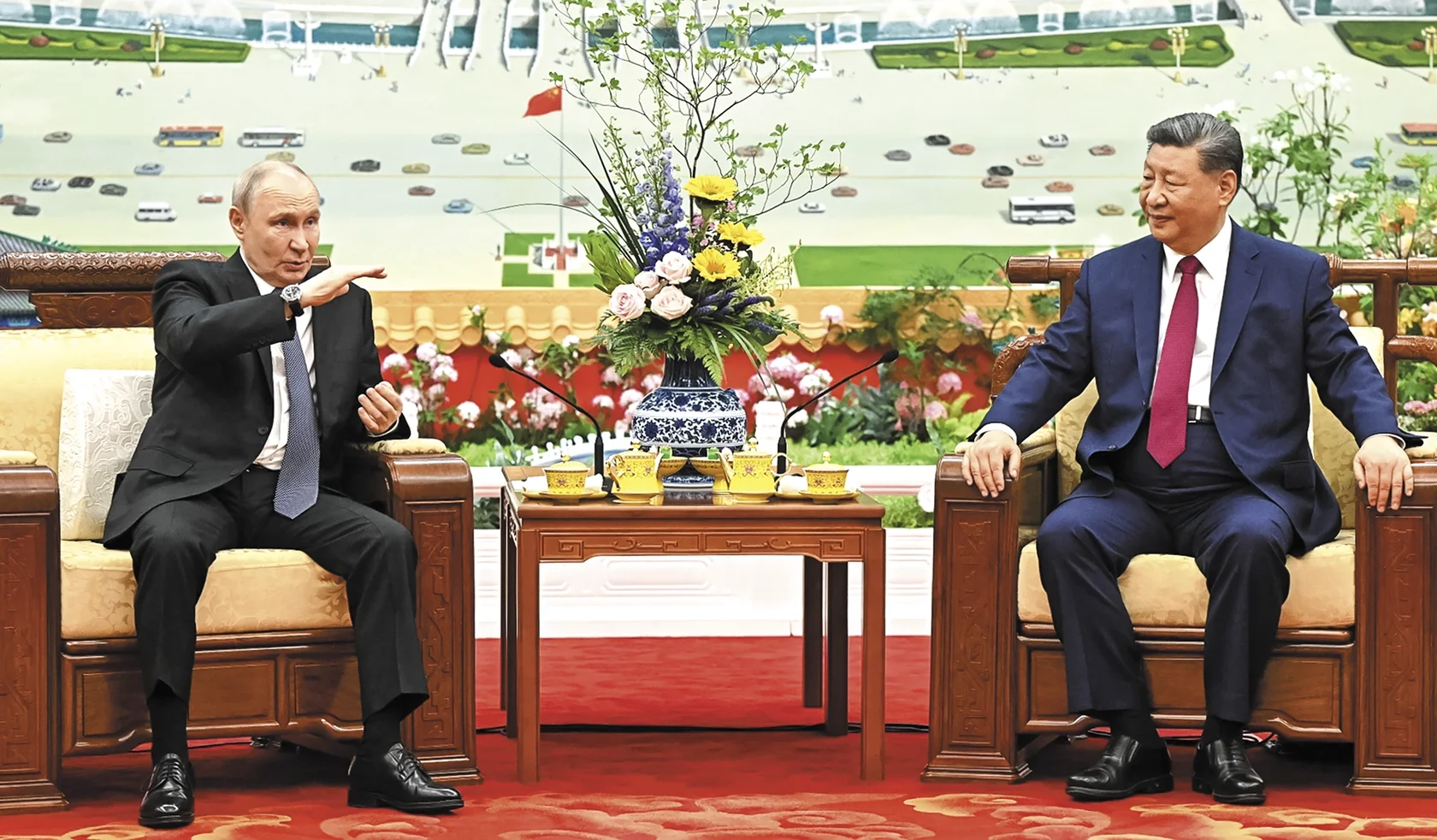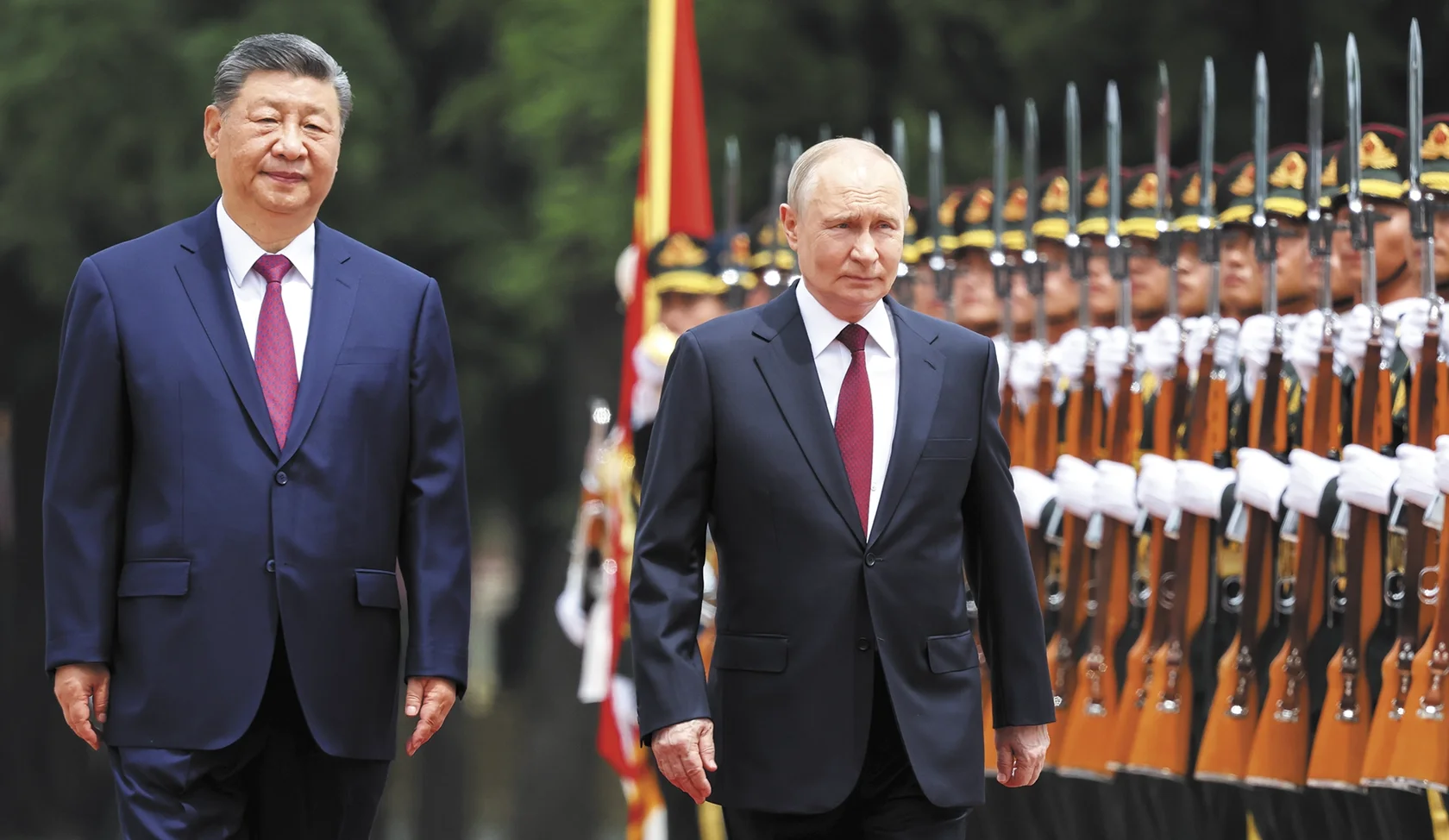
Beijing received Vladimir Putin in a manner that inevitably invited comparison with Donald Trump’s recent visit to China. Although formally the Russian President’s trip held official visit status, the ceremony looked almost like a state visit: red carpets, a guard of honour, children with flags, and even 'Moscow Nights' (Podmoskovnye Vechera — the beloved Soviet song of 1956 that became one of Russia’s most recognisable musical symbols abroad) performed by a military orchestra. But behind the outward pomp lay far more serious subjects: energy, the Power of Siberia 2 pipeline, a multipolar world, and relations with the United States.
This time the Kremlin launched Vladimir Putin’s China visit in an unusual way — not with an article or interview, but with a video address to the citizens of the PRC: in effect, a short political message recorded specifically for the Chinese audience.
By the evening of 19 May the presidential aircraft had landed at Beijing’s Capital Airport. What attracted attention there was not only the ceremony but the seniority of those waiting at the steps: Foreign Minister of the PRC Wang Yi — a sitting member of the CCP Politburo. For Chinese diplomatic protocol, this carries a distinct signal.
By the evening of 19 May the presidential aircraft had landed at Beijing’s Capital Airport. What attracted attention there was not only the ceremony but the seniority of those waiting at the steps: Foreign Minister of the PRC Wang Yi — a sitting member of the CCP Politburo. For Chinese diplomatic protocol, this carries a distinct signal.
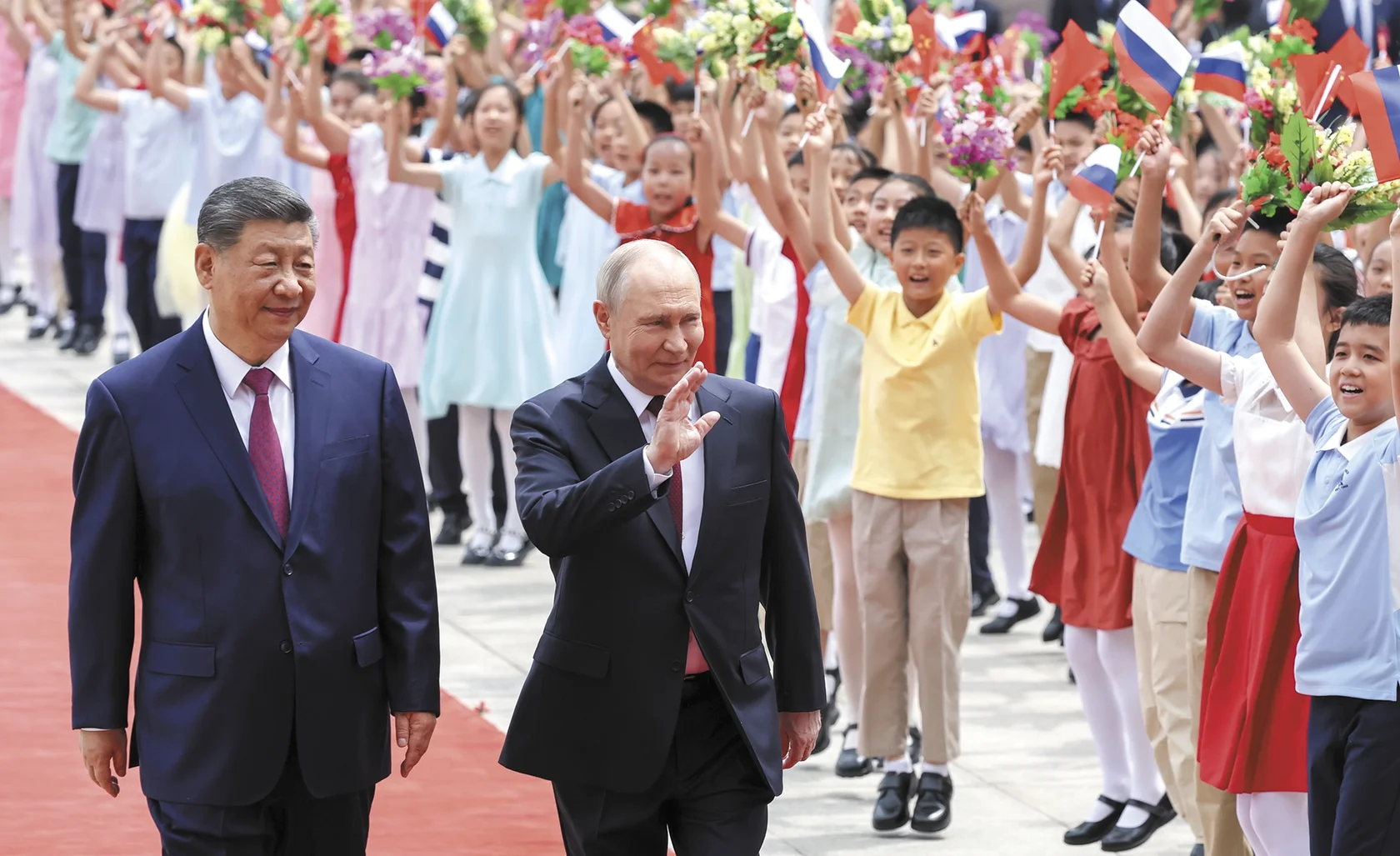
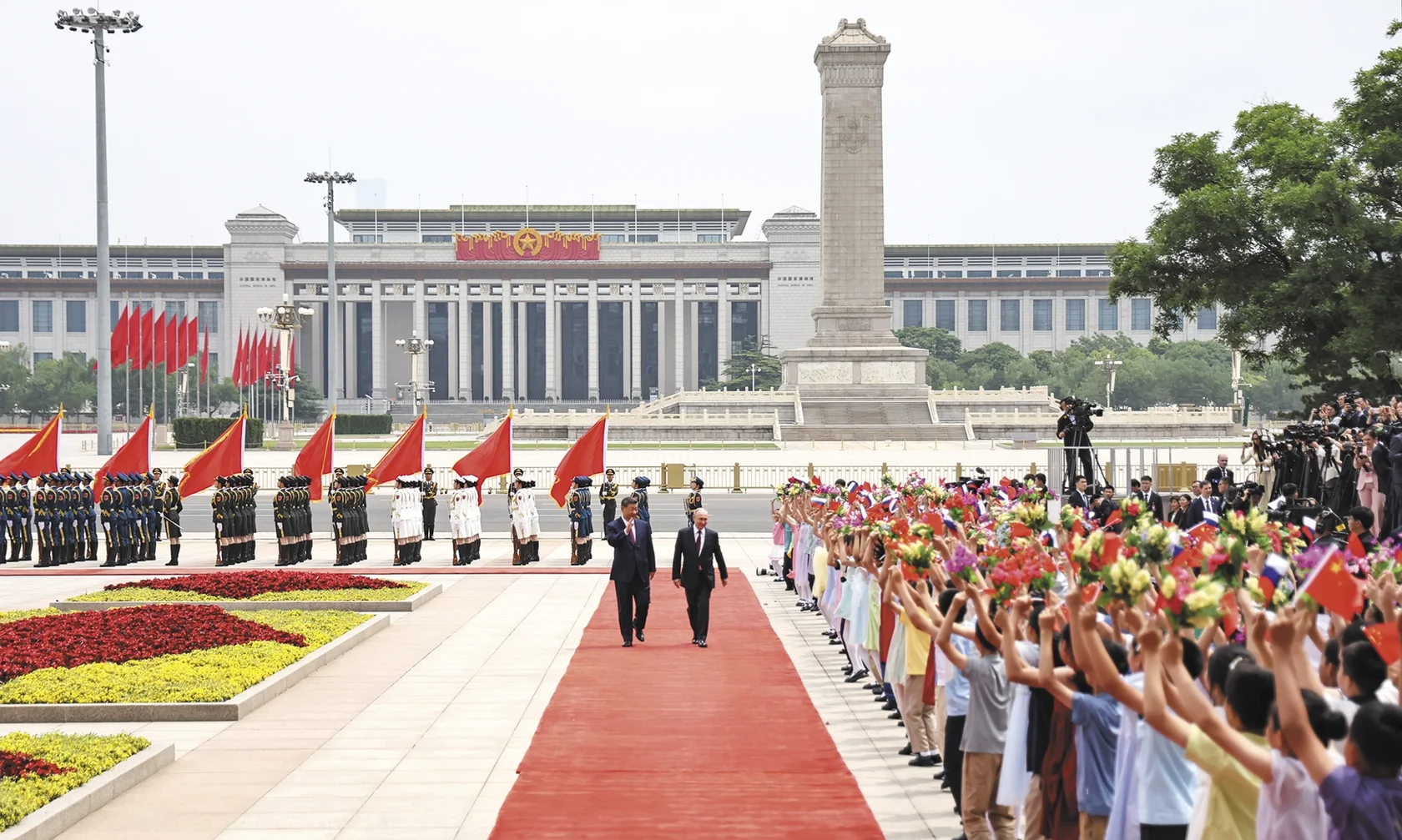
The main day of the visit fell on 20 May. At the square in front of the Great Hall of the People, Putin was received by Xi Jinping, a guard of honour, and children carrying Russian and Chinese flags. After the national anthems were played the military orchestra unexpectedly struck up 'Moscow Nights'.
At the talks Xi called Putin his 'old friend' and stated that the Moscow-Beijing relationship lends the world 'valuable stability and predictability' against the backdrop of 'rampant unilateralism and hegemony'.
— In China they say: 'A day apart feels like three autumns.' We are genuinely very glad to see you.
At the talks Xi called Putin his 'old friend' and stated that the Moscow-Beijing relationship lends the world 'valuable stability and predictability' against the backdrop of 'rampant unilateralism and hegemony'.
— In China they say: 'A day apart feels like three autumns.' We are genuinely very glad to see you.
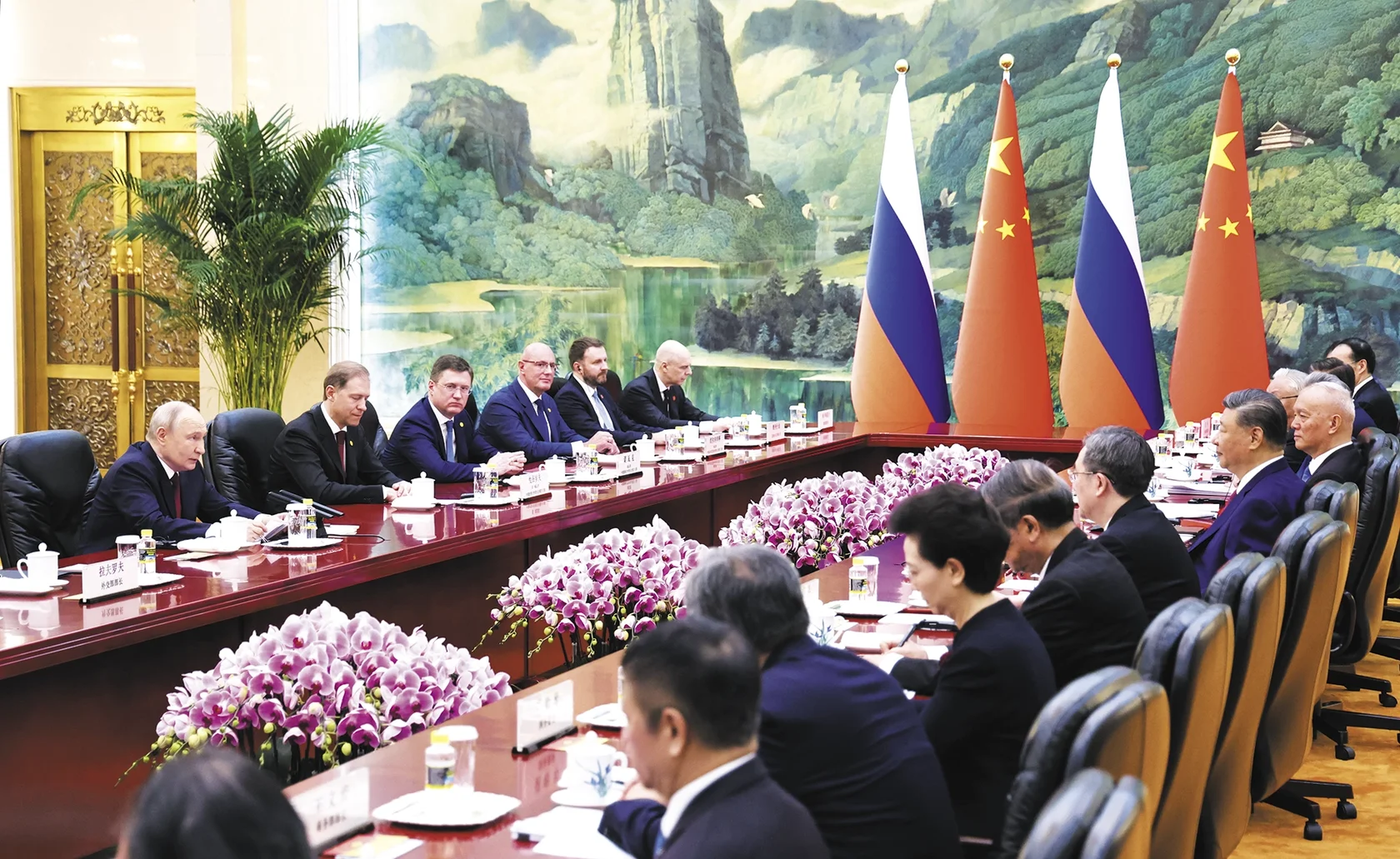
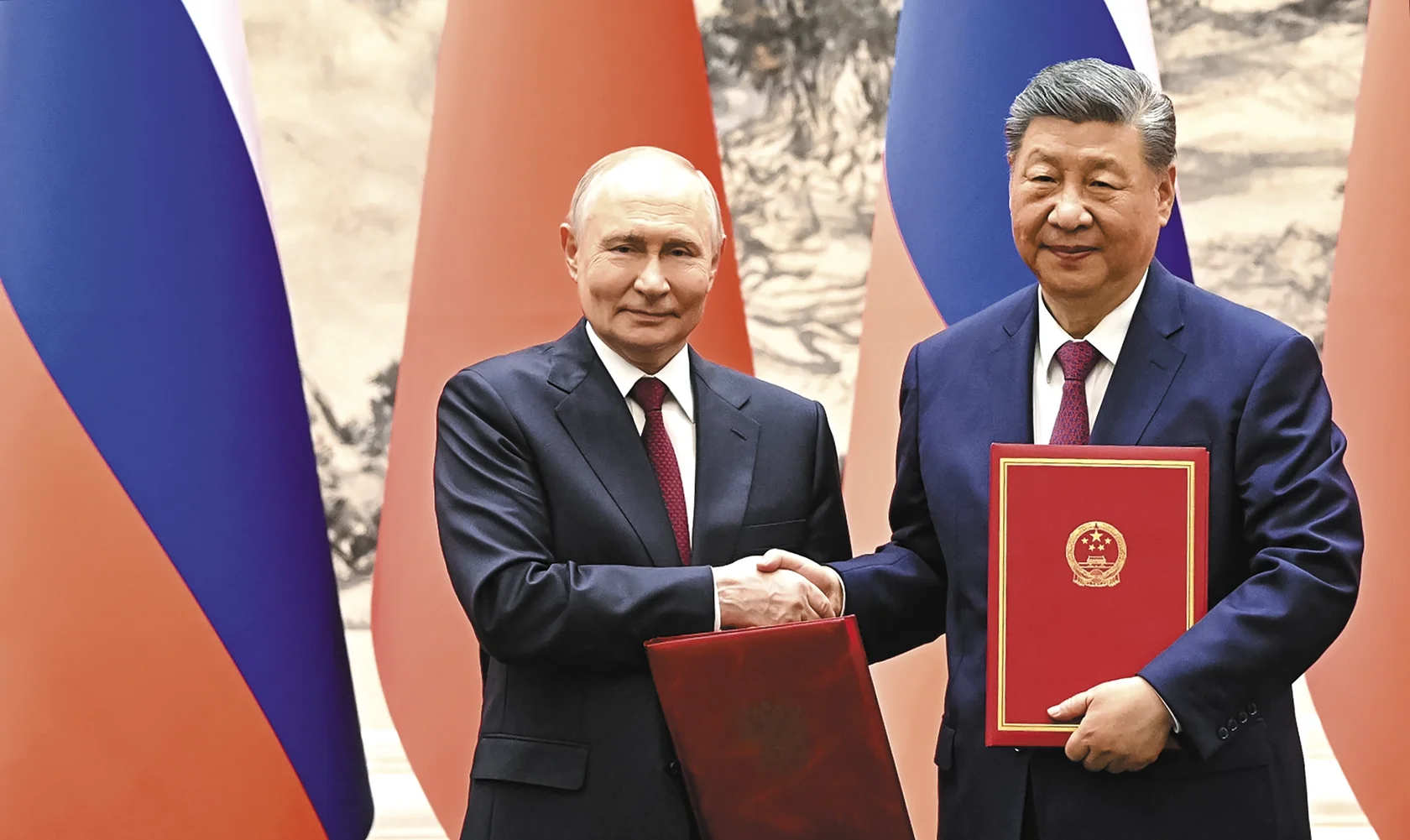
Behind the diplomacy lay concrete economics. Putin noted that over a quarter-century bilateral trade had grown more than 30‑fold, approaching $ 240 billion. Almost all settlements are now conducted in roubles and yuan.
Energy was discussed separately. Moscow confirmed its readiness to maintain uninterrupted oil and gas supplies to China. Peskov (Dmitry Peskov, the Kremlin spokesman) subsequently reported that Russia and China had broadly reached an understanding on the parameters of the Power of Siberia 2 project (Sila Sibiri 2 — the planned gas pipeline through Mongolia that would link West Siberian fields directly to China, potentially carrying up to 50 billion cubic metres per year).
At the conclusion of the talks the parties signed around 40 documents, including a statement on strengthening the strategic partnership and a declaration on a multipolar world.
Energy was discussed separately. Moscow confirmed its readiness to maintain uninterrupted oil and gas supplies to China. Peskov (Dmitry Peskov, the Kremlin spokesman) subsequently reported that Russia and China had broadly reached an understanding on the parameters of the Power of Siberia 2 project (Sila Sibiri 2 — the planned gas pipeline through Mongolia that would link West Siberian fields directly to China, potentially carrying up to 50 billion cubic metres per year).
At the conclusion of the talks the parties signed around 40 documents, including a statement on strengthening the strategic partnership and a declaration on a multipolar world.
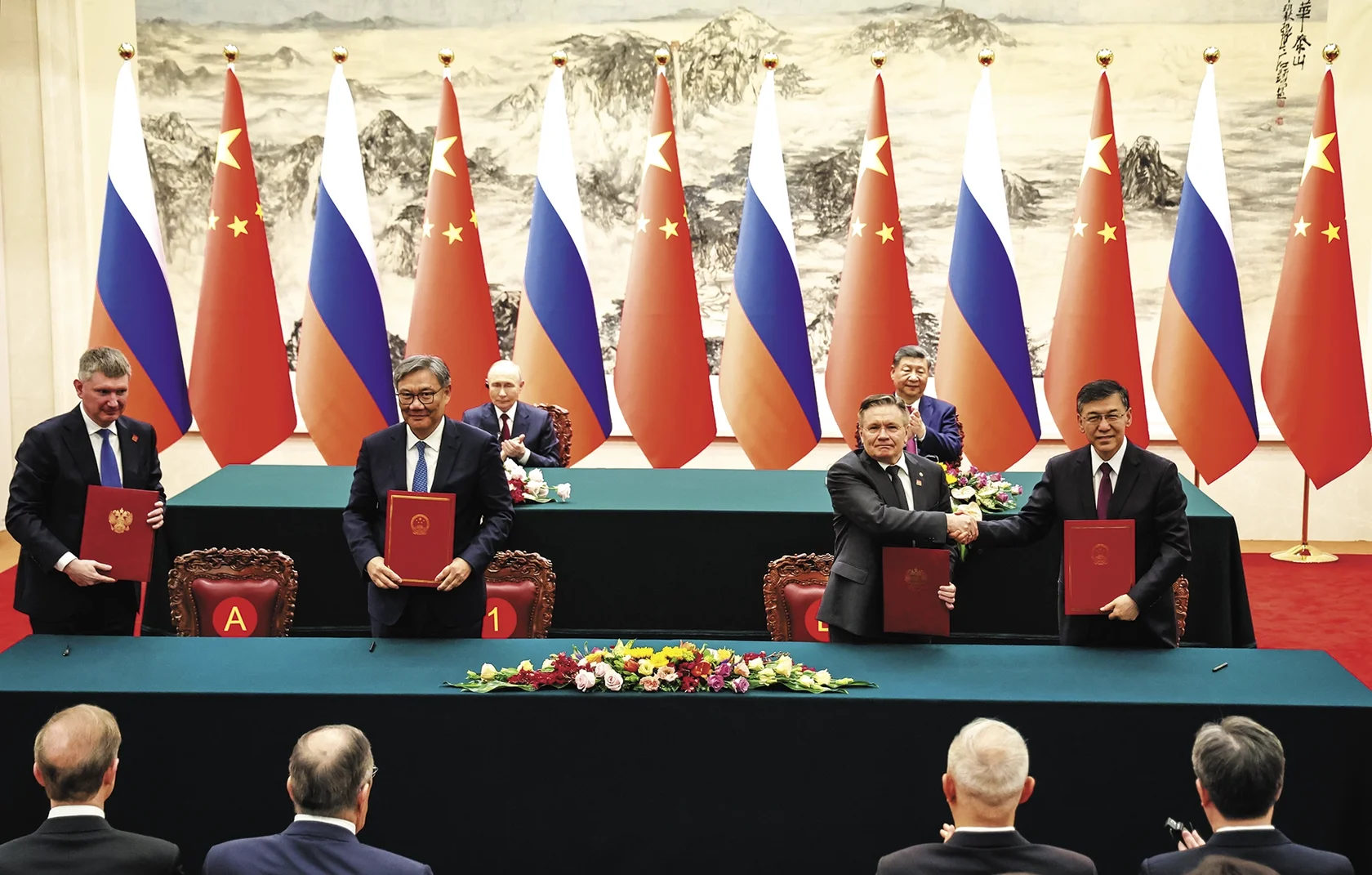
After the official proceedings Putin and Xi jointly launched the Russia-China Years of Educational Cooperation. The visit then took an unexpectedly personal turn.
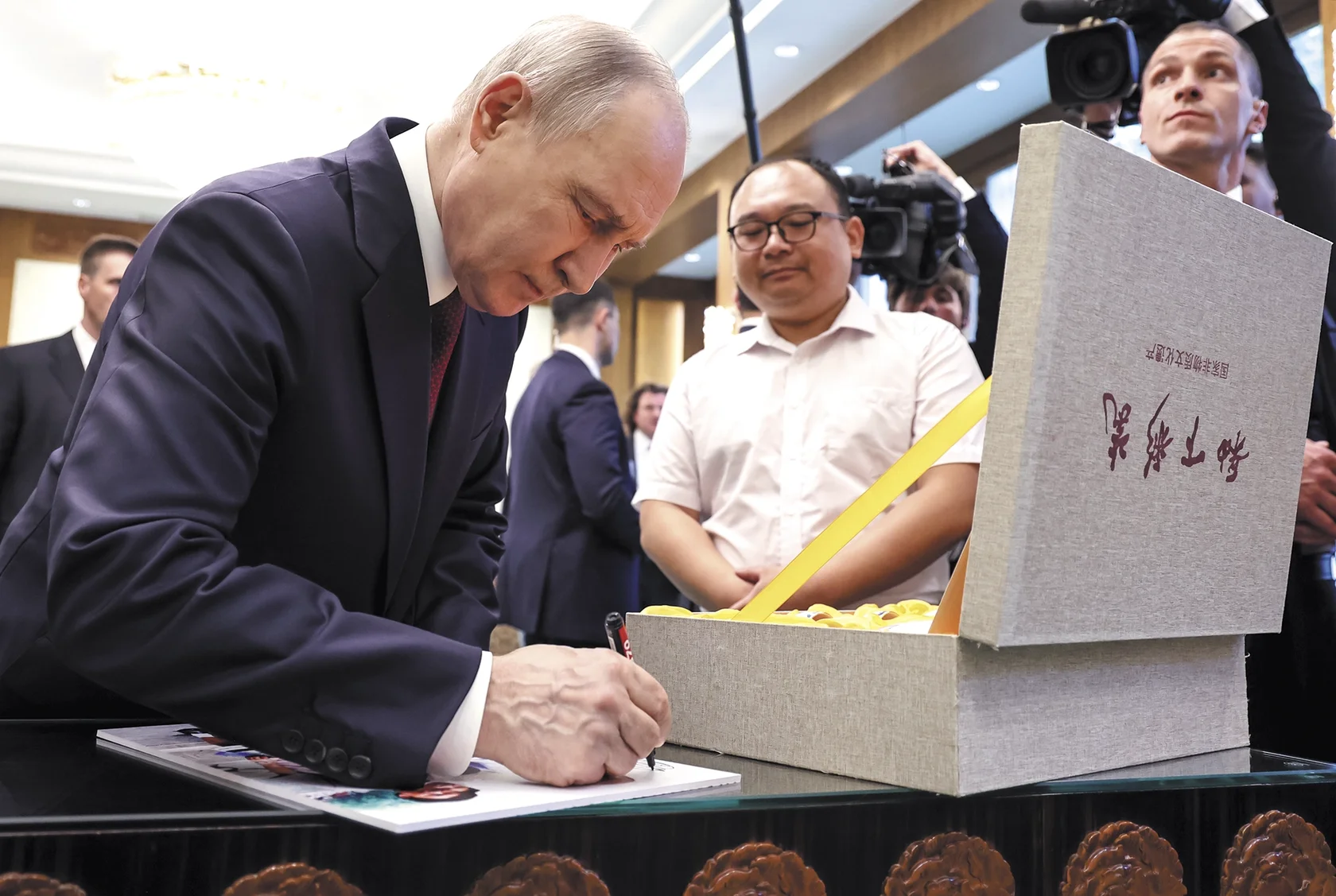
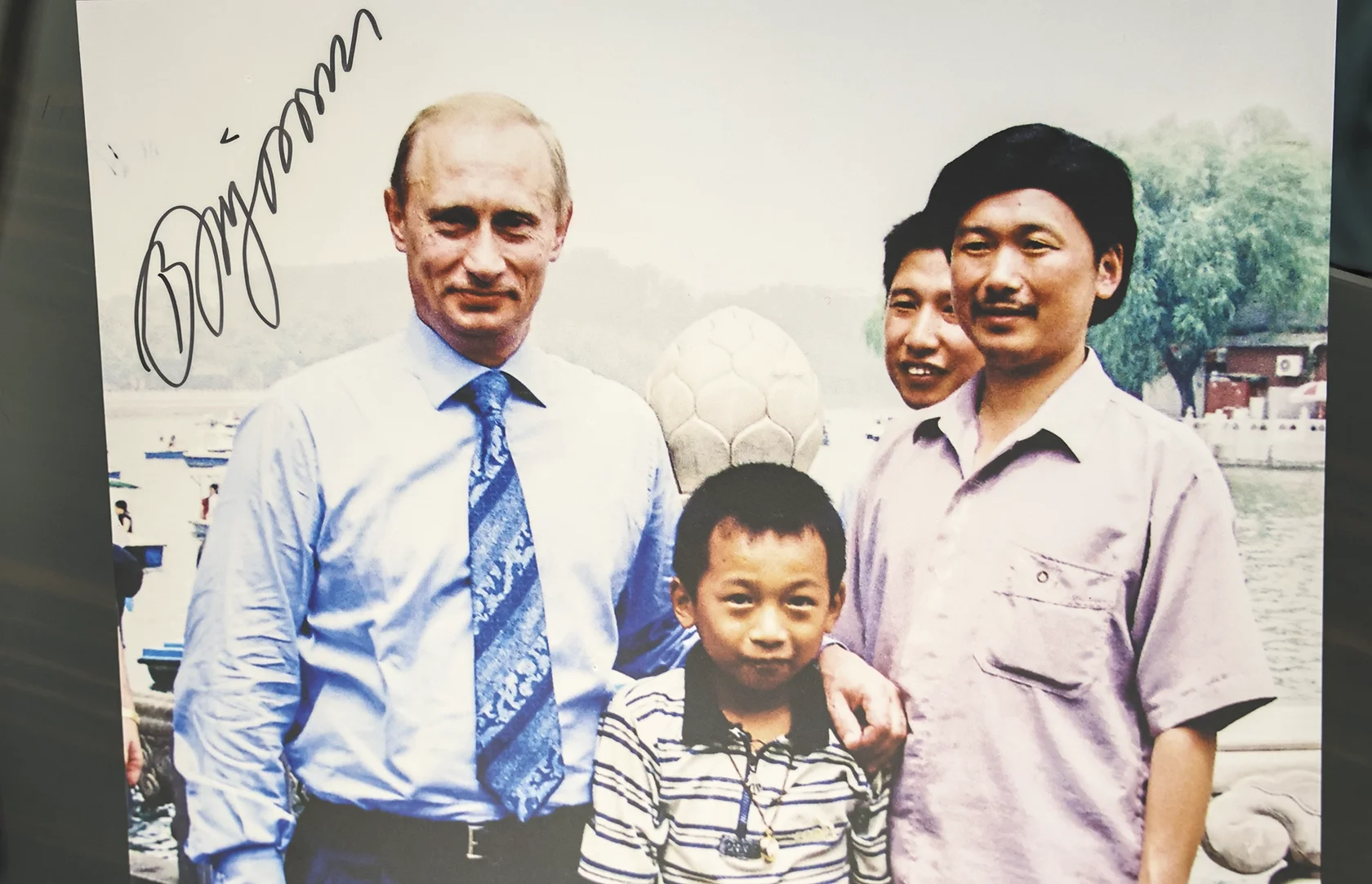
Putin met the Chinese engineer Peng Pai — the very boy with whom he had happened to be photographed during his China visit in 2000. Peng Pai subsequently learned Russian and graduated from MADI (Moscow Automobile and Road Construction University) in Moscow. At this encounter the engineer presented the Russian President with a porcelain tea service.
It was at that point that Putin unexpectedly invoked the historical symbolism of the date. He noted that Peng Pai is from Hunan Province — Mao Zedong’s home province — and recalled that on 20 May 1972 the Chinese leader had called on the world to fight ‘American imperialism' (On 20 May 1970 — the date is sometimes given as 1970 in different accounts — Mao Zedong issued his famous statement calling for the peoples of the world to unite against American imperialism amid the Vietnam War).
— But today Russia and China are friends not against anyone, — Putin emphasised. — We are fighting no one; we fight only for our interests, for our development. And beyond that — we are ready to cooperate with everyone, including the United States.
— But today Russia and China are friends not against anyone, — Putin emphasised. — We are fighting no one; we fight only for our interests, for our development. And beyond that — we are ready to cooperate with everyone, including the United States.