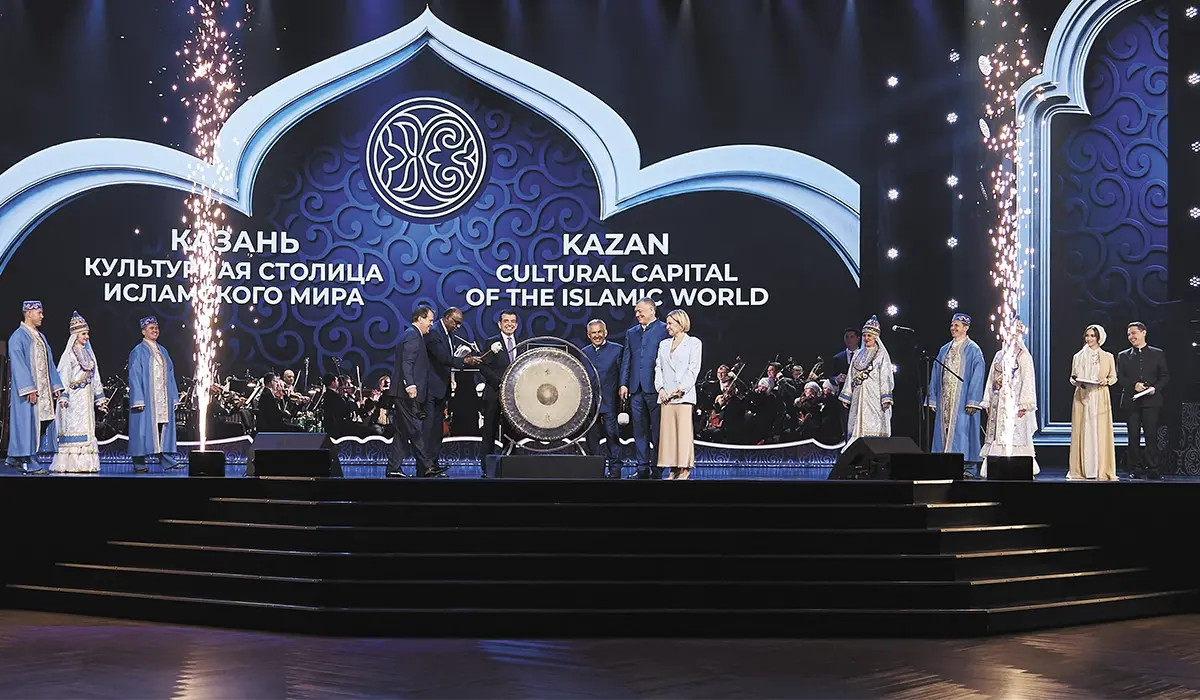
— The International Economic Forum 'Russia — Islamic World: KazanForum' has recently taken place. Please tell us about its key outcomes.
KazanForum, alongside SPIEF and the Eastern Economic Forum (VEF — Vostochny Ekonomichesky Forum, held annually in Vladivostok), is one of Russia’s major international forums. It is the permanent meeting place between Russia and Islamic countries for discussing bilateral relations and strengthening cooperation. I would note that our partnership is grounded in mutual respect and shared traditional values — especially important in the current geopolitical environment.
The forum gains momentum year on year. This year around 10,000 people participated in the business programme, with representatives arriving from 99 countries. But the most important thing is the practical outcome: more than 160 agreements and memoranda were signed at the close of the forum.
The forum’s agenda covered the most promising areas of cooperation: Islamic finance and investment, the halal industry, information technology, transport and logistics including international transport corridors, education, culture, sport, and tourism.
One of the key events was the annual session of the Russia-Islamic World Strategic Vision Group, which this year marks its twentieth anniversary. The Group facilitates Russia’s rapprochement and networking with Muslim countries.
The exhibitions attracted considerable attention. For the first time an international exhibition was organised: 'Projects of Russia: Innovation. Investment. Infrastructure.' The International Exhibition of Cooperation between Russia and the Islamic World was held for the ninth time.
Kazan is this year’s cultural capital of the Islamic world, which gave us a unique opportunity to show guests that Russia is a country of the richest cultural heritage. This creates exactly the atmosphere of trust without which genuine dialogue is impossible.
— You have managed two complex 'city economies' — Kazan and Moscow. Which was harder, and which was more interesting from a management perspective?
Honestly, comparing Kazan and Moscow is difficult — they represent two different stages of my life. My public service experience began with the Ministry of Construction, Architecture, and Housing and Communal Services of the Republic of Tatarstan (ZhKKh — zhilishchno-kommunalnoye khozyaystvo — the Russian term for housing and utility infrastructure), which I headed for nearly ten years. A great deal was accomplished, much of it for the first time in the country.
Earlier than anywhere else in Russia we began eliminating dilapidated and hazardous housing, establishing a dedicated fund for the purpose. We carried out major repairs, brought in private business to work in the utilities sector, and launched a social mortgage programme. For the millennium of Kazan a metro was built — the first to appear in Russia in the country’s modern history. For the city’s anniversary we completely reconstructed the city centre: the Kul Sharif Mosque, the Millennium Bridge, a new hippodrome, the Park of the Millennium, and much more.
Major work was done in preparation for the 2013 Kazan Universiade (the World University Games) — a large-scale renewal of sports infrastructure, with most facilities completed ahead of schedule. Another significant project: the creation of the Alabuga Special Economic Zone (OEZ Alabuga — one of Russia’s most successful industrial special economic zones, attracting major manufacturing and logistics investment), which continues to demonstrate high effectiveness today.
In Tatarstan I received an invaluable management education: for the first time I was launching major projects from scratch at the scale of an entire region. Tatarstan taught me not to be afraid of any work.
Moscow was a different level entirely. The capital is the heart and face of the whole country — greater responsibility, and the cost of mistakes is high. But the Kazan experience helped me launch large-scale projects in Moscow.
KazanForum, alongside SPIEF and the Eastern Economic Forum (VEF — Vostochny Ekonomichesky Forum, held annually in Vladivostok), is one of Russia’s major international forums. It is the permanent meeting place between Russia and Islamic countries for discussing bilateral relations and strengthening cooperation. I would note that our partnership is grounded in mutual respect and shared traditional values — especially important in the current geopolitical environment.
The forum gains momentum year on year. This year around 10,000 people participated in the business programme, with representatives arriving from 99 countries. But the most important thing is the practical outcome: more than 160 agreements and memoranda were signed at the close of the forum.
The forum’s agenda covered the most promising areas of cooperation: Islamic finance and investment, the halal industry, information technology, transport and logistics including international transport corridors, education, culture, sport, and tourism.
One of the key events was the annual session of the Russia-Islamic World Strategic Vision Group, which this year marks its twentieth anniversary. The Group facilitates Russia’s rapprochement and networking with Muslim countries.
The exhibitions attracted considerable attention. For the first time an international exhibition was organised: 'Projects of Russia: Innovation. Investment. Infrastructure.' The International Exhibition of Cooperation between Russia and the Islamic World was held for the ninth time.
Kazan is this year’s cultural capital of the Islamic world, which gave us a unique opportunity to show guests that Russia is a country of the richest cultural heritage. This creates exactly the atmosphere of trust without which genuine dialogue is impossible.
— You have managed two complex 'city economies' — Kazan and Moscow. Which was harder, and which was more interesting from a management perspective?
Honestly, comparing Kazan and Moscow is difficult — they represent two different stages of my life. My public service experience began with the Ministry of Construction, Architecture, and Housing and Communal Services of the Republic of Tatarstan (ZhKKh — zhilishchno-kommunalnoye khozyaystvo — the Russian term for housing and utility infrastructure), which I headed for nearly ten years. A great deal was accomplished, much of it for the first time in the country.
Earlier than anywhere else in Russia we began eliminating dilapidated and hazardous housing, establishing a dedicated fund for the purpose. We carried out major repairs, brought in private business to work in the utilities sector, and launched a social mortgage programme. For the millennium of Kazan a metro was built — the first to appear in Russia in the country’s modern history. For the city’s anniversary we completely reconstructed the city centre: the Kul Sharif Mosque, the Millennium Bridge, a new hippodrome, the Park of the Millennium, and much more.
Major work was done in preparation for the 2013 Kazan Universiade (the World University Games) — a large-scale renewal of sports infrastructure, with most facilities completed ahead of schedule. Another significant project: the creation of the Alabuga Special Economic Zone (OEZ Alabuga — one of Russia’s most successful industrial special economic zones, attracting major manufacturing and logistics investment), which continues to demonstrate high effectiveness today.
In Tatarstan I received an invaluable management education: for the first time I was launching major projects from scratch at the scale of an entire region. Tatarstan taught me not to be afraid of any work.
Moscow was a different level entirely. The capital is the heart and face of the whole country — greater responsibility, and the cost of mistakes is high. But the Kazan experience helped me launch large-scale projects in Moscow.
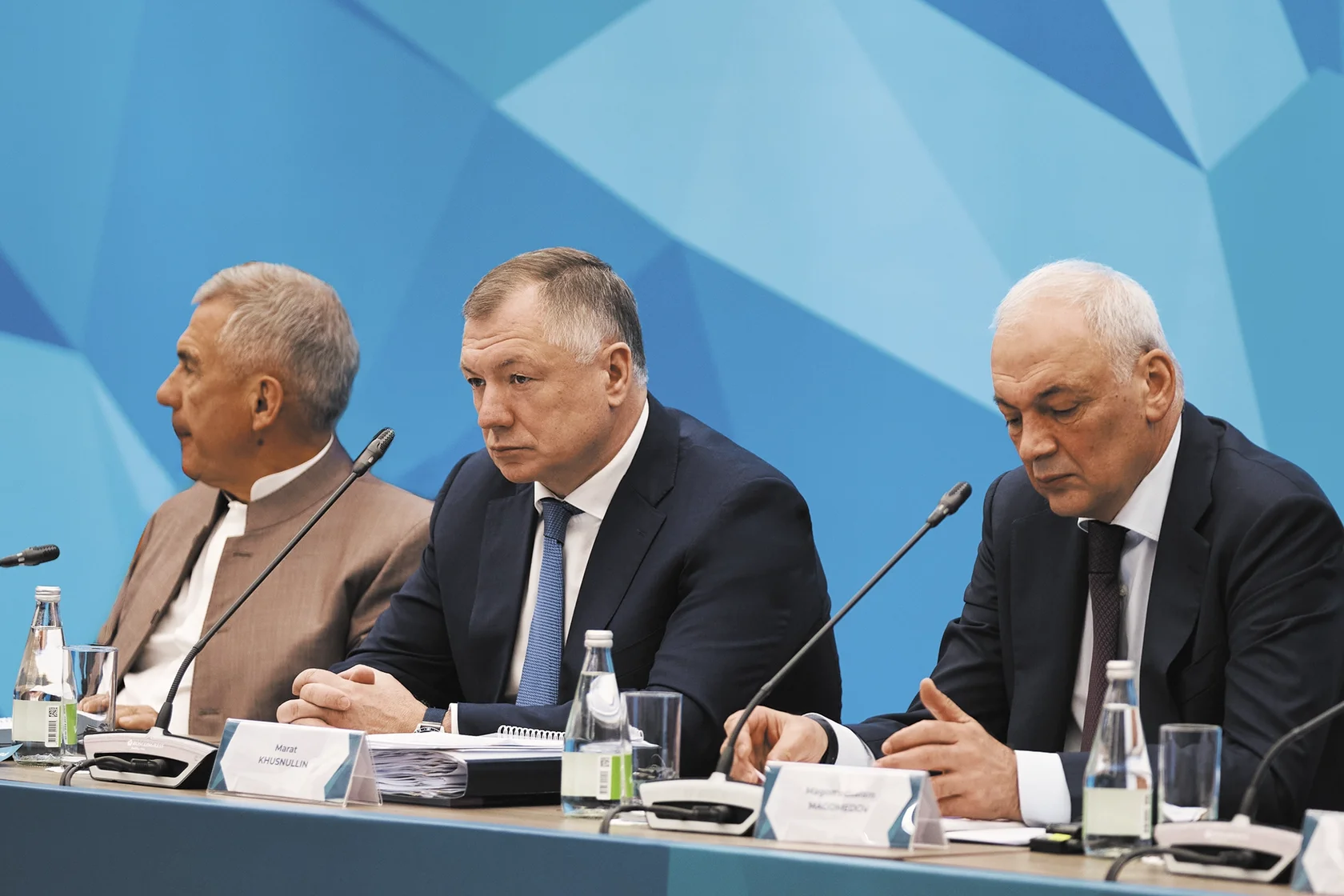
— Can Moscow today be called a city that has delivered on its development strategy? Which projects are you personally most proud of?
Moscow is a city that has not simply delivered on a strategy — it sets the agenda for the whole country and, in many respects, for the world. It is a world-class city by development standards, confirmed by numerous international rankings.
When it comes to what I am genuinely proud of, transport comes first without question — not any single facility, but systematic work. Moscow’s core problem was traffic congestion, which grew worse year on year. Without decisive action more than half the city’s territory would simply have ground to a halt.
Large-scale road construction was launched: arterial highways, interchanges on the MKAD (Moscow Ring Road), elimination of bottlenecks, and the high-speed chord ring road project. The result: Moscow began to move.
An enormous leap was made in metro construction: an unprecedented number of new stations; the launch of the Moscow Central Circle (MCC-Moskovskoye Tsentralnoye Koltso, a ring railway repurposed as urban transit) and the first Moscow Central Diameters (MCD — Moskovskiye Tsentralnye Diametry, cross-city rail routes integrating suburban and urban rail); and the groundbreaking for the Big Circle Line. Millions of people gained metro access within walking distance.
It was Moscow that first gave serious attention to the upgrading of public spaces — something that was not on the agenda anywhere in Russia at the time. Today the large-scale Comfortable Urban Environment programme (Kompleksnoye blagoustroystvo) is deployed across the whole country.
Another major programme is the renovation (renoVATsiya — Moscow’s large-scale programme to demolish Soviet-era five-storey residential blocks and rehouse residents in new buildings in the same areas). When we launched it in 2017 it seemed almost impossible: relocating that many people from obsolete five-storey blocks into modern new housing. There was a great deal of argument, but today the programme has proved the correctness of those decisions.
Specific landmark projects: Zaryadye Park (built on the site of the demolished Rossiya Hotel, opened in 2017 as Russia’s first new major public park in decades) and the reconstruction of Luzhniki for the FIFA World Cup. Of course it is pleasant to speak of achievements. But I will not pretend: there are projects I am ashamed of. That is why in my current government work I try to prevent such things.
— What is the Azov Sea Ring project and exactly how will the route run? What new opportunities will it open for logistics and drivers?
The Azov Ring is one of the largest infrastructure projects for the development of the Azov region. The total length of the ring will be 1,343 km. The route runs from Rostov-on-Don through Novoazovsk, Mariupol, Berdyansk, Melitopol, and Henichesk to its junction with the Crimean road, completing the ring around the sea. We plan by 2030 to make it a full four-lane motorway, well-lit, without a single traffic light, with service roads and access routes to the sea.
The road around the sea will increase the accessibility of the reunified regions (the new Russian federal subjects of Donetsk, Lugansk, Zaporizhzhia, and Kherson), including for freight traffic, give impetus to the social and economic development of Donbass and Novorossiya, raise the investment attractiveness of the territories, stimulate housing construction, business, tourism, and the creation of new jobs.
Part of the work is already done. We have completely overhauled and widened almost the entire stretch of the R‑280 Novorossiya highway from Novoazovsk to Mariupol, carried out work on the section in the DPR (Donetsk People’s Republic) from the Rostov Oblast border to Novoazovsk, and renewed a number of structures including bridges. Last year construction began on the Mariupol bypass — a critical facility of just over 31 km in length.
Once work is complete, journey time will be cut by five hours and throughput capacity will triple. An alternative freight route bypassing congested existing roads will open. The main goal is to create a reliable overland route connecting Russia’s southern regions.
Moscow is a city that has not simply delivered on a strategy — it sets the agenda for the whole country and, in many respects, for the world. It is a world-class city by development standards, confirmed by numerous international rankings.
When it comes to what I am genuinely proud of, transport comes first without question — not any single facility, but systematic work. Moscow’s core problem was traffic congestion, which grew worse year on year. Without decisive action more than half the city’s territory would simply have ground to a halt.
Large-scale road construction was launched: arterial highways, interchanges on the MKAD (Moscow Ring Road), elimination of bottlenecks, and the high-speed chord ring road project. The result: Moscow began to move.
An enormous leap was made in metro construction: an unprecedented number of new stations; the launch of the Moscow Central Circle (MCC-Moskovskoye Tsentralnoye Koltso, a ring railway repurposed as urban transit) and the first Moscow Central Diameters (MCD — Moskovskiye Tsentralnye Diametry, cross-city rail routes integrating suburban and urban rail); and the groundbreaking for the Big Circle Line. Millions of people gained metro access within walking distance.
It was Moscow that first gave serious attention to the upgrading of public spaces — something that was not on the agenda anywhere in Russia at the time. Today the large-scale Comfortable Urban Environment programme (Kompleksnoye blagoustroystvo) is deployed across the whole country.
Another major programme is the renovation (renoVATsiya — Moscow’s large-scale programme to demolish Soviet-era five-storey residential blocks and rehouse residents in new buildings in the same areas). When we launched it in 2017 it seemed almost impossible: relocating that many people from obsolete five-storey blocks into modern new housing. There was a great deal of argument, but today the programme has proved the correctness of those decisions.
Specific landmark projects: Zaryadye Park (built on the site of the demolished Rossiya Hotel, opened in 2017 as Russia’s first new major public park in decades) and the reconstruction of Luzhniki for the FIFA World Cup. Of course it is pleasant to speak of achievements. But I will not pretend: there are projects I am ashamed of. That is why in my current government work I try to prevent such things.
— What is the Azov Sea Ring project and exactly how will the route run? What new opportunities will it open for logistics and drivers?
The Azov Ring is one of the largest infrastructure projects for the development of the Azov region. The total length of the ring will be 1,343 km. The route runs from Rostov-on-Don through Novoazovsk, Mariupol, Berdyansk, Melitopol, and Henichesk to its junction with the Crimean road, completing the ring around the sea. We plan by 2030 to make it a full four-lane motorway, well-lit, without a single traffic light, with service roads and access routes to the sea.
The road around the sea will increase the accessibility of the reunified regions (the new Russian federal subjects of Donetsk, Lugansk, Zaporizhzhia, and Kherson), including for freight traffic, give impetus to the social and economic development of Donbass and Novorossiya, raise the investment attractiveness of the territories, stimulate housing construction, business, tourism, and the creation of new jobs.
Part of the work is already done. We have completely overhauled and widened almost the entire stretch of the R‑280 Novorossiya highway from Novoazovsk to Mariupol, carried out work on the section in the DPR (Donetsk People’s Republic) from the Rostov Oblast border to Novoazovsk, and renewed a number of structures including bridges. Last year construction began on the Mariupol bypass — a critical facility of just over 31 km in length.
Once work is complete, journey time will be cut by five hours and throughput capacity will triple. An alternative freight route bypassing congested existing roads will open. The main goal is to create a reliable overland route connecting Russia’s southern regions.
— Key infrastructure projects 2026−2027. Which road construction projects will be decisive?
The road industry has delivered good results year on year, despite all the difficulties. This year an updated six-year road programme for 2026−2031 was approved. Under it we will build and reconstruct more than 2,000 km of federal and regional roads. All plans are synchronised with the national project 'Infrastructure for Life' (Infrastruktura dlya zhizni).
Among the key priorities is the continued development of the North-South, West-East, and Europe-Western China international transport corridors and their access routes. An important task is to extend the M‑12 Vostok motorway to Tyumen — total distance from Moscow to Tyumen will be around 1,961 km. We plan to complete construction this year, then move on to the Tyumen bypass.
We are giving considerable attention to road bypasses of populated areas. The updated six-year plan to 2031 envisages building more than 30 further bypasses totalling over 800 km. Each such facility reduces transport pressure, speeds up freight delivery, and lowers logistics costs.
We are continuing the complex southern project: the Adler bypass. Its commissioning will shorten the route from central Sochi to the airport and toward Krasnaya Polyana and the Sirius federal territory (Sirius — a federal territory near Sochi established in 2020, hosting the Sirius Educational Centre and positioned as a hub for science, sport, and technology), give impetus to the social and economic development of Krasnodar Krai, and expand the tourist potential of the Black Sea coast.
How is the construction market performing after the turbulence of 2024−2025? Where is the line between business market risks and the state’s zone of responsibility?
The construction sector remains one of the economy’s locomotives. It generates on average around 16 percent of regional budget tax revenues and receipts, with some regions above 20 percent.
In 2025 all national project targets were met: 150 million sq m of residential and non-residential property were put into operation — the highest figure ever; more than 28,000 km of roads were repaired, reconstructed, or built — 15 percent more than the previous year; and all regions approved development programmes for 2,160 anchor localities (opornye nasekyonnye punkty — the backbone network of regional centres that are intended to drive balanced spatial development), where more than 70 percent of the country’s population lives.
One must understand that such results were made possible largely by the foundations laid earlier. This year reaching the same figures will be extremely difficult. We set ourselves the task of preventing any significant decline.
The main challenge is the high key interest rate (klyuchevaya stavka — the benchmark rate set by the Bank of Russia, which stood at elevated levels following anti-inflationary policy tightening). This has virtually eliminated market-rate mortgage lending. Credit is more expensive for developers too. Yes, we see a gradual reduction in the key rate, but it has not yet had a significant effect. Nevertheless, we see no crisis or wave of company bankruptcies — the market is holding quite steadily.
I have worked in construction for 38 years and have lived through downturns more than once. That gives a clear understanding of how to act. We are continuously monitoring the market situation, working to build up urban development potential, and bringing unused land into productive use. Another important block: reducing excessive procedures in construction and developing digital tools and AI technologies. We see significant potential there for accelerating construction an.
The road industry has delivered good results year on year, despite all the difficulties. This year an updated six-year road programme for 2026−2031 was approved. Under it we will build and reconstruct more than 2,000 km of federal and regional roads. All plans are synchronised with the national project 'Infrastructure for Life' (Infrastruktura dlya zhizni).
Among the key priorities is the continued development of the North-South, West-East, and Europe-Western China international transport corridors and their access routes. An important task is to extend the M‑12 Vostok motorway to Tyumen — total distance from Moscow to Tyumen will be around 1,961 km. We plan to complete construction this year, then move on to the Tyumen bypass.
We are giving considerable attention to road bypasses of populated areas. The updated six-year plan to 2031 envisages building more than 30 further bypasses totalling over 800 km. Each such facility reduces transport pressure, speeds up freight delivery, and lowers logistics costs.
We are continuing the complex southern project: the Adler bypass. Its commissioning will shorten the route from central Sochi to the airport and toward Krasnaya Polyana and the Sirius federal territory (Sirius — a federal territory near Sochi established in 2020, hosting the Sirius Educational Centre and positioned as a hub for science, sport, and technology), give impetus to the social and economic development of Krasnodar Krai, and expand the tourist potential of the Black Sea coast.
How is the construction market performing after the turbulence of 2024−2025? Where is the line between business market risks and the state’s zone of responsibility?
The construction sector remains one of the economy’s locomotives. It generates on average around 16 percent of regional budget tax revenues and receipts, with some regions above 20 percent.
In 2025 all national project targets were met: 150 million sq m of residential and non-residential property were put into operation — the highest figure ever; more than 28,000 km of roads were repaired, reconstructed, or built — 15 percent more than the previous year; and all regions approved development programmes for 2,160 anchor localities (opornye nasekyonnye punkty — the backbone network of regional centres that are intended to drive balanced spatial development), where more than 70 percent of the country’s population lives.
One must understand that such results were made possible largely by the foundations laid earlier. This year reaching the same figures will be extremely difficult. We set ourselves the task of preventing any significant decline.
The main challenge is the high key interest rate (klyuchevaya stavka — the benchmark rate set by the Bank of Russia, which stood at elevated levels following anti-inflationary policy tightening). This has virtually eliminated market-rate mortgage lending. Credit is more expensive for developers too. Yes, we see a gradual reduction in the key rate, but it has not yet had a significant effect. Nevertheless, we see no crisis or wave of company bankruptcies — the market is holding quite steadily.
I have worked in construction for 38 years and have lived through downturns more than once. That gives a clear understanding of how to act. We are continuously monitoring the market situation, working to build up urban development potential, and bringing unused land into productive use. Another important block: reducing excessive procedures in construction and developing digital tools and AI technologies. We see significant potential there for accelerating construction an.